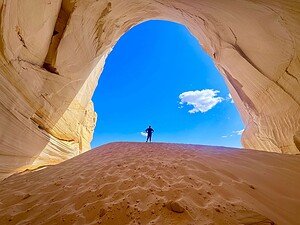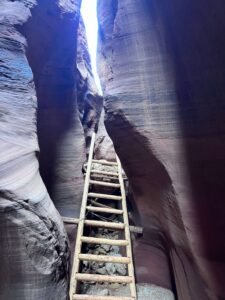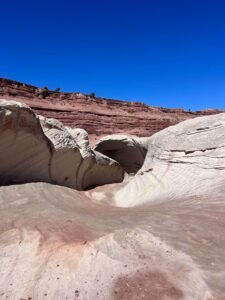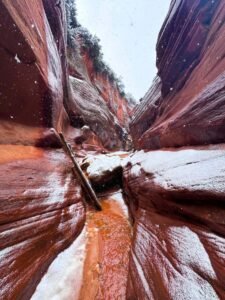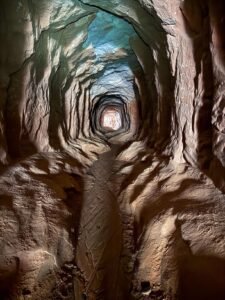
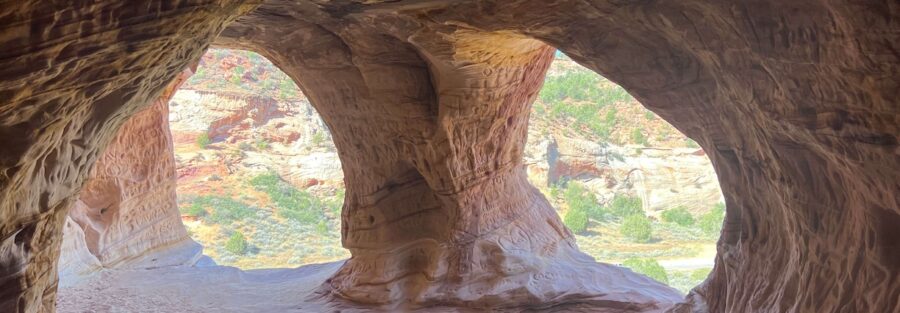
The Sand Caves sit visible from US-89 about 5 miles north of Kanab, carved into the Navajo Sandstone cliffside by early 20th-century miners who were digging into the rock for sand. The mining operation didn’t last, but what it left behind is a series of smooth-walled cave openings in the warm orange sandstone that have become one of the more accessible and photogenic stops in the Kanab area. A 1.5-mile roundtrip with a short sandstone scramble to reach the entrance, no permit required, no fee, dogs welcome. I’ve stopped here on the way through Kanab and as a standalone morning when I wanted something short and visually distinctive. The smooth curved walls of the Sand Caves, with the desert framed in the openings behind you, deliver something unusual in a compact package. The scramble to get into the caves requires some engagement but it’s not technical. The payoff inside is the combination of cool shade, the carved stone walls, and the view looking back out through the opening toward the Vermilion Cliffs country.
Quick Facts
| Trail Name | Sand Caves Trail |
| Location | Paria Canyon-Vermilion Cliffs Wilderness Area, near Kanab, Utah |
| Coordinates | 37.1141 N, 112.5554 W (US-89 pullout) |
| Distance | 1.5 miles roundtrip |
| Elevation Gain | ~130 feet |
| Difficulty | Moderate (short sandstone scramble to cave entrance) |
| Time | 45-90 minutes |
| Dogs Allowed | Yes, on leash; watch for slippery sandstone on scramble |
| Fee | None |
| View on AllTrails | |
How to Get There
From Kanab, head north on US-89 for approximately 5 miles. The Sand Caves are on the east side of the highway, visible on the cliffside just past the Best Friends Animal Sanctuary sign. Watch for a dirt pullout on the right side of US-89 where the caves are visible above the highway. No official trailhead signage; the pullout and the caves visible above it are your landmarks. From Salt Lake City, Kanab is about 4 hours south via I-15 and US-89. From Las Vegas, roughly 2.5 hours north on I-15 and US-89. From Page, Arizona, about 1.5 hours west on US-89. Kanab sits at the junction of several major southern Utah highway routes and is a natural base for exploring the Vermilion Cliffs, Grand Staircase-Escalante, and the Kanab area canyon country. No timed entry. No permit. No reservation. Pull off the highway, park in the dirt, and walk to the caves.
Parking Information
The parking area is an informal dirt pullout along US-89. It’s accessible to standard vehicles in dry conditions. The pullout isn’t large and fills quickly during busy periods, particularly on spring and fall weekends. Early morning arrivals typically have no trouble parking. No restrooms and no facilities. The caves are visible from the parking area, so if you can’t see them from where you’ve pulled over, you haven’t found the right pullout. Look for the pale orange cave openings in the cliff face above and to the east of the highway. 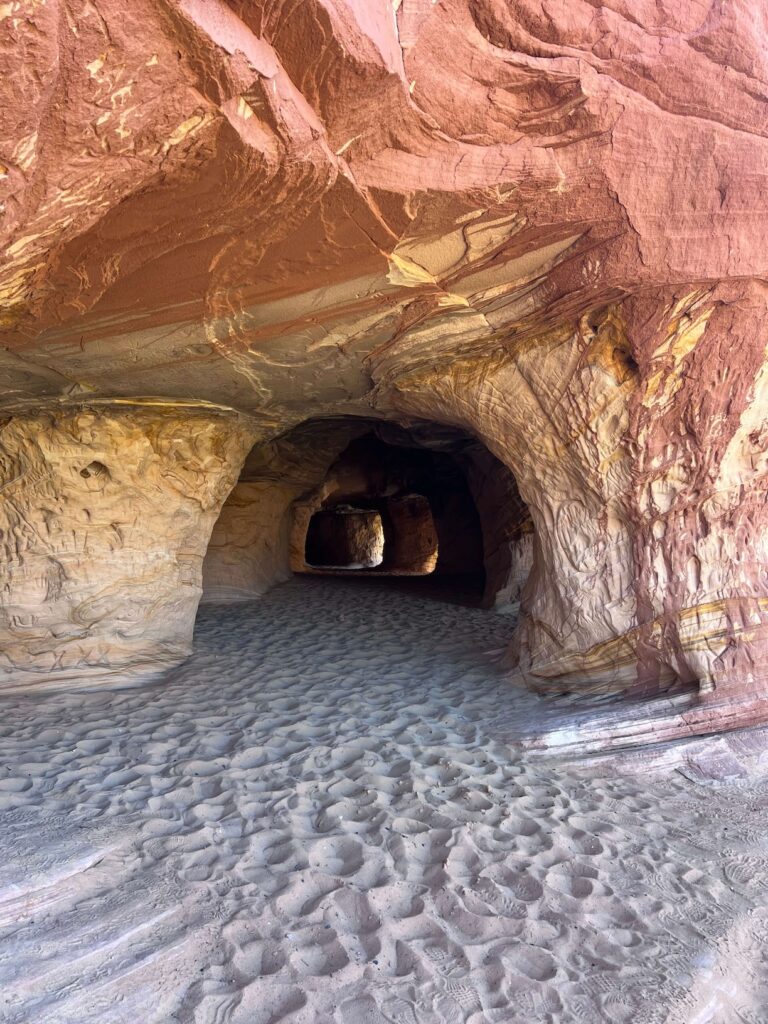
Cell Service and Navigation
US-89 north of Kanab has reasonable cell coverage and it holds through the pullout area. Download AllTrails offline as standard practice for any canyon country hike, but navigation isn’t the challenge here. The caves are visible from the parking area and the route to them is direct. Having the GPS coordinates saved makes finding the pullout easier if you’re driving at speed on the highway.
What to Expect at Sand Caves
The Approach
From the pullout, a use trail leads through desert scrub toward the base of the cliff where the caves sit. The lower section is easy walking on sand and rock. As you approach the cliff, the trail steepens and the sandstone scramble begins. The final push to the cave openings involves climbing up angled sandstone on a relatively steep section that requires using hands and feet. The sandstone is solid but smooth, and can be slippery when wet or when carrying a heavy pack. Most hikers manage it fine, but it’s the reason this rates moderate rather than easy. The scramble section is short. From the base of the cliff to inside the first cave opening is maybe 50-75 feet of elevation gain. Take it slowly and test each hold before committing.
Inside the Caves
The Sand Caves are man-made rather than natural formations, carved by miners in the early 20th century who were extracting sand from the Navajo Sandstone. The mining operation left behind smooth, curved walls, a sandy floor, and a cave geometry that’s different from natural slot canyons or arches in an interesting way: the human scale of the carving creates a different relationship between the visitor and the space. The cave openings face generally west, which means the interior catches afternoon light and frames the Vermilion Cliffs country visible through the entrance. The contrast between the cool, shaded interior and the bright desert outside is striking in both the visual and physical sense. On a hot day, stepping into the caves from the direct sun is an immediate relief. For photography: the caves photograph best in the golden hour before sunset when the western light angles through the openings and illuminates the curved walls. Looking from inside the cave toward the entrance frames the desert in the opening. A wide-angle lens captures the interior scale. Bring a tripod for the lower-light interior work.
Trail Difficulty and Length
Sand Caves is 1.5 miles with 130 feet of gain. Moderate is the rating, with the sandstone scramble to the cave entrance as the reason. The scramble is the crux: the rest of the hike is easy desert walking. Know what you’re getting into before you bring people who are nervous about scrambling. Budget 45-90 minutes for the round trip including time inside the caves. Morning or late afternoon visits are the better call for both temperature management and photography. 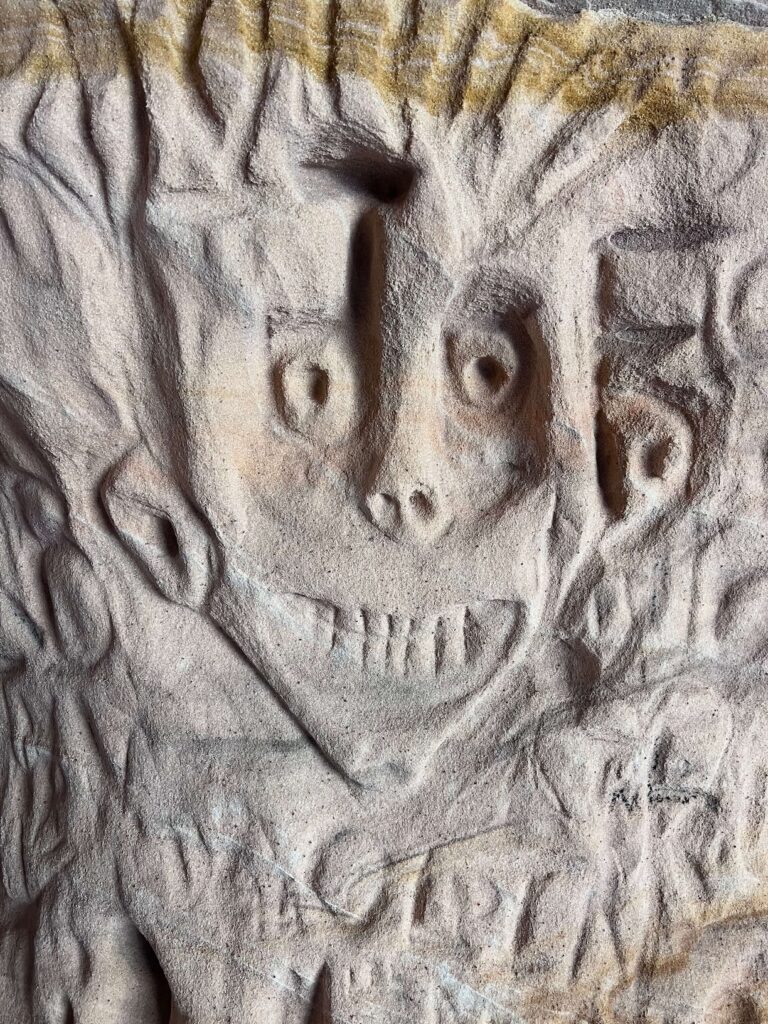
Dog Friendly?
Yes. Dogs are welcome on the Paria Canyon-Vermilion Cliffs Wilderness land. Keep dogs leashed throughout. The sandstone scramble to the cave entrance is the dog consideration: smooth, angled rock is slippery for dog paws and some dogs find it difficult to negotiate. Assess your dog’s scrambling confidence before committing to the final push. Most athletic dogs handle it fine. Hesitant dogs may need assistance or may prefer to stay at the base of the scramble. Bring water. The desert environment north of Kanab gets hot fast and the sandy floor of the caves, while cooler than outside, doesn’t provide water access.
What to Bring
Water: at least a liter per person for a short hike in desert terrain. More in summer. Sun protection for the approach and the hike back. Comfortable shoes with grip for the sandstone scramble. Sandals are not appropriate for the scramble section. For photography: wide-angle lens for the cave interior, a tripod for the lower-light work inside, and a polarizing filter for the approach section where the Vermilion Cliffs backdrop can be glary in full sun. Golden hour visit before sunset is the photography priority.
Best Time to Visit Sand Caves
Spring (March through May) and fall (September through November) are the comfortable windows. The south-facing canyon country around Kanab gets hot fast in summer; the caves’ position facing west means the scramble section can be brutally exposed in July and August midday. Summer is manageable before 9 a.m. and after 4 p.m. The cave interior provides shade once you’re inside, which makes the visit more comfortable than other Kanab-area stops once you’ve made the scramble. The approach in full summer midday sun is the unpleasant part. Golden hour before sunset is the photography window. The western-facing cave openings catch the late afternoon and golden hour light in a way that makes the curved walls glow and the desert framed in the opening go warm orange. Plan a late afternoon visit in spring or fall for the combination of comfortable temperature and ideal light. 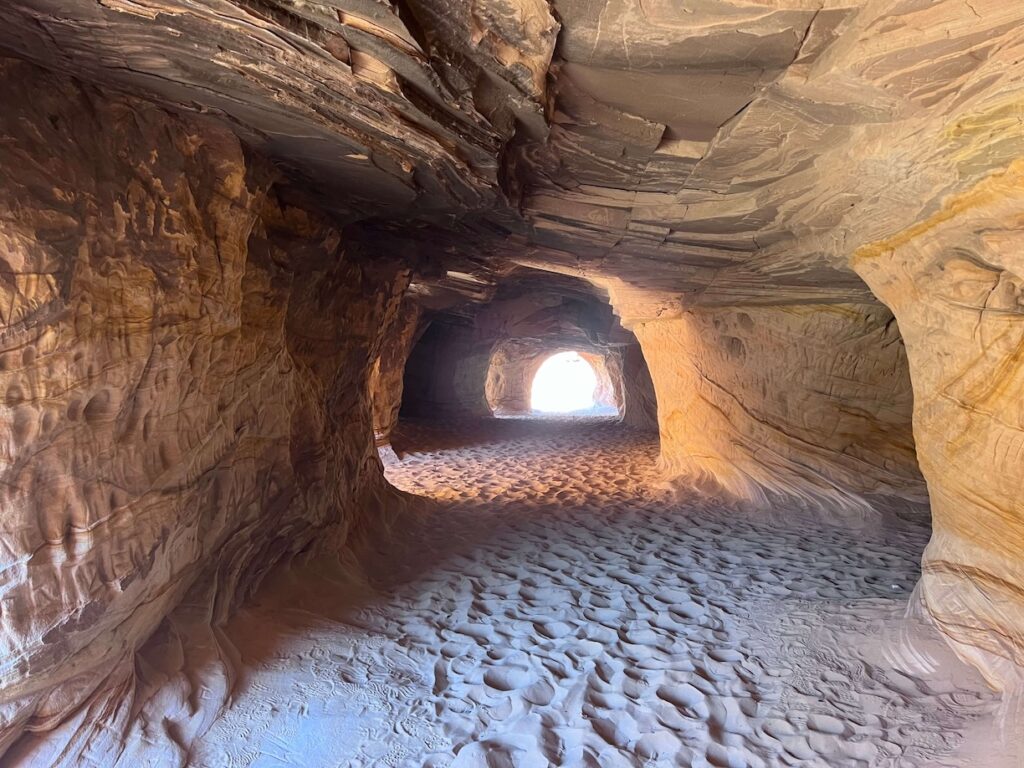
Rules and Regulations
Leave No Trace principles apply throughout the Paria Canyon-Vermilion Cliffs Wilderness Area. Pack out all trash. Do not carve or mark the cave walls. The smooth sandstone is both the aesthetic appeal and the fragile surface; any damage is permanent and irreplaceable. No fees, no permits, no entry reservation for the Sand Caves. Dogs on leash. Stay on established use trails on the approach. Check the BLM Kanab Field Office for any current access alerts before your visit.
Where to Stay Near Kanab
Kanab is 5 miles south and the obvious base. Basecamp37 in Kanab is worth knowing about for adventure-oriented visitors. For points travelers, check available Marriott Bonvoy properties in Kanab, IHG Rewards hotels in Kanab, and Hilton Honors options near Kanab. Spring and fall availability in Kanab moves with Grand Canyon and Zion overflow traffic.
Camping Nearby
BLM dispersed camping is available throughout the Paria Canyon and Kanab area. Coral Pink Sand Dunes State Park has developed camping with facilities a short drive west of Kanab. The Grand Staircase-Escalante NM south of Kanab has dispersed camping on BLM land throughout the monument.
Nearby Adventures
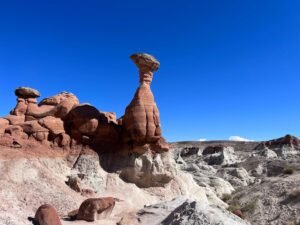
Moqui Cave is 2 miles north of the Sand Caves pullout on US-89: a commercial attraction in a natural sandstone cave with fossils, fluorescent minerals, and Native American artifacts. A natural companion stop on the same US-89 corridor. The Great Chamber, a few miles east via Angel Canyon Road and BLM trails, is the other Kanab-area cave formation worth visiting. Different approach, different character, same sandstone country. Toadstool Hoodoos Trail is north of Kanab on US-89 and provides a short hike to distinctive balanced rock formations in the Grand Staircase corridor. Easy terrain, striking geology, and accessible from the highway without a long drive into the monument. Peekaboo Slot Canyon is 7.5 miles with 629 feet of gain, accessible from the Grand Staircase-Escalante south of Kanab. One of the premier slot canyon experiences in the area for hikers willing to commit a full day. Best Friends Animal Sanctuary, visible from the highway on the way to the Sand Caves, offers tours and volunteer opportunities at the largest no-kill animal sanctuary in the US. Worth a stop on the way back to Kanab if you haven’t visited.
Plan This Hike
AllTrails has Sand Caves mapped with the parking pullout location and the scramble approach. Download before your drive out from Kanab. Plan your hike on AllTrails and pull the offline map while you’ve got signal in town.
Chase the Quiet
The Sand Caves were made by people looking for something practical, sand for construction or glass or industrial use, and they left behind spaces that turned out to be beautiful. That’s an unusual inversion. Most human activity in the desert canyon country of southern Utah has taken things away. These miners took sand and left architecture. The smooth curved walls, the openings framing the Vermilion Cliffs, the cool interior after the desert heat on the scramble up, all of it a byproduct of extraction that became something worth visiting. The desert has a way of composting things into beauty.
Support the Adventure
To make your walls less boring, check out my photography portfolio and bring a piece of the wild and my story into your home. If you’d like to fuel future adventures, you can donate a coffee on Ko-Fi. Every cup keeps me chasing sunrises and stories. When you shop using my affiliate links, every click helps support this blog at no extra cost to you. It’s a small way to keep Unicorn Adventure alive and kicking while I keep exploring. Subscribe to my mailing list for future updates, new stories, and behind-the-scenes adventures. Stay connected with me on Instagram and Facebook for more photos and daily inspiration. Thanks for being part of the journey, Unicorn Squadron!
Theo Maynard is a landscape photographer and adventure blogger based in Salt Lake City. He chases remote desert and mountain light across the American West, documents it all solo, and shares the journey through Unicorn Adventure. He’s on the autism spectrum, and that’s not a footnote, it’s the whole story. He creates to inspire others to get outside, chase what lights them up, and live their best possible life. Unapologetically himself.