

The Best Eco-Friendly Camping Gear for Leave No Trace Adventures
The places I photograph exist because someone took care of them. Grand Staircase-Escalante. Bears Ears. Coyote Gulch. These landscapes are fragile. Cryptobiotic soil that takes decades to grow. Desert springs that sustain entire ecosystems. Slot canyons where a single piece of trash stays visible for years. I camp solo in these places regularly, and Leave No Trace isn’t a suggestion. It’s the minimum.
I’m also autistic. Systems and routines help me function. Leave No Trace gives me a clear system for how to exist in wild places without damaging them. Reusable over disposable. Biodegradable over chemical. Solar over battery. These aren’t just environmental choices. They simplify my decision-making in the field. Fewer things to throw away means fewer decisions about waste.
These are the eco-friendly camping products I’d actually recommend. Tested on real trips across the American West. Durable, reusable, and designed to leave the land the way I found it. No gimmicks.
The Best Eco-Friendly Camping Gear
1. Osprey Ultralight Dry Sack, Waterproof Protection That Lasts for Years
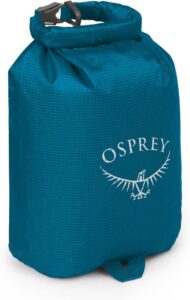
The Osprey Ultralight Dry Sack is made from 40D ripstop nylon with a roll-top closure and clip seal. Multiple sizes available. Rectangular shape for efficient packing.
Keeps gear dry. Period. Clothes, electronics, camera equipment, all protected from rain and river splashes. The 40D ripstop nylon is waterproof and lightweight. Roll-top closure seals tight and clips shut. I use these in Estes on every trip. Crossing streams in the Uintas. Rain in the Sawtooths. Unexpected weather in Grand Staircase. The rectangular shape packs better than round dry bags, which matters when you’re organizing gear in a vehicle or backpack. Multiple sizes let you match the sack to what you’re protecting. The eco angle is longevity. One quality dry sack replaces dozens of disposable plastic bags over its lifetime. Ripstop nylon doesn’t tear easily. The closure mechanism doesn’t wear out. Buy once, use for years. That’s the most sustainable approach to any piece of gear.
2. Dr. Bronner’s Pure-Castile Soap, Biodegradable Multi-Use Camp Soap
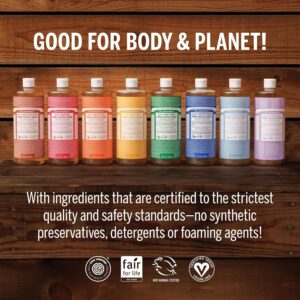
Dr. Bronner’s Pure-Castile Soap is concentrated, biodegradable, and made from vegetable oils. Vegan. Works for dishes, body wash, and general cleaning. One bottle replaces multiple products.
One bottle handles dishes, body, hair, and general camp cleaning. Concentrated formula means a little goes a long way. Made from vegetable oils. Vegan. Biodegradable. This has been a go-to since the 1940s for good reason. It works. I carry one bottle in Estes and it covers every cleaning need at camp. The eco angle matters here. Regular soaps and detergents contain chemicals that poison streams and lakes. Biodegradable soap breaks down safely in nature. Critical rule: use it at least 200 feet from any water source. Even biodegradable soap can harm aquatic life if it enters streams directly. Strain your wash water through soil, which filters it before it reaches groundwater. One concentrated bottle replaces multiple single-use products. Less packaging. Less weight. Less waste. Simple.
3. Iron Flask Insulated Water Bottle, Double-Wall Steel That Replaces Disposables
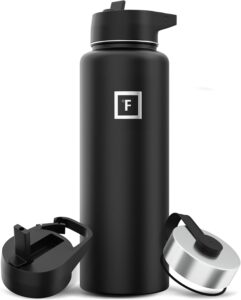
The Iron Flask Insulated Water Bottle is a double-wall insulated stainless steel bottle. Keeps drinks cold 24 hours or hot 12 hours. Sweat-free exterior. Three leak-proof lids included. BPA-free 18/8 stainless steel.
Every reusable bottle you carry is hundreds of plastic bottles that don’t end up in a landfill or blowing across a desert campsite. The Iron Flask keeps drinks cold for 24 hours or hot for 12. Double-wall insulation. Sweat-free exterior. Three leak-proof lids included: carabiner straw lid, flip lid, and stainless steel lid. 18/8 stainless steel. BPA-free. No rust. No metallic taste. Hand wash only. The 14-ounce, 18-ounce, and 22-ounce sizes fit cupholders, which matters for long drives in Estes to remote trailheads. I fill mine at every opportunity and carry it on every hike. Hot coffee at dawn shoots in Bryce Canyon. Cold water on summer hikes through Moab. Durable enough to survive drops on rock. One bottle for years of use.
4. BioLite CampStove 3, Burns Twigs and Charges Your Phone
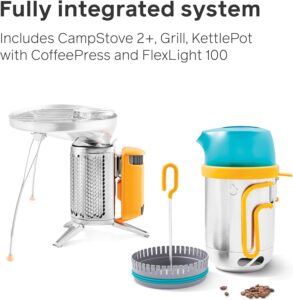
The BioLite CampStove 3 burns twigs, pinecones, and natural debris. Smokeless flame via patented combustion technology. 3-watt thermoelectric generator charges devices. 3,200 mAh battery. 4-speed fan. Grill attachment included. 5.1 pounds.
Burns what’s already on the ground. Twigs. Pinecones. Small debris. No propane canisters to pack in and pack out. No fossil fuel to buy. The patented combustion technology creates a nearly smokeless flame, which means less air pollution at your campsite. The thermoelectric generator produces 3 watts of power to charge devices while you cook. Cook dinner and charge your phone simultaneously using sticks you picked up off the ground. 3,200 mAh battery stores energy for later. 4-speed fan controls flame intensity. Grill fits four burgers. At 5.1 pounds, it’s heavier than ultralight stoves but the multi-functionality justifies the weight. The eco angle is compelling. Zero fuel canisters in the waste stream. Zero fossil fuel consumption. Uses renewable biomass that’s already on the forest floor. For car camping and base camp setups where weight isn’t critical, this is the most environmentally responsible cooking option on this list.
5. Kizen Solar Powered Lantern, Collapsible Light With Phone Charging
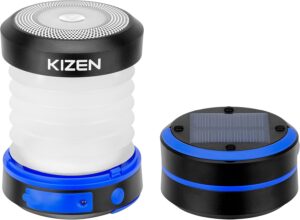
The Kizen Solar Powered Lantern is a collapsible solar and USB rechargeable lantern. Up to 10 hours of LED light. Multiple light modes. Doubles as phone charger and flashlight. Water-resistant.
Solar charged. No disposable batteries. That’s the core eco benefit. Disposable batteries leak toxic metals into soil. Solar power costs nothing and produces no waste. This lantern charges via solar panel or USB, provides up to 10 hours of bright LED light, and doubles as a phone charging power bank. Multiple light modes. Water-resistant. Collapses flat for storage. Fits in your hand, bag, or Estes’ glove box. I keep one charged and ready for every trip. Emergency backup for power outages at home. Primary lighting at remote desert camps where I don’t want to drain my vehicle battery running interior lights. Lightweight and compact enough to toss in a day pack for evening hikes when I’m chasing sunset light at Muley Point or Kodachrome Basin and need light for the walk back.
6. Advanced Elements Solar Shower, 10-Gallon Sun-Heated Camp Shower
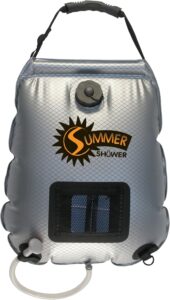
The Advanced Elements Solar Shower holds up to 10 gallons. Four-layer construction with reflector, insulator, solar panel, and reservoir. Diamond ripstop fabric. Heats water to 110 degrees in under 3 hours. Temperature gauge included.
Hot shower at camp using nothing but sunlight. No propane water heater. No electricity. No fuel. Four-layer construction with reflector, insulator, solar panel, and reservoir. Diamond ripstop fabric for durability. Heats water to 110 degrees in under 3 hours of direct sun. Temperature gauge tells you when it’s ready. Up to 10 gallons gives you a real shower, not just a rinse. Wide carrying handles. Velcro straps for toiletries. Rolls up compact when empty. I hang this on Estes’ roof rack at camp and let the desert sun do the work. After dusty days on trails through Grand Staircase or Escalante, a hot shower without burning fuel is a luxury that costs nothing. Use biodegradable soap. Shower 200 feet from water sources. Strain wastewater through soil. One-year manufacturer warranty.
7. TiTo Titanium Long Handle Spork, One Utensil That Replaces Disposable Plastic
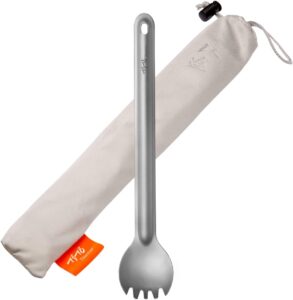
The TiTo Titanium Long Handle Spork is a titanium spork with long handle. Lightweight. Rust-proof. Dishwasher safe. Compact.
One utensil. Replaces every disposable plastic fork, spoon, and spork you’d otherwise throw away at camp. Titanium is strong, lightweight, and doesn’t rust. Long handle reaches into deep freeze-dried meal pouches without getting food on your fingers. Dishwasher safe at home. Easy to clean in the field with a quick rinse. Compact enough to toss in any pack, cook kit, or vehicle console. The eco math is simple. Every trip where you use a reusable titanium spork instead of plastic utensils keeps that plastic out of the waste stream. Over years of camping, that adds up to hundreds of disposable utensils eliminated. Titanium lasts essentially forever with normal use. One purchase. Lifetime of meals. I’ve carried mine on every trip since I bought it.
8. HydraPak Stow Collapsible Water Bottle, Ultra-Light Packable Hydration
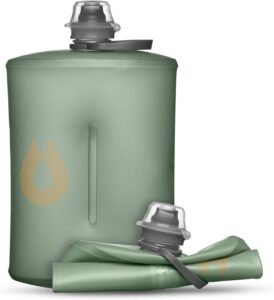
The HydraPak Stow Collapsible Water Bottle weighs under 2 ounces. Made from abrasion-resistant TPU. 80 percent lighter than hard bottles. Rolls up when empty. Freezer and dishwasher safe. Flexible bail handle.
Under 2 ounces. Rolls up to pocket size when empty. Expands to full bottle capacity when you need it. Made from durable, abrasion-resistant TPU that’s 80 percent lighter than hard bottles. Freezer safe. Dishwasher safe. Flexible bail handle makes it easy to carry, clip, or fill from any water source. Faucet, river, alpine stream. I carry one as a backup in my day pack on hikes through the Wasatch and Uintas. When my primary bottle runs low, I have extra capacity that weighs almost nothing and takes up zero space when empty. The eco benefit is the same as any reusable bottle. Every fill replaces a disposable plastic bottle. The collapsible design means you’re more likely to actually carry it because it disappears when empty. The most sustainable gear is the gear you always have with you.
9. Rainleaf Microfiber Towel, Fast-Drying Camp Towel That Packs Tiny
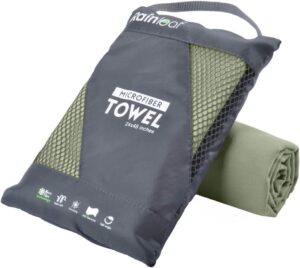
The Rainleaf Microfiber Towel absorbs five times its weight in water. Quick-drying with snap loop for hanging. Suede-like feel. 40 by 72 inches with zippered corner pocket. Comes with ventilated carry bag. Machine washable. Sand-resistant.
Absorbs five times its weight in water and dries fast. That quick-dry capability means it’s ready to use again the same day, which means you carry one towel instead of multiple. Snap loop for hanging. Suede-like feel that’s soft on skin. 40 by 72 inches, big enough to be useful. Zippered corner pocket for small essentials. Ventilated carry bag included. Machine washable. Sand-resistant, which matters after desert camping in Grand Staircase or Moab. I carry one on every trip. Post-hike cleanup. Drying off after the solar shower. Wiping down gear. One microfiber towel replaces disposable paper towels and eliminates the need for multiple cotton towels that take forever to dry in the field. Packs down small enough to fit anywhere. Six sizes and 16 colors available.
How to Build a Leave No Trace Gear Kit
Replace disposable with reusable first. That single change, reusable bottle, reusable utensils, reusable towel, eliminates the most common camp waste. Every trip without disposable plastic is a win. Biodegradable soap replaces chemical cleaners. Solar power replaces disposable batteries.
Durability is sustainability. Cheap gear that breaks after one season creates more waste than quality gear that lasts years. Buy the best you can afford and take care of it. Pack out everything you pack in. Use biodegradable products 200 feet from water sources. Strain wash water through soil. These aren’t complicated rules. They’re habits that protect the places we love.
Frequently Asked Questions
What’s the single most impactful eco-friendly swap for camping?
A reusable water bottle. The average camper goes through multiple disposable bottles per trip. One stainless steel or collapsible bottle eliminates all of them. The Iron Flask or HydraPak Stow both work. After that, switch to biodegradable soap and reusable utensils.
Is biodegradable soap safe to use in streams?
No. Even biodegradable soap harms aquatic life if it enters water directly. Always use soap at least 200 feet from any water source. Strain your wash water through soil before it reaches groundwater. The soil acts as a natural filter. Dr. Bronner’s is biodegradable but still needs to break down in soil, not water.
Is the BioLite CampStove practical for regular camping?
For car camping and base camp, yes. It burns natural debris, charges devices, and eliminates propane canisters. At 5.1 pounds, it’s too heavy for ultralight backpacking. You also need available dry biomass, which isn’t always present in desert environments. For forest camping where sticks and pinecones are abundant, it works great.
Does eco-friendly gear work for someone with sensory sensitivities?
Yes. Most eco-friendly gear is simpler than conventional alternatives. Fewer chemicals means fewer strong smells. Dr. Bronner’s unscented version works well for scent sensitivity. Titanium utensils have a neutral taste. Microfiber towels have a consistent suede-like texture. Simpler gear means fewer sensory variables to manage in the field.
How do I start practicing Leave No Trace?
Seven principles. Plan ahead. Travel on durable surfaces. Dispose of waste properly. Leave what you find. Minimize campfire impacts. Respect wildlife. Be considerate of other visitors. Start with proper waste disposal and reusable gear. Build from there. The eco-friendly products on this list support all seven principles.
Protect What You Love
I photograph landscapes that took millions of years to form. Cryptobiotic soil crusts in Grand Staircase. Sandstone arches in Moab. Alpine meadows in the Uintas. These places don’t recover quickly from damage. Every piece of reusable gear, every biodegradable product, every solar-powered alternative is a choice to protect these places for the people who come after us.
Leave No Trace isn’t complicated. It’s just giving a damn. These products make it easy.
Support the Adventure
To make your walls less boring, check out my photography portfolio and bring a piece of the wild and my story into your home.
If you’d like to fuel future adventures, you can donate a coffee on Ko-Fi. Every cup keeps me chasing sunrises and stories.
When you shop using my affiliate links, every click helps support this blog at no extra cost to you. It’s a small way to keep Unicorn Adventure alive and kicking while I keep exploring.
Subscribe to my mailing list for future updates, new stories, and behind-the-scenes adventures.
Stay connected with me on Instagram and Facebook for more photos and daily inspiration.
Thanks for being part of the journey, Unicorn Squadron!

Theo Maynard is a landscape photographer and adventure blogger based in Salt Lake City. He chases remote desert and mountain light across the American West, documents it all solo, and shares the journey through Unicorn Adventure. He’s on the autism spectrum, and that’s not a footnote, it’s the whole story. He creates to inspire others to get outside, chase what lights them up, and live their best possible life. Unapologetically himself.