


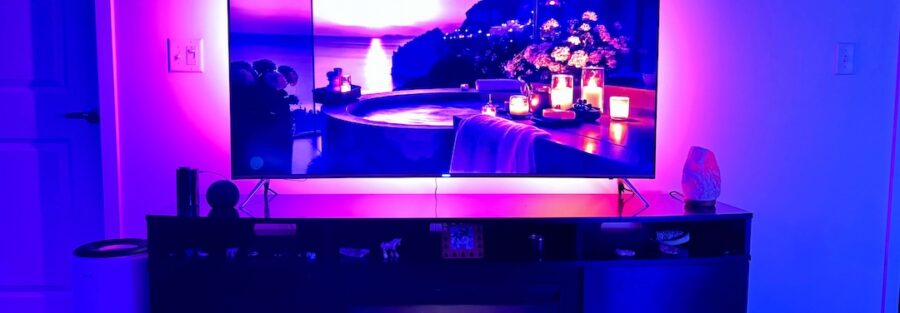
The Best Sensory Lighting for Calming Spaces and Stress Relief
Light controls how my brain feels. That’s not metaphor. I’m autistic and my nervous system responds to lighting the way most people respond to temperature. Harsh fluorescents make me agitated. Flickering LEDs create anxiety. But the right sensory lighting, soft color shifts, gentle movement, predictable patterns, can bring my system down from a 9 to a 4 in minutes. After long days shooting landscapes in Grand Staircase or driving Estes back from remote desert, my sensory room is where I recover.
Sensory lighting uses specific colors, brightness levels, and movement patterns to support emotional regulation. Soft blues and greens lower heart rate and ease anxiety. Warm amber tones support natural sleep cycles. Gentle transitions avoid the harsh shifts that spike my system. This isn’t aesthetic decoration. It’s functional nervous system support.
These are the sensory lights I’d actually recommend. Projectors, bubble tubes, touch panels, fiber optic lamps, and breathing tools. Tested for calming effect, build quality, and real-world usability. No gimmicks.
The Best Sensory Lighting
1. diatomiteco Ocean Wave Projector, Gentle Water Ripples for Dark Rooms
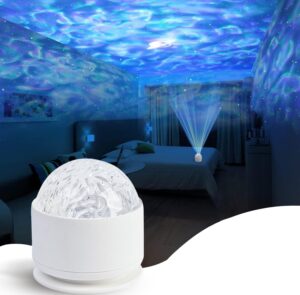
The diatomiteco Ocean Wave Projector creates water ripple effects across walls and ceilings. Seven color patterns. Remote control. Compact nightstand size.
Gentle ripples that move across walls and ceiling. Genuinely soothing. The slow wave motion gives your eyes something calming to track without demanding attention. Seven color patterns let you switch between cool blues for winding down and warmer tones for different moods. Remote works from about 15 feet. No need to get up once you’re settled. Compact enough for a nightstand. The tradeoff is brightness. This projector needs a dark room to create defined, calming effects. Any ambient light washes it out. Plastic housing feels lightweight. Patterns can get repetitive during long sessions. But for a bedroom or sensory space where you can control ambient light, the water ripple effect creates exactly the kind of slow, predictable visual movement that helps my nervous system decompress after intense days.
2. Emberela HEXlights Kids Sensory Lights, Touch-Activated Hexagon Panels
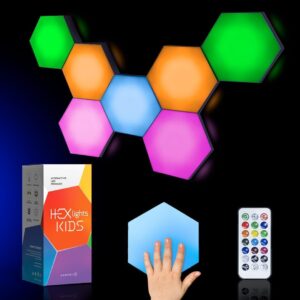
The Emberela HEXlights Kids Sensory Lights are seven touch-activated hexagon panels with 13 color options. Remote control. Timer function. Wall mount or table stand. USB powered with batteries included.
Interactive sensory input. Tap a panel and the color changes. That tactile-visual feedback loop is powerful for regulation. 13 color options with fade, jump, and flash modes via remote. Timer for bedtime wind-down. Seven panels connect together in custom shapes, which adds a creative element. Setup takes about 20 minutes with connectors for wall mounting or table stand. Build quality feels solid for the price. Each panel has good weight. The tradeoff is adhesion. Stickers don’t hold well on textured walls. Remote range feels short in bigger rooms. Assembly can be fiddly. But the touch activation is what makes these special. For kids and adults who need tactile interaction combined with visual feedback, tapping panels to change colors provides active sensory engagement that passive lights can’t match. Dimmer settings work well for evening calming.
3. Bright Autism Calming Sea Lamp, Ocean Projector With Built-In Lullabies
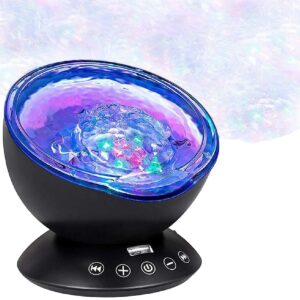
The Bright Autism Calming Sea Lamp projects underwater wave effects on ceilings. Seven light modes. Four built-in lullabies. Music connectivity. Compact angled design.
Designed specifically for autism support. The underwater wave effect moves slowly across the ceiling, creating gentle visual movement that helps focus attention on something calm. Seven light modes. Four built-in lullabies plus phone connectivity for custom audio. The combination of visual and audio sensory input works well for bedtime routines. When the ocean waves start, it signals wind-down time. That consistency helps build predictable transitions, which matters for anyone who struggles with shifting between activities. Compact angled design lets you point the projection where you want. Works best in dark rooms since the projection is soft. The tradeoff is power. Not bright enough for big rooms. Speaker quality is just okay. Plastic housing feels cheap. But for a bedtime sensory tool that combines gentle visual movement with calming audio in a compact package, this delivers targeted nervous system support.
4. CALOVER 4FT Sensory Fish Bubble Tube, Full-Height Visual Anchor
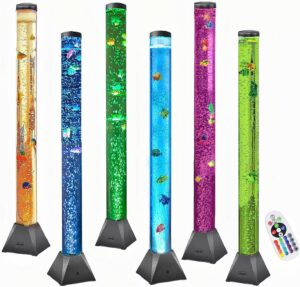
The CALOVER 4FT Sensory Fish Bubble Tube is a 4-foot bubble tube with floating fish, color-changing LEDs, and remote control. Plug-in operation.
This grabs attention immediately. Fish glide up and down through streaming bubbles while LED lights shift through colors. The movement is mesmerizing in a way that pulls your focus away from whatever is overwhelming your system. I watched kids settle down almost instantly. Adults get drawn in too. The 4-foot height makes a statement in any room. Setup is fast. Plug in and add water. Remote handles color changes from anywhere in the room. The calming effect is real and immediate. The tradeoff is stability and maintenance. Heavy unit can tip if not placed carefully. Corner placement helps. Fish sometimes stop floating after extended use, though unplugging briefly fixes it. More expensive than smaller tubes. But for a dedicated sensory room, therapy space, or calming corner, a full-height bubble tube provides the kind of sustained visual engagement that helps regulate overstimulated nervous systems.
5. HUMIIEYE Northern Light Projector, Portable Battery-Powered Aurora
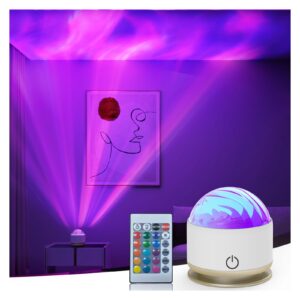
The HUMIIEYE Northern Light Projector is a portable aurora projector with battery power, memory function, and dual touch and remote controls.
Aurora patterns that genuinely look like northern lights on your ceiling. Brighter than expected. The slow-moving color waves create the kind of organic, unpredictable-but-gentle visual input that mimics natural phenomena. Portable battery power means no outlet needed. I’ve used this in Estes during overnight camping trips to create a calming environment in the vehicle. Memory function saves your favorite settings, which supports routine. Same light, same pattern, same calming effect every time. The tradeoff is battery life. Two hours isn’t enough for a full night. You’ll usually leave it plugged in at home. Touch controls get bumped easily and change settings accidentally. Sometimes needs a reset. But for portable aurora projection that you can move between rooms, take camping, or set up anywhere without wiring, the versatility and visual quality justify the limitations.
6. Avkast Northern Lights Cube, Compact Wave Projector With 16 Colors
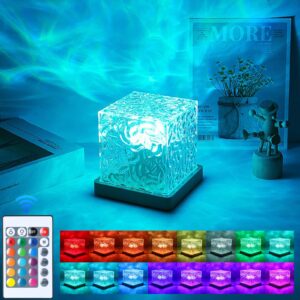
The Avkast Northern Lights Cube is a compact cube projector with rippling wave patterns, 16 colors, wood base, battery power, and remote control.
Changes the vibe of a room in seconds. Rippling wave patterns cast across walls and ceiling. 16 colors let you choose blues and greens for calming or warmer tones for cozy evenings. Wood base looks clean on a nightstand or shelf. Battery power means no cords and instant portability. Move it room to room without hassle. Remote works from about 15 feet. Setup takes seconds. The tradeoff is build quality and brightness consistency. Wood base feels lighter than expected and can tip if bumped. Battery life is limited for long sessions. Some colors are noticeably dimmer than others, which creates inconsistency if you’re particular about your calming environment. Works best on flat surfaces since the projection angle changes with positioning. But for a compact, portable wave projector at a reasonable price, this creates genuinely calming visual effects.
7. Muiofang Jellyfish Sensory Lamp, Budget Jellyfish Tank With 17 Colors
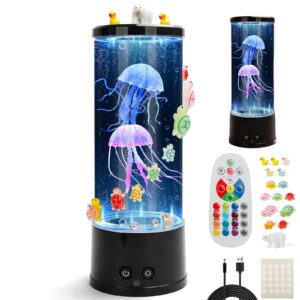
The Muiofang Jellyfish Sensory Lamp is a jellyfish lamp with 17 colors, multiple lighting modes, remote control, and DIY glow-in-the-dark sea creatures.
Budget entry into jellyfish sensory lighting. 17 colors with steady and fading modes via remote. Once set up properly, the jellyfish move around in a reasonably realistic way that provides gentle visual tracking. Runs quietly, which matters for sleep environments and sensory-sensitive users. The DIY glow-in-the-dark sea creatures add a creative element. The tradeoff is quality control. Setup requires squeezing air out of jellyfish heads or they won’t swim properly. Takes a few tries. Plastic feels flimsy. Some units arrive with deformed jellyfish. Inconsistent product quality is a real issue. But for the price, if you get a good unit, the quiet operation and gentle movement create a basic calming effect that works. Lower your expectations on build quality and this can fill a role in a sensory space on a tight budget.
8. Special Supplies LED Bubble Wall, Wall-Mounted Stainless Steel Sensory Panel
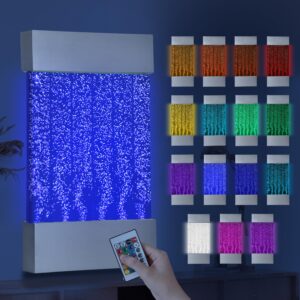
The Special Supplies LED Bubble Wall is a wall-mounted bubble panel with stainless steel frame, six tubes, 16 colors, four effects, and remote control. Standard outlet powered.
Wall-mounted design saves floor space and looks professional. Stainless steel frame feels more durable than plastic tubes. 16 colors and four lighting effects via remote. Bubble motion is calming with soft colored lights that provide ambient illumination without being harsh. Standard outlet power. No special wiring needed. Setup takes about an hour with basic tools. Mounting hardware feels solid. Frame stays cool after hours of use. The tradeoff is installation commitment and visual impact. You need to drill into the wall, which limits placement flexibility. Six tubes don’t create as much visual impact as you might expect for the size. Remote range is limited in bigger rooms. But for a permanent sensory installation in a dedicated room, therapy space, classroom, or calming corner, the wall-mounted stainless steel design is the most professional-looking option on this list.
9. Bright Autism Touch Sensory Lights, Magnetic Hexagon Panels With Dimming
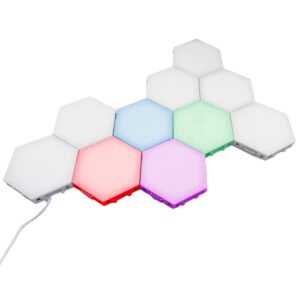
The Bright Autism Touch Sensory Lights are six magnetic hexagonal touch-activated panels with dimming. Wall-mounted. Multiple color options.
Touch to activate. Swipe to change. The tactile feedback is satisfying. A click and a glow. That direct cause-and-effect relationship between touch input and visual output is powerful for sensory regulation. Magnetic connections let you build different shapes and patterns. Surprisingly sturdy once assembled. Dimming switches from bright playtime to soft evening glow, which supports transition routines. Six panels with multiple color options. Mounting takes about 30 minutes. The tradeoff is permanence and scale. Once mounted, you can’t easily move them. Six panels don’t fill a big wall. Sometimes requires more than one tap to register. But for active sensory engagement where the user controls the light through direct touch, these panels provide something that passive projectors and bubble tubes can’t. The interaction itself is regulating. Designed specifically for autism support.
10. PEN&H Fiber Optic Sensory Lamp, Portable Touchable Light Strands
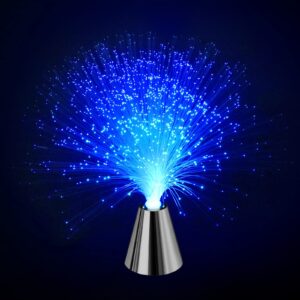
The PEN&H Fiber Optic Sensory Lamp is a battery-powered fiber optic lamp with seven color cycles and simple touch controls. Portable. No cords.
Touchable light. Run your fingers through the fiber strands and watch them shimmer. That tactile-visual combination provides gentle sensory input that’s calming without being overstimulating. Seven color cycles shift through slow transitions. Touch controls are simple enough for kids to operate independently. Battery powered with no cords, so it moves anywhere. Pick it up and carry it to wherever you need calming light. The tradeoff is brightness and durability. This is mood lighting, not room lighting. Very dim. Batteries drain quickly. Fiber strands bend and break with rough handling, especially from kids. But for a portable, touchable sensory tool that combines tactile input with gentle visual feedback, fiber optic lamps fill a unique role. I keep one on my desk for evening photo editing sessions when I need something calming in my peripheral vision.
11. Breathing Pal Kyle, Guided Breathing Light in a Squeezable Koala
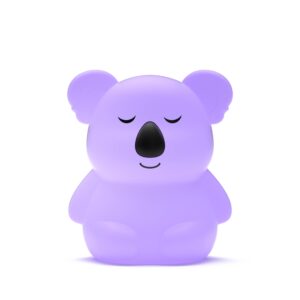
The Breathing Pal Kyle is a soft koala with three guided breathing modes using light patterns. One-button operation. Doubles as a nightlight. Auto-off feature.
This combines sensory lighting with guided breathing in a squeezable package. Three breathing modes including 4-7-8 and box breathing. The light pattern guides your inhale, hold, and exhale. Follow the light. Breathe with it. Your nervous system responds. One-button operation. No complicated menus or settings. The soft squishy body provides tactile comfort alongside the visual breathing guide. Auto-off if you fall asleep. Works as a nightlight between breathing sessions. I use the 4-7-8 mode for nighttime wind-down and box breathing for daytime stress after overstimulating events. The tradeoff is simplicity. You can’t customize the breathing patterns. Light head gets loose after extended use. Smaller than expected. But for a combined tactile, visual, and breathing regulation tool with dead-simple operation, this fills a unique space. Kids and adults both benefit. One button. Follow the light. Breathe.
How to Choose Sensory Lighting
Start with what calms you. Projectors create ambient visual movement for passive calming. Bubble tubes provide sustained visual tracking. Touch panels offer active sensory engagement. Fiber optics combine touch and visual input. Different nervous systems respond to different types of sensory input. Try multiple types if you can.
Color range matters. More options let you find what works for your specific system. Blues and greens tend to calm. Warm amber supports sleep. Brightness control is essential. Smooth dimming avoids harsh transitions. Battery-powered lights offer portability but limited run time. Plug-in lights stay on but need a fixed location. For dedicated sensory rooms, invest in quality. For portable calming tools, prioritize simplicity and durability.
Frequently Asked Questions
What’s the single best sensory light on this list?
For passive calming in a bedroom, the HUMIIEYE Northern Light Projector. For a dedicated sensory room, the CALOVER 4FT Bubble Tube. For active tactile engagement, the Bright Autism Touch Sensory Lights. For portability, the PEN&H Fiber Optic Lamp. Match the light to how your nervous system responds.
Do sensory lights actually help with anxiety?
Yes. Gentle visual movement gives your brain something predictable and calming to process. Slow color transitions lower arousal levels. Deep pressure helps the body, and sensory lighting helps the visual system. They work best as part of a broader calming toolkit, not as a standalone solution. I use them daily.
Are bubble tubes or projectors better for autism?
Depends on the person. Bubble tubes provide sustained visual tracking with movement and color. Projectors create ambient environments. Some people respond better to the contained movement of bubble tubes. Others prefer the room-wide wash of a projector. Both provide gentle, predictable visual input. Try both if possible.
Are any of these good for sensory-sensitive adults?
All of them. Sensory lighting isn’t just for kids. I use projectors and fiber optic lamps regularly as an adult. The key is brightness control and smooth transitions. Avoid lights with harsh flash or strobe modes. Stick to fade and smooth settings. Dim everything lower than you think you need.
How bright should sensory lighting be?
Dimmer than you expect. The goal is calming, not illumination. Sensory lights should provide gentle visual input without competing with your environment. Most projectors and lamps work best in dark or dim rooms. If the light feels intense at any setting, it’s too bright for calming purposes. Look for smooth dimming controls.
The Right Light Changes How You Feel
My sensory room is where I recover. After overstimulating days, after long drives, after pushing through crowded events that drain my battery. The lighting in that space is not decorative. It’s functional nervous system support. Every light on this list has been evaluated for calming effect, build quality, and real-world usability.
The best sensory light is the one that brings your system down. Find what works for your brain.
Support the Adventure
To make your walls less boring, check out my photography portfolio and bring a piece of the wild and my story into your home.
If you’d like to fuel future adventures, you can donate a coffee on Ko-Fi. Every cup keeps me chasing sunrises and stories.
When you shop using my affiliate links, every click helps support this blog at no extra cost to you. It’s a small way to keep Unicorn Adventure alive and kicking while I keep exploring.
Subscribe to my mailing list for future updates, new stories, and behind-the-scenes adventures.
Stay connected with me on Instagram and Facebook for more photos and daily inspiration.
Thanks for being part of the journey, Unicorn Squadron!

Theo Maynard is a landscape photographer and adventure blogger based in Salt Lake City. He chases remote desert and mountain light across the American West, documents it all solo, and shares the journey through Unicorn Adventure. He’s on the autism spectrum, and that’s not a footnote, it’s the whole story. He creates to inspire others to get outside, chase what lights them up, and live their best possible life. Unapologetically himself.
1 Comment
Best Mental Health Gifts Under $100 | Thoughtful Self-Care Tools
[…] smart lamp delivers excellent mood lighting and relaxation benefits. It’s a solid pick for a mental health gift under […]