


Best Sleeping Bags for Every Budget: 8 Tested From $30 to $400
When the sun drops behind the peaks and desert air turns cold, the sleeping bag is what stands between you and a miserable night. I camp solo across the American West, from freezing mountain camps in the Uintas to cold desert floors at Muley Point overlooking Monument Valley. The bag I crawl into determines whether I wake up ready for the next day or wrecked from a sleepless night.
I’m also autistic. Fabric texture, interior space, and zipper behavior matter. A scratchy lining, a claustrophobic fit, or a zipper that snags in the dark creates friction that compounds through a sleepless night. I need bags that feel predictable and work without drama.
These are the sleeping bags I’d actually recommend across every budget tier. Tested in real conditions. No gimmicks.
The Best Sleeping Bags for Every Budget
1. Mountain Hardwear Phantom 0 (Premium), Elite Warmth Under Three Pounds
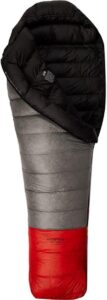
The Mountain Hardwear Phantom 0 is rated to 0 degrees with 850-fill down, a draft collar, mummy shape, and a packed size of 9 by 17 inches. 2 pounds 14 ounces.
This bag laughs at sub-zero temps. 850-fill down and a solid draft collar keep you cocooned in warmth even when snow piles on your tent. At under three pounds, it balances serious insulation with portability. Mummy shape traps heat efficiently. Packed size is compact enough for backpacking. This is the bag I’d bring on a winter trip to Great Basin or a cold shoulder-season night in the Sawtooths. Premium price tag. Down loses warmth when wet. Mummy shape feels restrictive for people who need space. But for elite warmth-to-weight performance, this is the top of the list.
2. Sierra Designs Nitro 0 (Mid-Range), Hydrophobic Down With Room to Move
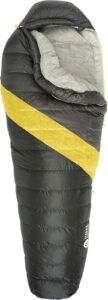
The Sierra Designs Nitro 0 is rated to 0 degrees with 800-fill hydrophobic down, a spacious footbox, mummy shape, and a packed size of 8 by 15 inches. 2 pounds 15 ounces.
A cold-weather performer without the brutal premium price. Hydrophobic down shrugs off dampness, which matters in the wet conditions that kill regular down insulation. The roomy footbox keeps claustrophobia away. Great for shoulder-season trips through the Uintas or cold nights at Flaming Gorge. Packs down tight. Weight is competitive with premium bags. Hydrophobic treatment adds meaningful wet-weather performance. Not as warm as the Phantom in true winter conditions. Mid-range price is still significant. But for the balance of warmth, packability, and moisture resistance, this is the sweet spot for serious three-season camping.
3. Kelty Cosmic Down 20 (Budget), Real Down Warmth at a Budget Price
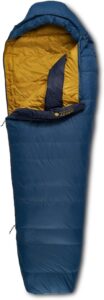
The Kelty Cosmic Down 20 is rated to 20 degrees with 600-fill duck down, mummy shape, and a packed size of 8 by 15 inches. 2 pounds 13 ounces.
A true classic for anyone starting out in backpacking. The Cosmic gives you real down warmth at a price that doesn’t sting. Heavier than premium bags, but the 20-degree comfort rating means reliable sleep in cooler temps without financial guilt. Mummy shape traps heat. Packed size is backpack-friendly. This is the bag I’d recommend to anyone who wants to try backcountry camping without investing in premium gear first. 600-fill duck down isn’t as lofty as 850-fill. Still loses warmth when wet. But for the price-to-warmth ratio, this is one of the best entry points into down sleeping bags.
4. Marmot Trestles Elite Eco 30 (Budget Synthetic), Wet-Weather Warmth From Recycled Materials
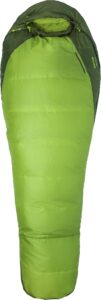
The Marmot Trestles Elite Eco 30 is rated to 30 degrees with recycled synthetic insulation, mummy shape, and a packed size of 9 by 19 inches. 3 pounds 6 ounces.
Rainy forecast? Go synthetic. This bag stays warm even when wet, which is something down can’t do. Made from recycled materials for anyone who cares about environmental impact. Perfect for humid, damp climates and shoulder-season trips where you can’t guarantee dry conditions. Heavier and bulkier than down at the same warmth rating. 30-degree rating limits it to three-season use. But for wet-weather reliability and the environmental angle, this fills a gap that down bags can’t.
5. Teton Sports Celsius XXL (Budget Car Camping), Flannel Comfort That Feels Like a Bed
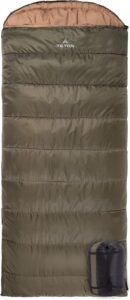
The Teton Sports Celsius XXL is rated from 0 to 20 degrees depending on model. Flannel lining. Semi-rectangular cut. 90 by 39 inches. 7 pounds.
If comfort is king, this is the throne. This bag feels like sleeping in a bed. Flannel lining is soft against skin. Semi-rectangular cut gives room to move, stretch, and actually sleep like a human instead of a mummy. At seven pounds, this is not backpacking gear. It’s car camping luxury. I use it for trips where I park Estes at camp and want to sleep like I’m at home. Flaming Gorge weekends. Kodachrome Basin nights. Any trip where weight is irrelevant and comfort is everything. Heavy. Bulky. Takes up serious space. But for car camping warmth and comfort, nothing else on this list comes close to how this bag feels.
6. MalloMe Sleeping Bag (Budget Entry), Affordable Warmth for Beginners
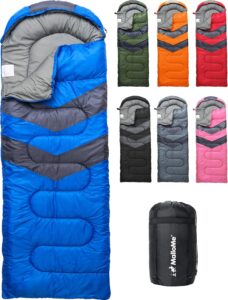
The MalloMe Sleeping Bag is rated from 40 to 77 degrees. Synthetic insulation. Rectangular shape. 86 by 29.5 inches. 4.2 pounds.
One of the most affordable bags that actually keeps you warm. Great for beginners, casual campers, festivals, or backyard sleepovers. Lightweight for its size. Easy to clean. Versatile. Not the lightest or smallest packed, and the 40-degree lower limit means this is warm-weather only. Rectangular shape loses heat compared to mummy bags. But for someone testing whether they enjoy camping before investing serious money, this removes the financial barrier. It gets the job done without fuss.
7. Coleman Brazos Cold-Weather Sleeping Bag (Budget Reliable), Fiberlock Construction Prevents Cold Spots
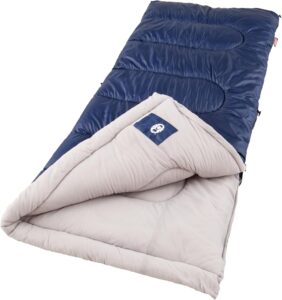
The Coleman Brazos Cold-Weather Sleeping Bag is rated to 20 degrees. Polyester insulation with Fiberlock construction. Rectangular shape. 75 by 33 inches. 5 pounds.
Rugged, budget-friendly, and designed for chilly nights. Coleman’s Fiberlock construction prevents insulation from shifting, so you don’t end up with cold spots mid-sleep. That consistency matters when you’re camping in the shoulder season and temps drop unexpectedly. A great starter bag for anyone who wants warmth without overthinking it. Machine washable. Thermolock draft tube blocks heat loss along the zipper. At five pounds, it’s heavy for anything beyond car camping. Rectangular shape isn’t as thermally efficient as mummy. But for budget reliability with no cold spots, this is proven gear.
8. Sea to Summit Spark 15 (Ultralight), Under Two Pounds With 15-Degree Warmth
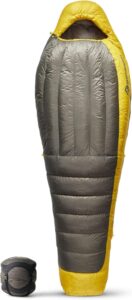
The Sea to Summit Spark 15 is rated to 15 degrees with 850-plus ultra-dry down, mummy shape, and a packed size of 5 by 10 inches. 1 pound 12 ounces.
Ultralight glory. Under two pounds and packs smaller than a water bottle, yet keeps you warm on frosty nights. 850-plus ultra-dry down resists moisture better than standard down. Mummy shape maximizes warmth-to-weight. Packed size of 5 by 10 inches is absurdly small. Ideal for thru-hikers and anyone who counts ounces. For long backcountry trips through the Sawtooths or multi-day pushes in Grand Staircase, this is the bag that disappears in your pack and delivers when temps drop. Premium price. Mummy shape is restrictive. Ultra-dry treatment helps but down still loses warmth when truly soaked. But for the lightest, most packable 15-degree bag, this is the gold standard.
How to Choose a Sleeping Bag
Temperature rating is the first decision. Buy rated 10 to 15 degrees below the coldest temps you expect. Down packs smaller and lighter but fails when wet. Synthetic is heavier but performs in damp conditions. For desert and mountain camping where conditions swing unpredictably, having both a down and a synthetic option covers you.
Shape matters for warmth and comfort. Mummy bags trap heat efficiently but feel restrictive. Rectangular bags give room to move but lose heat through extra space. Semi-rectangular splits the difference. Weight and packed size matter for backpacking. For car camping, prioritize comfort and warmth over packability.
Frequently Asked Questions
What’s the single best sleeping bag on this list?
Depends on your budget and use. For premium performance, the Mountain Hardwear Phantom 0. For mid-range value, the Sierra Designs Nitro 0. For budget backpacking, the Kelty Cosmic Down 20. For car camping comfort, the Teton Sports Celsius XXL. For ultralight, the Sea to Summit Spark 15.
Should I buy down or synthetic?
Down packs smaller, weighs less, and lasts longer. Synthetic stays warm when wet and costs less. If you camp in dry conditions and want lightweight performance, go down. If you camp in rain, humidity, or unpredictable weather, synthetic is the safer bet. The Marmot Trestles Eco is the best synthetic option on this list.
Can I use a three-season bag in winter?
Only if it’s rated well below the temps you’ll face. A 20-degree bag works for mild winter car camping. For real winter backcountry, you need a 0-degree or colder bag like the Phantom 0 or Nitro 0. Never trust a bag at its limit rating. That’s survival temperature, not comfort temperature.
Are any of these good for someone with sensory sensitivities?
Yes. The Teton Sports Celsius XXL has a flannel lining that feels soft and consistent against skin, with a semi-rectangular shape that doesn’t feel claustrophobic. The Coleman Brazos has a smooth polyester interior. Mummy bags feel restrictive for many people on the spectrum. If tight spaces bother you, go rectangular or semi-rectangular.
How do I store a sleeping bag to make it last?
Never store a sleeping bag compressed in its stuff sack. Compression crushes the insulation over time and reduces warmth. Store it loose in a large cotton or mesh storage sack, or hang it in a closet. Down bags need even more care since compressed down loses loft permanently. This one habit will add years to any bag on this list.
Sleep Well, Adventure Better
Good sleep makes everything else possible. After a long day shooting canyon light in Grand Staircase or grinding up Wheeler Peak in Great Basin, the quality of my night determines the quality of my next day. Every bag on this list has been chosen for real performance at its price point.
The best sleeping bag is the one that keeps you warm and comfortable every night. These do.
Support the Adventure
To make your walls less boring, check out my photography portfolio and bring a piece of the wild and my story into your home.
If you’d like to fuel future adventures, you can donate a coffee on Ko-Fi. Every cup keeps me chasing sunrises and stories.
When you shop using my affiliate links, every click helps support this blog at no extra cost to you. It’s a small way to keep Unicorn Adventure alive and kicking while I keep exploring.
Subscribe to my mailing list for future updates, new stories, and behind-the-scenes adventures.
Stay connected with me on Instagram and Facebook for more photos and daily inspiration.
Thanks for being part of the journey, Unicorn Squadron!

Theo Maynard is a landscape photographer and adventure blogger based in Salt Lake City. He chases remote desert and mountain light across the American West, documents it all solo, and shares the journey through Unicorn Adventure. He’s on the autism spectrum, and that’s not a footnote, it’s the whole story. He creates to inspire others to get outside, chase what lights them up, and live their best possible life. Unapologetically himself.