


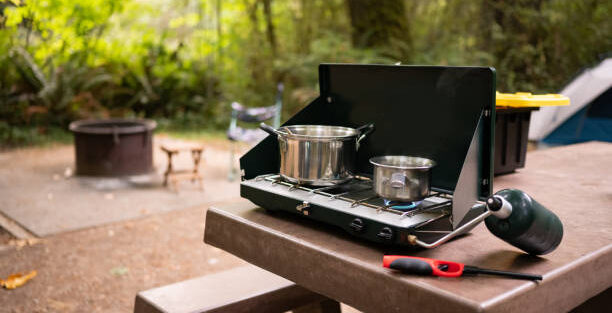
The Best Camping Stoves for Backpacking and Car Camping, Compared and Tested
A good stove is the difference between eating cold food and having a real meal at camp. I cook for myself on every trip, morning coffee before dawn shoots, hot dinners after full days on the trail, quick boils for freeze-dried meals at remote sites in Grand Staircase or the Sawtooths. The stove I carry determines whether cooking is a pleasure or a chore.
I’m also autistic. Complicated ignition systems, unpredictable flame behavior, and fussy fuel connections all create friction that compounds when I’m tired and hungry. I need stoves that light the same way every time, hold a consistent flame, and don’t require troubleshooting in the field.
These are the camping stoves I’d actually recommend. From ultralight backpacking to serious car camping cooking. Tested in real conditions. No gimmicks.
The Best Camping Stoves
1. Camp Chef Everest 2X, 20,000 BTU Per Burner for Serious Camp Cooking
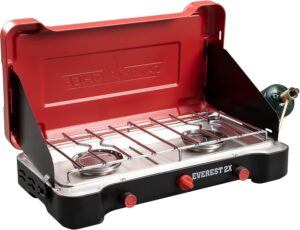
The Camp Chef Everest 2X puts out 20,000 BTUs per burner. Matchless ignition. Removable legs for tabletop use. Wind-resistant design. 12 pounds. Works with 16.4-ounce propane bottles.
Top pick for group camping. 20,000 BTUs per burner means serious cooking power. I boiled a quart of water in 4 minutes per burner. The cooking surface fits most pots and pans, even bigger ones. Wind-resistant design held up in tough weather during trips to Flaming Gorge and exposed sites in the Uintas. Matchless ignition fires every time. Removable legs switch between freestanding and tabletop use. Setup takes under 2 minutes. Legs fold flat and everything packs into the carrying case. At 12 pounds, this is car camping gear only. But for cooking real meals for a group, this is the most capable stove on this list.
2. Jetboil Genesis Basecamp, Modular System With Precision Simmer Control
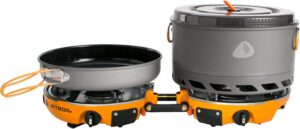
The Jetboil Genesis Basecamp delivers 10,000 BTUs per burner with excellent simmer control. Modular design connects multiple units. Adjustable legs. Piezo ignition. 9 pounds.
Great simmer control is what sets this apart. Boils a liter in 3.5 minutes but also dials down to a gentle simmer for eggs and sauces without burning. Modular design lets you connect additional units if you need more burners. Adjustable legs keep things stable on rough ground. Piezo ignition fired every time, even after heavy use. Wind resistance is excellent with built-in burner shields. Works down to 15 degrees. 9 pounds. At this weight, it’s lighter than most two-burner setups. Pots up to 10 inches fit easily. For anyone who wants to actually cook at camp, not just boil water, the simmer control here is the best I’ve tested.
3. MSR WindBurner, Enclosed Burner That Laughs at 25 MPH Wind
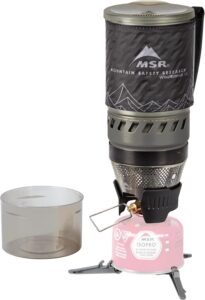
The MSR WindBurner thrives in wind with an enclosed radiant burner. 7,000 BTUs. Boils a liter in 4.5 minutes. Cookware locks onto the burner. 1 pound 5 ounces.
This stove was built for wind. I saw steady performance in winds over 25 mph where other stoves couldn’t keep a flame. The enclosed radiant burner technology is the reason. Cookware locks onto the burner and never disconnects, which matters on exposed ridgelines and windy desert sites. One 8-ounce canister produced about 22 boils. That’s solid for backcountry use through Grand Staircase or multi-day pushes in the Sawtooths. At 1 pound 5 ounces, the weight is reasonable for backpacking. Works with MSR cookware specifically. Not as versatile as open-burner stoves for varied pot sizes. But for windy conditions where other stoves fail, this is the one I trust.
4. Coleman Triton, Budget Two-Burner Reliability That Never Quits
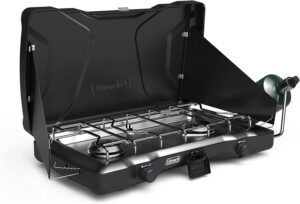
The Coleman Triton puts out 11,000 BTUs per burner. Matchless ignition. Adjustable controls. Removable drip tray. 11 pounds. Uses 16.4-ounce propane cylinders.
This is the stove I reach for on every car camping trip. Reliable. Simple. Affordable. Two burners heat quickly. I boil water in about 5 minutes consistently. Grates fit pots from 6 to 12 inches. Matchless ignition lights every time. The steel build holds up well, barely any wear after heavy use across dozens of trips. Setup is tool-free in under 3 minutes. Wind guards actually work, which is rare at this price. Removable drip tray makes cleanup easier. Chrome grate lifts out for washing. At 11 pounds, it’s car camping only. BTUs are lower than the Camp Chef Everest. But for dependable, no-drama cooking at a price that makes sense, the Triton is the stove I’ve used most over the years.
5. Camp Chef Explorer, 30,000 BTU Heavy-Duty Cooking Station
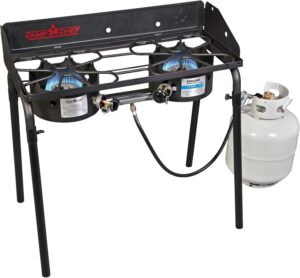
The Camp Chef Explorer puts out 30,000 BTUs per burner. Cast iron grates. Matchless ignition. Removable legs and side shelves. Uses bulk propane tanks. 27 pounds.
For serious outdoor cooks. 30,000 BTUs per burner handles restaurant-sized pots, wok cooking, and searing. I cooked large batches without any issues. The cast iron grates are heavy but distribute heat evenly. Enclosed burner design provides solid wind resistance. I used it in 15 mph winds with no problems. Removable legs and side shelves add workspace. Uses bulk propane tanks for extended trips. Carrying bag and modular setup help with transport. At 27 pounds, this is base camp and overlanding gear. Overkill for solo camping. But for groups, extended trips, or anyone who takes camp cooking seriously, this is the most powerful option on this list.
6. MSR PocketRocket 2, 2.6-Ounce Ultralight That Boils in 3.5 Minutes
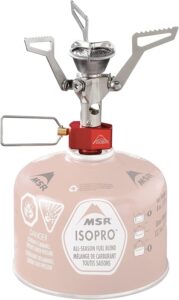
The MSR PocketRocket 2 weighs 2.6 ounces and puts out 8,200 BTUs. Folds to 2 by 2 by 3 inches. Piezo ignition. Works with isobutane canisters. Boils a liter in 3.5 minutes.
Ultralight perfection. At 2.6 ounces, I barely notice this stove exists in my pack. Folds to fit in my palm. Boils a liter in 3.5 minutes, which is fast for something this small. One 8-ounce canister produced over 60 boils. Performance stayed steady from sea level to 10,000 feet on trails like Wheeler Peak in Great Basin and Quandary Peak in Colorado. Pot supports are surprisingly stable for a stove this tiny. Piezo ignition works reliably. Needs a windscreen in breezy conditions since there’s no built-in wind protection. Not for cooking complex meals. This is a boil-water machine. But for morning coffee and freeze-dried dinners on backcountry trips where every ounce counts, nothing beats the PocketRocket.
How to Choose a Camping Stove
Start with how you camp. Car campers can carry two-burner propane stoves without worrying about weight. Backpackers need ultralight canister stoves where every ounce matters. Solo campers usually just need to boil water. Groups need multi-burner cooking power.
BTUs determine cooking speed. 8,000 to 12,000 handles basic boiling and simple meals. 12,000 to 20,000 covers most cooking needs. Above 20,000 is for serious camp cooking with large pots and groups. Wind resistance matters more than most people think. A stove that can’t hold a flame in a breeze wastes fuel and time. Simmer control determines whether you can cook real food or just boil water.
Frequently Asked Questions
What’s the single best camping stove on this list?
Depends on how you camp. For car camping reliability, the Coleman Triton. For group cooking power, the Camp Chef Everest 2X or Explorer. For wind performance, the MSR WindBurner. For ultralight backpacking, the MSR PocketRocket 2. For simmer control, the Jetboil Genesis.
What fuel type should I use?
Propane for car camping. Burns hot and steady in any temperature. Isobutane for backpacking. Lighter than propane with decent cold-weather performance. Butane is cheapest but fails below freezing. Most backpacking stoves use isobutane canisters. Most car camping stoves use 16.4-ounce propane bottles or bulk tanks.
How much BTU do I actually need?
For boiling water and simple meals, 8,000 to 12,000 BTUs per burner. For cooking for two to four people, 12,000 to 20,000. For large groups or serious cooking, 20,000 to 30,000. More BTUs means faster cooking but also faster fuel consumption. Match the output to your actual cooking needs.
Do I need wind protection on my stove?
Yes. Open-burner stoves lose up to 30 percent of their efficiency in wind. The MSR WindBurner has built-in wind protection. The Camp Chef models have wind guards. The PocketRocket needs a separate windscreen. If you camp in exposed sites like I do in Grand Staircase and the Uintas, wind resistance is not optional.
Are any of these good for someone with sensory sensitivities?
Yes. The Coleman Triton and Camp Chef Everest both have predictable, consistent ignition that fires every time. No surprises. The MSR PocketRocket has a reliable piezo ignition with simple operation. Stoves with complicated multi-step ignition or inconsistent flame behavior create unnecessary stress. Stick with matchless ignition systems that work the same way every time.
Good Cooking Makes Every Trip Better
Hot coffee at dawn. A real dinner after a long day. A quick boil for freeze-dried meals at a remote camp. The right stove makes all of that happen reliably, trip after trip. Every stove on this list has been tested in real conditions across the American West.
The best camping stove is the one that lights every time and cooks every meal. These do.
Support the Adventure
To make your walls less boring, check out my photography portfolio and bring a piece of the wild and my story into your home.
If you’d like to fuel future adventures, you can donate a coffee on Ko-Fi. Every cup keeps me chasing sunrises and stories.
When you shop using my affiliate links, every click helps support this blog at no extra cost to you. It’s a small way to keep Unicorn Adventure alive and kicking while I keep exploring.
Subscribe to my mailing list for future updates, new stories, and behind-the-scenes adventures.
Stay connected with me on Instagram and Facebook for more photos and daily inspiration.
Thanks for being part of the journey, Unicorn Squadron!

Theo Maynard is a landscape photographer and adventure blogger based in Salt Lake City. He chases remote desert and mountain light across the American West, documents it all solo, and shares the journey through Unicorn Adventure. He’s on the autism spectrum, and that’s not a footnote, it’s the whole story. He creates to inspire others to get outside, chase what lights them up, and live their best possible life. Unapologetically himself.