


The Best Hiking Gifts Under $50 That Actually Earn a Spot in the Pack
I’m picky about what goes in my pack. Every ounce is a decision. When I’m heading out to the Lofty Lake Loop in the Uintas, or pushing through the 13-mile Amethyst Lake route, or doing the Grinnell Glacier approach in Glacier National Park, the gear I’m carrying had to pass a real test to earn its spot.
These are the hiking gifts under $50 that I’d actually give to someone who hikes seriously. No novelty items. No gear that sounds useful until you try to use it. Just honest picks that work.
The Best Hiking Gifts Under $50
1. LifeStraw Personal Water Filter, The One That Lives in Every Pack
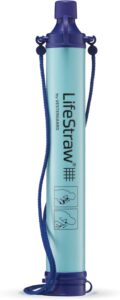
The LifeStraw weighs 2 ounces. Removes 99.999999% of bacteria and parasites. No batteries. No setup. Filters up to 4,000 liters before replacement. Stick it in water and drink.
Under $20. This is the gift that changes how someone hikes. Once you have a backup water filter in your pack, you stop worrying about running dry on a long route with uncertain water sources. On desert trails where water carries need to be planned carefully, having the LifeStraw as insurance changes the risk profile of the whole trip. Carry one on every trip. Give them to every hiker you know.
2. LHKNL Ultra-Light LED Headlamp, Best Budget Trail Light
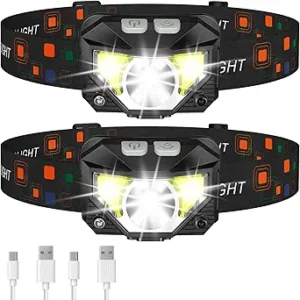
The LHKNL Ultra-Light LED Headlamp is a two-pack at 1.87 ounces per headlamp, eight lighting modes, rechargeable, waterproof, with a wave-activated sensor.
Two headlamps for one gift. Keep one in the trail pack and one in the car. The eight lighting modes include red for night vision preservation around camp. The wave sensor is genuinely useful when hands are wet or muddy. At this price for two units, this is the gift for every hiker who doesn’t already have a solid headlamp. Battery life is solid for weekend use.
3. TrailBuddy Trekking Poles, Best Budget Poles
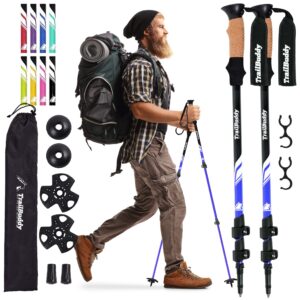
The TrailBuddy Trekking Poles are lightweight, adjustable, cork-grip, and come with tips for multiple terrain types. Under $50.
Trekking poles reduce knee impact on descents, improve stability on loose terrain, and provide meaningful energy savings on long ascents. The Ben Lomond Peak trail near Salt Lake City is 14.9 miles and 3,618 feet of gain. The Sawtooth Lake approach in Idaho is 10 miles and 1,873 feet. On either of those, poles on the descent make a real difference in how your knees feel the next day. For any hiker doing significant elevation gain, poles pay back quickly.
4. Mregb Solar Power Bank, Best Budget Off-Grid Charging
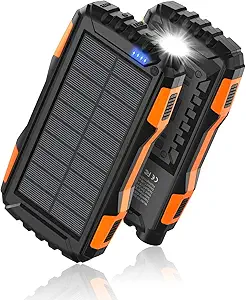
The Mregb Solar Power Bank holds 42,800mAh with a bright flashlight and rugged build that handles drops on rocky terrain. IP67 waterproof.
Be clear about the solar limitation: the panel charges very slowly and should be treated as emergency trickle input, not primary charging. Pre-charge fully at home before any trip. The large capacity and physical durability are the real selling points. For someone doing multi-day trips where wall charging isn’t an option, this keeps devices alive. The flashlight is legitimately bright and adds genuine utility.
6. Adventure Medical Kits Ultralight .7, Best First Aid Gift
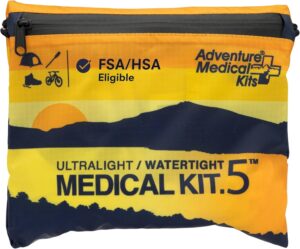
A dedicated trail first aid kit is gear that most hikers push off buying until they need it. At under $50, the Adventure Medical Kits Ultralight .7 covers common trail injuries for two people on a day trip: blisters, cuts, sprains, and minor wound care, organized by injury type with a wilderness first aid reference guide. Give this to anyone who hikes without a kit. That’s more people than you’d think.
What Makes a Hiking Gift Actually Good
It has to be light enough to carry. Hikers don’t use gifts that stay in the car. It has to solve a real problem on the trail. And it has to be durable enough to handle the conditions. A fragile gadget that works perfectly on a suburban trail and fails on anything technical is not a hiking gift. It’s a parking lot gift.
Every item on this list earns its weight. None of them require batteries that will die at the worst moment. None add meaningful bulk to a loaded pack. All of them address something real.
The Trails Are Worth Preparing For
The trails I hike are the ones I plan my year around. The Wind Cave Trail outside Logan, Utah. The Four Lake Loop in Rocky Mountain National Park. The Dunraven Pass to Mount Washburn route in Yellowstone. Preparation is what makes those trips possible and safe and worth doing again.
The right gear, even the small pieces under $50, is part of that preparation. Give gifts that respect the trail.
Support the Adventure
To make your walls less boring, check out my photography portfolio and bring a piece of the wild and my story into your home.
If you’d like to fuel future adventures, you can donate a coffee on Ko-Fi. Every cup keeps me chasing sunrises and stories.
When you shop using my affiliate links, every click helps support this blog at no extra cost to you. It’s a small way to keep Unicorn Adventure alive and kicking while I keep exploring.
Subscribe to my mailing list for future updates, new stories, and behind-the-scenes adventures.
Stay connected with me on Instagram and Facebook for more photos and daily inspiration.
Thanks for being part of the journey, Unicorn Squadron!

Theo Maynard is a landscape photographer and adventure blogger based in Salt Lake City. He chases remote desert and mountain light across the American West, documents it all solo, and shares the journey through Unicorn Adventure. He’s on the autism spectrum, and that’s not a footnote, it’s the whole story. He creates to inspire others to get outside, chase what lights them up, and live their best possible life. Unapologetically himself.