


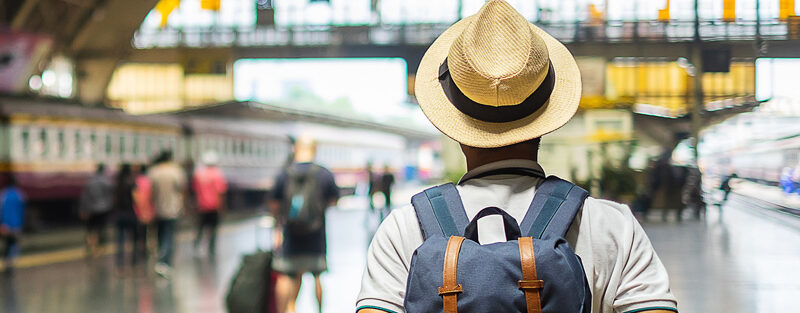
Travel Gear for Autistic Adults That Actually Works (From Someone Who Uses It)
I fly alone. I drive alone. I navigate airports, rental car lines, and hotel check-ins without anyone to buffer the experience. I’m autistic, and travel is something I’ve had to learn to engineer rather than just endure.
Airports are genuinely overwhelming. The combination of unpredictable noise, changing visual fields, PA announcements at random intervals, fluorescent lighting, crowd density, and the underlying anxiety of time-sensitive logistics is a lot. Even when I’m headed somewhere I’m excited about, the process of getting there can leave me depleted before the trip has started.
The right gear changes that equation. Not by eliminating the challenge. By reducing the sensory load enough that I have bandwidth left for the actual trip. These are the tools I use and trust.
The Best Travel Gear for Autistic Adults
1. Soundcore Q20i Noise Cancelling Headphones, The Most Important Item in the Bag
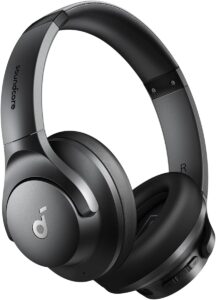
The Soundcore Q20i Noise Cancelling Headphones block up to 90% of ambient noise. The 40-hour battery life means I don’t think about charging them mid-trip. Transparency mode lets gate announcements through without removing the headphones. That’s the feature I use constantly in airports.
Engine drone on a flight is a continuous low-frequency input that builds into real fatigue over two or three hours. Cutting it by 90% is not a subtle improvement. It’s the difference between arriving depleted and arriving functional. The app lets me custom-tune the EQ to reduce specific frequencies that bother me most. For any autistic traveler, noise-cancelling headphones are not a comfort upgrade. They’re a functional requirement.
2. ProCase Noise Reduction Ear Muffs, Best for Acute Sensory Overload
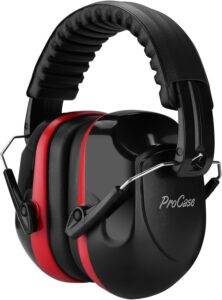
The ProCase Noise Reduction Ear Muffs deliver NRR 28dB passive noise reduction with no battery required. The Soundcore headphones handle everyday airport noise. The ProCase handles acute situations: a crowded boarding gate, a busy baggage claim, a moment where I need more reduction than any electronic system provides.
Stretch them over a box overnight before your first trip to open the headband. They’re tight out of the box and that tightness becomes uncomfortable over time. After the break-in period they’re fine for 30 to 60-minute intervals. I carry both. Headphones for sustained use, ear muffs for acute overload moments. They serve different purposes.
3. Mr. Pen Spiky Sensory Rings, Best Discreet Stim Tool
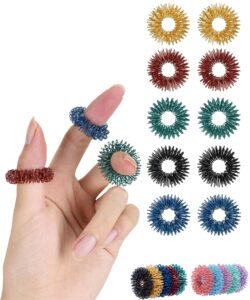
The Mr. Pen Spiky Sensory Rings are stainless steel, pocket-sized, and invisible in use. Roll one up and down a finger under a table at a gate and nobody notices. The spiky texture is firm enough to provide real sensory input without causing discomfort.
The pack of ten means I can keep them in every bag, every jacket pocket, and my wallet. The small size is also their only weakness: they can come apart at the seam under heavy use, though they snap back together. For the price, having ten means losing one or two is irrelevant. These go everywhere with me.
4. KLT Sensory Worry Stones, Best for Waiting Anxiety
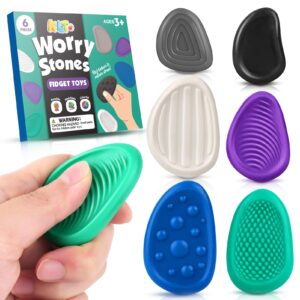
The KLT Sensory Worry Stones are quiet, compact, and varied in texture. The set of six means different options for different sensory needs. Bumpy textures for high-anxiety moments. Smoother options for general restlessness. Small enough to hold in a closed fist without anyone noticing.
The slight flexibility took me by surprise. I expected something rigid. The give is actually useful for sustained fidgeting because my fingers don’t fatigue as fast. Security checkpoints and gate waiting are where these see the most use. The silent operation is the key feature. A clicking or rattling fidget tool in a quiet terminal draws attention I don’t want.
5. Cevioce Magnetic Rings Fidget Set, Best Motion-Based Stim
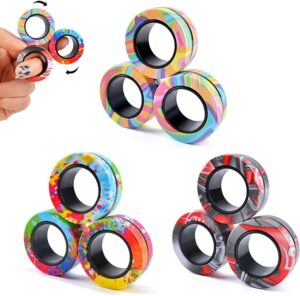
The Cevioce Magnetic Rings Fidget Toy Set provide movement-based sensory input. The magnets attract and repel in ways that require light concentration to navigate, which gives the hands and the brain something low-stakes to do simultaneously. Compact enough for a jacket pocket.
The lighter magnets mean they can slip apart and scatter. That’s annoying on a plane. Know this going in and manage accordingly. For a waiting room or a long drive, they’re genuinely useful. For confined spaces where dropping them creates problems, the sensory rings or worry stones are more practical.
How to Build a Travel Kit That Manages Sensory Load
Layer Your Noise Management
Noise-cancelling headphones for sustained background noise. Passive ear muffs for acute overload. A travel playlist or ambient sound loaded offline so you’re not dependent on wifi or data for audio input that keeps the auditory system occupied with something neutral. These three elements in combination handle most airport and transit sound scenarios.
Carry Redundant Stim Tools
Different situations call for different tools. Pack at least three different options. Something for the hands when seated. Something discreet enough for use in a crowd. Something that provides pressure or proprioceptive input for higher-anxiety moments. A single fidget toy that gets lost or left behind ends your sensory support for the rest of the trip.
Build a Pre-Boarding Routine
I board last whenever possible. Sitting in a boarding queue surrounded by people for 20 minutes before a flight is a significant sensory load with no purpose. Wait until the queue clears, then board. You get the same seat. You get there without the extra input.
I identify the quietest corner of every terminal I pass through. The gate furthest from the food court. The corridor away from the main flow. Airports have genuinely quiet spaces if you look for them. I sit there between connections instead of in the main terminal.
Know Your Recovery Window
Extended travel depletes me even with all of the above. I build in recovery time before any activity I care about on the trip. If I’m driving to Moab from a flight, I stop somewhere quiet for an hour before pushing into the backcountry. The trip is better for it. Arriving tired and depleted and immediately trying to navigate unfamiliar terrain is the setup for a bad experience.
Frequently Asked Questions
Are noise-cancelling headphones worth it for autistic travelers?
Yes. This is the single highest-impact item on the list. The Soundcore Q20i is a solid entry point. If budget allows, Sony XM5 or Bose QuietComfort 45 provide stronger noise cancellation. The investment pays back on the first flight.
Should I disclose autism when flying?
Personal decision. TSA has a Disability Notification Card program that lets you communicate needs to officers without verbal explanation. Some airports have sensory rooms or quiet areas designated for travelers who need them. Not every airport, not every country. Research specific airports before a trip.
What if sensory tools get flagged at TSA?
Fidget tools and sensory items are permitted in carry-ons. Ear muffs are permitted. Noise-cancelling headphones are permitted. If something raises a question, explain it calmly and briefly. Most TSA officers have seen everything and are not looking for a reason to create a problem.
Travel Is Worth Engineering Properly
The places I go are worth the trip. Wheeler Peak in Great Basin National Park. Glacier National Park in late summer. The Sawtooths in Idaho. None of those places are accessible without travel. Getting there in one piece, with functional bandwidth remaining when I arrive, requires the right kit.
Being autistic doesn’t mean travel is off the table. It means travel requires more preparation. These tools are part of that preparation. They work. I use them.
Support the Adventure
To make your walls less boring, check out my photography portfolio and bring a piece of the wild and my story into your home.
If you’d like to fuel future adventures, you can donate a coffee on Ko-Fi. Every cup keeps me chasing sunrises and stories.
When you shop using my affiliate links, every click helps support this blog at no extra cost to you. It’s a small way to keep Unicorn Adventure alive and kicking while I keep exploring.
Subscribe to my mailing list for future updates, new stories, and behind-the-scenes adventures.
Stay connected with me on Instagram and Facebook for more photos and daily inspiration.
Thanks for being part of the journey, Unicorn Squadron!

Theo Maynard is a landscape photographer and adventure blogger based in Salt Lake City. He chases remote desert and mountain light across the American West, documents it all solo, and shares the journey through Unicorn Adventure. He’s on the autism spectrum, and that’s not a footnote, it’s the whole story. He creates to inspire others to get outside, chase what lights them up, and live their best possible life. Unapologetically himself.