


The Best Off-Road Winches for Solo Overlanders (What Goes on Estes When the Trail Gets Ugly)
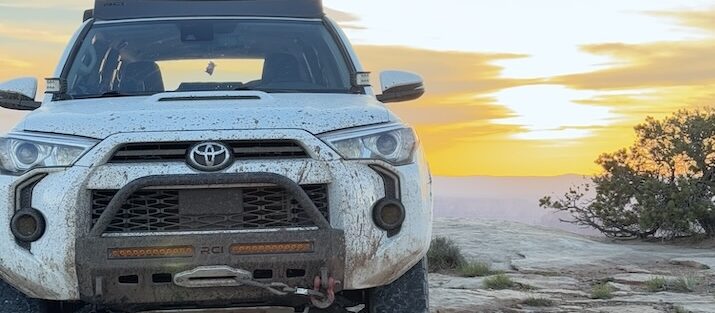
The Long Canyon OHV Route outside Moab is not a casual drive. Top to bottom it drops through narrow sandstone corridors, loose decomposed rock, and off-camber shelf road where a wrong line puts a rear tire over nothing. I run it solo. I run most things solo.
That calculus changes the moment you get stuck. No buddy vehicle. No one to pull from the front while you push from behind. No one to run a strap. If Estes goes off the edge of a ledge or buries a front axle in a sandwash on Mineral Bottom Road, the winch on the front bumper is the entire recovery plan.
A winch for solo overlanding isn’t theoretical gear. It’s the answer to a very specific question: when I’m stuck, alone, miles from the nearest paved road, what gets me out? This post covers the best off-road winches on the market, what makes each one worth considering, and how to think about the decision if you’re running remote terrain without a safety net.
The Best Off-Road Winches, Ranked
1. WARN VR EVO 10-S, Best All-Around Pick for 4Runners and Mid-Size SUVs
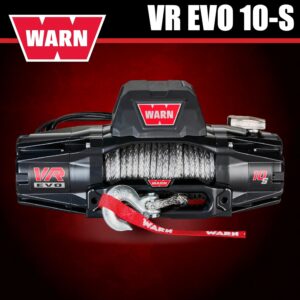
The WARN VR EVO 10-S is where I’d start for any serious overlanding rig. 10,000 lb pull rating, IP68 waterproof construction, series-wound motor with a planetary gear train for fast line speed under load and low amp draw. Synthetic rope option. Both corded and wireless remotes included.
WARN built its reputation on real-world recovery performance over decades of use in exactly the kind of terrain I run through. The VR EVO 10-S sits at the top of their value lineup and delivers the core WARN reliability without the Zeon price tag. For a 4Runner loaded with camera gear, camping equipment, and recovery kit, the 10,000 lb rating gives genuine margin on the toughest pulls.
The IP68 rating matters specifically for desert running. Sandwash crossings, flash flood mudflows, creek crossings on routes like Onion Creek outside Moab. A winch that fails when wet is worse than no winch. WARN sealed this one properly.
2. Smittybilt X20, Best Value Synthetic Rope Winch
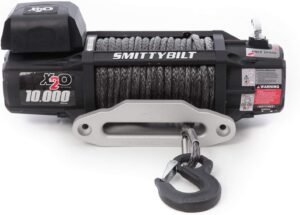
The Smittybilt X20 covers 9,500 to 10,000 lb pull ratings with forged gears, water and dust resistance, and a synthetic rope that reduces fairlead wear and bumper damage compared to steel cable. For regular off-road use where the budget matters, the X20 delivers.
The forged gears are the real differentiator at this price point. Cast gears are cheaper and weaker. Under the repeated stress of a serious recovery, on a steep OHV shelf road or pulling a rig out of a sandwash, forged gears handle load cycling without the same failure risk. Smittybilt gets the fundamentals right on the X20.
Water and dust resistance is solid but not IP68. Fine for most desert use. If you’re doing serious water crossings regularly, step up to the WARN or the Zeon. For the majority of OHV and backcountry driving, the X20 performs above its price.
3. Badland Apex 12,000 lb, Best Budget Option
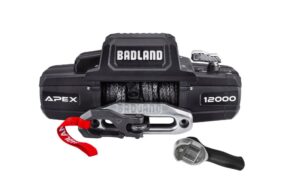
The Badland Apex 12,000 lb is the honest budget pick. Synthetic rope, wireless remote, series-wound motor, 12,000 lb rating. Harbor Freight builds this one, which comes with the predictable trade-off: real performance for most recovery tasks, but not the longevity or duty cycle of WARN or Smittybilt premium lines.
For a rig that goes out occasionally on established OHV routes like the Hurrah Pass run from Moab or the Four Peaks OHV Road in Arizona, the Apex covers the realistic use cases. If you’re doing frequent technical runs solo in remote terrain with no cell service and no backup vehicle, invest in better. But for entry-level overlanding with occasional recovery needs, the Apex works.
The 12,000 lb rating on a mid-size SUV gives real margin. Line speed under load is steady. The wireless remote functions as advertised. Know what you’re buying and it won’t disappoint.
4. WARN M8, Best for Tight Bumper Fitment
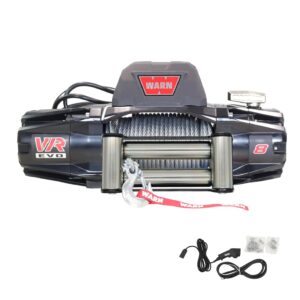
The WARN M8 rates at 8,000 pounds with a low-profile design and a separate control box that fits tight bumper mounts and custom setups where a full-size winch won’t clear. Cone brake holds the full rated load. Simple maintenance. Common parts.
The 8,000 lb rating covers most Jeeps, mid-size trucks, and SUVs for typical recovery loads on standard OHV routes. If your bumper has a specific fitment requirement or you’re running a lighter platform, the M8’s compact footprint solves the packaging problem that stops bigger winches from mounting cleanly. WARN’s field serviceability is the other argument for it. Parts are common. You can service it at a trailhead without proprietary tools.
Not the winch for a loaded 4Runner on technical solo routes. Right-sized for lighter rigs and shorter trips where you want proven WARN reliability in a smaller package.
5. Warn Zeon 12-S, Best Premium Winch for Heavy Rigs and Hard Use
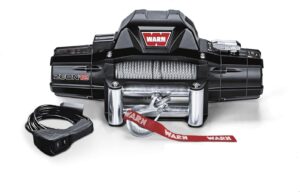
The Warn Zeon 12-S is the serious tool for serious use. 12,000 lb pull, quiet planetary gear train, synthetic rope option, powder-coated finish, stainless fasteners for corrosion resistance. Eighty feet of rope on some configurations for real reach on complex recoveries.
The quiet planetary gear train is not just a comfort feature. Gear noise under load is often an early indicator of wear and heat buildup. The Zeon runs smooth and quiet because the engineering tolerances are tighter. That translates to longer duty cycles and a winch that holds up through repeated recoveries without overheating.
For anyone running technical OHV routes solo in genuinely remote terrain, like the White Rim Road in Canyonlands, the Shafer Trail descent, or the Gemini Bridges area, the Zeon 12-S is the winch to run. It’s the one where the answer to ‘will it get me out?’ is never in question.
6. VEVOR 12,000 lb Electric Winch, Best for Occasional Heavy Use
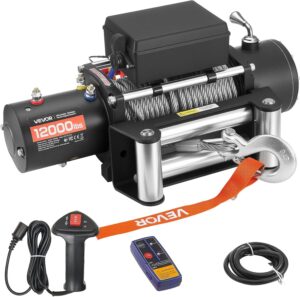
The VEVOR 12,000 lb Electric Winch runs a 12V motor and a 3-stage planetary gear set with an 85-foot steel cable and wireless remote. Weather-resistant housing. 12,000 lb rating with steady pull behavior under load.
Steel cable on this one versus synthetic on most others at the price point. Steel handles abrasion better on rocky terrain where the line drags across sandstone edges or loose shale, which is genuinely common on Utah desert routes. The trade-off is weight and the higher energy storage if the line snaps. Use a cable dampener every time.
For a rig that goes out a few times a year on established routes and wants solid performance without premium pricing, the VEVOR delivers. Not built for the frequency of use a serious expedition overlander demands, but honest about what it is.
7. OPENROAD Heavy-Duty Winch, Best High-Capacity Budget Option
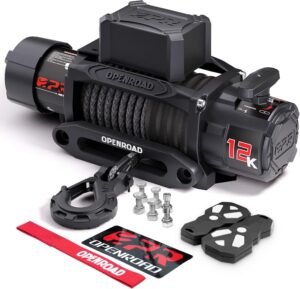
The OPENROAD Heavy-Duty Winch reaches up to 13,500 lb capacity with synthetic rope, sealed motor, and weatherproof housing. The synthetic line and high rating make it competitive for heavier trucks and trailers at a price point below the WARN Zeon.
The 13,500 lb rating gives genuine margin on a heavy truck or a loaded trailer recovery. Synthetic rope keeps handling safe and reduces snapback energy. The sealed housing performs in wet conditions. For a heavier vehicle platform where the WARN VR EVO 10-S doesn’t provide enough rated capacity, the OPENROAD fills the gap at a reasonable price.
Build quality is solid for the price but not in the same tier as WARN or ARB. For occasional use on harder terrain or as a primary winch on a budget build, it earns its spot.
Why a Winch Is Non-Negotiable for Solo Off-Roading
The Solo Recovery Problem
Group off-roading has a built-in safety net. Someone has a strap. Someone has traction boards. Someone can pull from the front while you spin the rears. When something goes seriously wrong on technical terrain, there are options.
Solo adventure eliminates every one of those options. No buddy vehicle. No one to pull a strap. No one to spot your line from outside the rig. The winch becomes the answer to every recovery scenario that traction boards, lockers, and good line choice can’t solve.
I’ve done Hurrah Pass, Mineral Bottom, Long Canyon OHV, Eye of the Whale, and Gemini Bridges all without a trail partner. Each one of those routes has sections where a mistake puts you in a situation that requires a winch or a helicopter. There’s no middle option. The winch on the front bumper is the entire recovery infrastructure.
The Terrain That Makes It Real
Utah desert OHV terrain has specific characteristics that elevate recovery risk. Loose sandstone that holds weight until it doesn’t. Steep shelf roads with exposure on the downhill side. Sandy washes that swallow tires without warning. Off-camber crossings where one wrong wheel placement rolls a vehicle. These aren’t hypothetical scenarios. They’re described in every detailed trip report for the routes I run.
The Shafer Trail descent in Canyonlands drops nearly 1,400 feet in a few miles on shelf road cut into sandstone cliff faces. Kane Springs Road outside Moab crosses sandy washes at speed. The Burr Trail through Grand Staircase has sections of loose fill on steep grades. On any of these routes, a winch is the difference between a recoverable mistake and a totaled vehicle.
Winch or Recovery Kit: You Need Both
A winch without an anchor point is useless. Most recovery situations require a tree strap, a deadman anchor, or a second vehicle as an anchor. Carry a full recovery kit including a snatch block, rated shackles, a tree trunk protector, a kinetic recovery rope, and traction boards alongside the winch. The winch is the muscle. The recovery kit is the rigging. You need both.
A snatch block doubles the pulling force by running a double-line pull, which halves the load on the winch and increases mechanical advantage. On a serious stuck situation, the difference between 10,000 lb of single-line pull and the equivalent of 20,000 lb of double-line pull can be the difference between getting out and not.
How to Choose the Right Off-Road Winch for Your Rig
Rated Capacity: The 1.5x Rule
The standard formula is 1.5 times the gross vehicle weight. A 4Runner loaded to 5,500 lb needs at least an 8,250 lb winch. In practice, buy the next step up. A 10,000 lb winch on a 5,500 lb rig gives you real working margin for adverse angles, deep mud, or any condition that multiplies the effective load beyond the vehicle’s static weight. Most production winches are rated at single-layer line pull, which is the strongest wrap. As the drum fills and the rope layers up, the effective pull decreases. Rated capacity is the best-case number, not the typical working load.
Synthetic Rope vs. Steel Cable
Synthetic rope is lighter, easier to handle, stores less energy when it breaks, floats in water, and doesn’t develop the wire splinters that steel cable does over time. It requires more care: keep it clean, inspect for abrasion damage after every use, protect it from UV exposure in storage, and never run it over a sharp metal edge without a fairlead roller or protective sleeve.
Steel cable handles abrasion and heat better. It’s the right call for terrain with a lot of sharp rock contact where the line drags across surfaces. Heavier, harder to handle, and more dangerous on failure because stored energy is higher. Both are proven. Synthetic is the better default for desert overlanding where the line is unlikely to drag across continuous sharp rock.
Motor Type: Series-Wound vs. Permanent Magnet
Series-wound motors produce more torque, handle heat from repeated use better, and pull faster under load. They’re the right choice for technical recovery where duty cycle matters. Permanent magnet motors are lighter and cheaper but overheat faster under sustained load and lose performance in cold temperatures. For a winch that gets used seriously and not just as a parking lot demonstration, series-wound is the correct answer. All the premium units on this list use series-wound or equivalent planetary gear configurations.
Remote Control: Wired and Wireless
You want both. The wired remote is the reliable backup that functions regardless of battery state or signal interference. The wireless remote lets you position yourself with a clear view of the recovery situation without standing in line with the rope, which is where you don’t want to be if the line or a rigging component fails. WARN includes both on the VR EVO 10-S. Verify both are included before buying any winch. A wireless-only remote with no backup is a problem waiting to find the wrong moment.
IP Rating and Weather Sealing
IP68 is the standard to look for if you do serious water crossings or run in consistently wet conditions. Lower ratings handle dust and light splashing but not full immersion. For desert overlanding where the primary exposure is dust, sand, and occasional sandwash water, most of the units on this list provide adequate protection. If your routes include genuine deep-water crossings, verify IP68 specifically. The WARN VR EVO 10-S is rated for it. The Zeon is built to the same standard.
Keeping Your Winch Ready When It Counts
Inspect Before Every Trip
Unspool the first 20 feet of rope and inspect it for fraying, cuts, or abrasion damage before any serious OHV trip. With synthetic rope, soft spots indicate internal fiber damage that isn’t visible from the surface. Replace damaged line immediately. A winch with a compromised rope is not a recovery tool. It’s a liability.
Check the fairlead for burrs or sharp edges that will accelerate rope wear. Inspect electrical connections and verify the solenoid engages cleanly in both directions. Test the remote. A remote with a dying battery that you discover when you’re stuck in a sandwash is exactly the kind of preventable failure that turns a recoverable situation into a bad one.
Clean After Every Use
Desert sand and grit are abrasive on all winch components. Wipe down the drum, fairlead, and rope after every OHV trip. For synthetic rope, hand-wash with mild soap and water to remove embedded grit that damages fibers under tension. Let it dry completely before spooling back up. Mud left in the drum corrodes steel components and abrades synthetic fibers over time.
Re-Spool Under Tension
A loosely spooled synthetic rope will embed itself under tension on the next hard pull and can bind the drum or damage the rope. After any recovery use, re-spool the rope under light tension with someone walking the line out in front of the vehicle while you winch it back in slowly. Even tension, no crossing layers, no loose sections. A properly spooled winch pulls cleanly. A sloppily spooled one birdnests under load at the worst possible time.
Service the Solenoid
The solenoid pack is the most common failure point on electric winches. Inspect terminals for corrosion every few months. Clean with electrical contact cleaner. Loose or corroded solenoid terminals cause voltage drop that reduces motor performance and can cause erratic behavior under load. Replace the solenoid pack at the first sign of intermittent operation. This is a $30 to $80 part on most winches and it’s the difference between a winch that works when you need it and one that doesn’t.
How to Winch Safely When You’re Alone
Anchor Selection Is Everything
The anchor point carries the full load of the recovery. A dead tree, a rock with a flat face that the strap can slide off, or a questionable rock formation is not a reliable anchor. Use a living tree with a trunk protector rated above your winch capacity. Use a rated deadman anchor buried in the ground. Use the rated D-rings on a second vehicle if one is available. Never improvise with hardware not rated for the load.
Clear the Line
Nobody stands in line with the rope during a winch pull. Ever. If the synthetic rope fails under tension, it drops to the ground. If a shackle fails, it becomes a projectile. If a rigging component fails at any point in the system, the energy has to go somewhere. That somewhere should not be a person. Set the winch in motion, step to the side and back, and let the recovery run.
Throw a recovery blanket or a heavy jacket over the middle of the line to dampen recoil if anything fails. This is standard practice. Make it a reflex.
Pull Steady, Not Hard
Shock loading a winch is the fastest way to break something in the rigging or the winch itself. Start the pull slowly, let the rope come to tension smoothly, then maintain steady pulling pressure. If the vehicle doesn’t move, stop and reassess the anchor, the line angle, and whether a snatch block double-line configuration gives you enough mechanical advantage. Hammering the winch against a stuck vehicle at full power with no movement is how motors overheat and ropes fail.
Let the Motor Cool
Series-wound motors generate significant heat on long or repeated pulls. If a recovery requires more than 30 to 45 seconds of continuous winching, stop and let the motor cool for several minutes before continuing. Running a hot motor to failure in the middle of a recovery leaves you in a worse position than you started. Patience on the cool-down is part of the technique.
Frequently Asked Questions
What winch do you recommend for a stock 4Runner used for overlanding?
The WARN VR EVO 10-S at 10,000 lb. It fits most 4Runner bumpers, the 10,000 lb rating gives real working margin on a loaded 4Runner, the IP68 sealing handles desert and water crossing conditions, and WARN’s reliability track record across decades of field use is the benchmark. The Smittybilt X20 is the value alternative that performs well at a lower price.
How do I anchor a winch when there are no trees?
In desert terrain, trees are often not an option. Carry a deadman anchor: a buried plate, a spare tire, or a dedicated ground anchor device rated above your winch capacity. Rock anchors work if the rock is solid, large, and has a geometry that keeps the strap from slipping. A second vehicle is the most reliable anchor if one is available. In genuinely treeless terrain like the open desert flats of the San Rafael Swell or the Escalante plateau, a ground anchor is essential recovery equipment.
Is a 10,000 lb winch enough for a mid-size SUV?
For most recovery scenarios on a loaded mid-size SUV, yes. Apply the 1.5x gross weight formula, add margin for adverse angles and deep mud, and a 10,000 lb winch on a 5,500 lb rig gives you genuine working capacity. For the most extreme stuck situations or for towing recovery of a second vehicle, run the double-line snatch block configuration for effective doubled pull capacity.
Synthetic rope or steel cable for winch?
Synthetic rope for most desert use. The terrain on Utah OHV routes involves loose sandstone, sandy washes, and exposed shelf roads where the primary risk is getting stuck or going off-edge, not repeated abrasion of the line across sharp rock surfaces. Synthetic handles those recoveries with less weight, better safety on failure, and no risk of wire splinters in your hands. If you run routes with a lot of sharp rock ledge contact on the line, steel cable’s abrasion resistance becomes relevant.
What recovery gear do I need alongside a winch?
Snatch block and two rated shackles minimum. Add a tree trunk protector, a kinetic recovery rope for snatch recoveries between vehicles, traction boards for soft surface traction, a hi-lift jack for lifting a buried or high-centered vehicle, and a recovery blanket for the winch line. A winch without proper rigging is half a recovery system. Carry the complete kit.
The Best Off-Road Winch Is the One You Trust Completely
I run OHV routes in the American West that don’t have cell service, don’t have regular traffic, and don’t have quick rescue access. Onion Creek. Long Canyon top to bottom. Mineral Bottom. The Burr Trail. Shafer descent. These routes reward good vehicle prep and punish the gaps in it.
The best off-road winch for solo overlanding is the one you’ve mounted properly, tested before you need it, maintained consistently, and know how to run. It’s not the one with the most impressive spec sheet. It’s the one that pulls you out when the terrain takes everything you have and then asks for more.
Choose based on your rig weight, your terrain, and the frequency of your use. For most 4Runner and mid-size SUV overlanders running technical Western terrain, the WARN VR EVO 10-S is the answer. For heavy rigs and maximum reliability, the Zeon 12-S. For budget entry on established routes, the Smittybilt X20 or the Badland Apex.
Mount it. Test it. Learn to use it before you need to.
Support the Adventure
To make your walls less boring, check out my photography portfolio and bring a piece of the wild and my story into your home.
If you’d like to fuel future adventures, you can donate a coffee on Ko-Fi. Every cup keeps me chasing sunrises and stories.
When you shop using my affiliate links, every click helps support this blog at no extra cost to you. It’s a small way to keep Unicorn Adventure alive and kicking while I keep exploring.
Subscribe to my mailing list for future updates, new stories, and behind-the-scenes adventures.
Stay connected with me on Instagram and Facebook for more photos and daily inspiration.
Thanks for being part of the journey, Unicorn Squadron!

Theo Maynard is a landscape photographer and adventure blogger based in Salt Lake City. He chases remote desert and mountain light across the American West, documents it all solo, and shares the journey through Unicorn Adventure. He’s on the autism spectrum, and that’s not a footnote, it’s the whole story. He creates to inspire others to get outside, chase what lights them up, and live their best possible life. Unapologetically himself.