


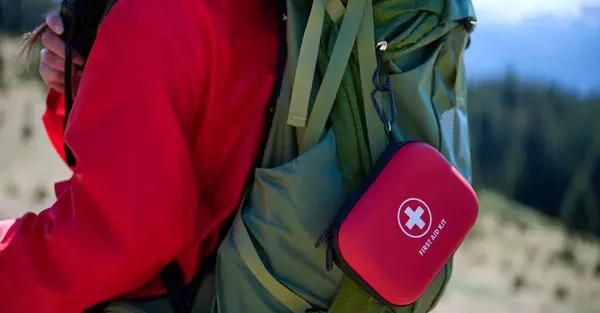
Hiking Safety Gear You Should Actually Carry (What’s in My Pack on Every Solo Trip)
I’ve hiked the Sky Pond Trail in Rocky Mountain National Park, 8.6 miles with 1,771 feet of gain, alone. I’ve done the Grinnell Glacier Trail in Glacier National Park, 10.9 miles and 2,080 feet of elevation, solo. I’ve crawled through Zebra and Tunnel Slots in Grand Staircase-Escalante and dropped into the Dry Fork Narrows without another person in sight. None of those trips had a safety net beyond what was in my pack.
That’s just how I operate. I’m a solo adventurer by nature and by preference. Being autistic, solitude isn’t just a comfort, it’s often how I function best in wild places. But going alone means the responsibility calculus changes completely. Nobody’s calling for help if I go down. Nobody’s carrying my pack out. The gear I bring is the entirety of my safety margin.
This post is not a generic Ten Essentials rehash. It’s what I actually carry, why each item earned its spot, and what real scenarios justify it. Every piece has been tested on actual trails, in actual conditions, with actual stakes.
The Hiking Safety Gear That Earns a Spot in My Pack
1. Garmin inReach Mini, The Non-Negotiable
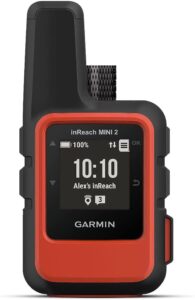
The Garmin inReach Mini Satellite Communicator goes on every single trip. Every one. It doesn’t matter if I’m doing the 3.2-mile Gem Lake Trail outside Estes Park or a 13-mile push into the Sawtooth Wilderness. The moment I’m out of cell coverage, this device is my lifeline.
It sends and receives two-way text messages via satellite. It shares my GPS location. It tracks my route. And the SOS button connects directly to a 24/7 emergency coordination center that can dispatch a rescue to my exact coordinates. A few ounces on my pack strap. Possibly the most important item I own.
You need an active subscription for messaging. Plans vary by message volume. Worth every dollar. The alternative is going deep into the backcountry with no communication capability, and I’ve seen enough trail reports to know how that ends.
2. Leatherman Wave Plus, The Problem-Solver
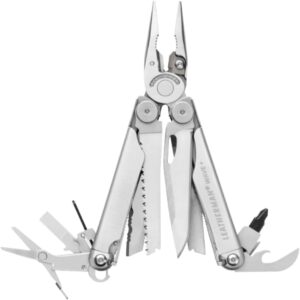
The Leatherman Wave Plus Multi-Tool is 8.5 ounces and 18 tools. Pliers, knives, screwdrivers, wire cutters, scissors, a file, a saw. I’ve used it to cut cord when a camera strap broke mid-hike, tighten the screws on trekking pole clamps, open packaging on a trailhead resupply, and field-strip a stuck filter housing at a creek camp.
The outer-access blades are the feature that matters most. I can open either knife without unfolding the whole tool. Fast, one-handed, clean. In 25 years of production, Leatherman hasn’t changed the core design because it doesn’t need changing. The 25-year warranty is real. Mine has taken serious abuse and earned it.
3. Adventure Medical Kits Mountain Series, The Backstop
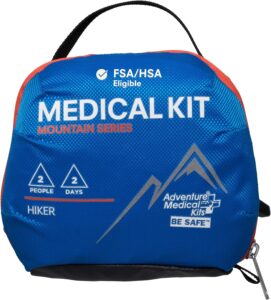
The Adventure Medical Kits Mountain Series Hiker is built for 1 to 2 people on weekend trips. Bandages, gauze, moleskin, antiseptic wipes, pain relievers, blister treatment, and an actual wilderness first aid guide organized by injury type. Not a novelty kit with ten bandages and a pamphlet. A real field kit.
Blisters are the most common issue. Then cuts from scrambles. Then twisted ankles on uneven desert terrain, the kind of rocky, unpredictable surface I deal with constantly on routes like the Fisher Towers Trail outside Moab or the Chesler Park loop in Canyonlands. A trail injury that goes untreated for hours because you didn’t pack the right supplies is a bad day that could have been a minor inconvenience.
Check and restock it every three months. Expired meds and depleted supplies are worse than useless. They create false confidence.
4. Black Diamond Spot 400 Headlamp, The One That Stays On
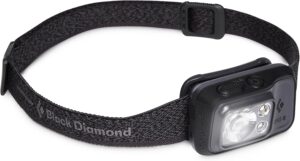
The Black Diamond Spot 400 puts out 400 lumens and runs on AAA batteries or rechargeables. Multiple modes including proximity, distance, dimmed, and red night vision. The digital lock prevents it from switching on in your pack and dying before you need it. Waterproof.
The red night vision mode is the sleeper feature. When I’m checking a topo map after sunset or navigating a camp without wrecking my adapted vision, red light keeps my eyes functional. That matters on technical terrain in the dark.
I always carry a headlamp even on day hikes. The Sky Pond approach through Glacier Gorge involves significant route-finding. The Amethyst Lake Trail in the Uintas is 13 miles round trip with 2,326 feet of gain. Either one can run long. A headlamp weighs almost nothing. Getting caught without one on a trail that goes dark is an easily preventable disaster.
5. LifeStraw Personal Water Filter, The Emergency Backup
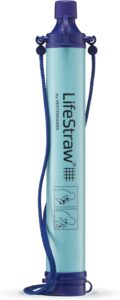
The LifeStraw Personal Water Filter weighs 1.7 ounces. No batteries. No moving parts. No setup. Stick it in water, drink. Removes 99.9% of bacteria and parasites, plus microplastics, silt, and sediment.
I carry this as a backup, not a primary filter. But backup is the wrong word for something this light. It’s insurance that weighs nothing. On a hot desert push, like the 6.4-mile Golden Canyon and Gower Gulch Loop in Death Valley or any canyon route in Grand Staircase where I’m relying on creek sources, having a secondary filtration option changes the math on how much water I need to carry from the trailhead.
One caveat: the LifeStraw doesn’t remove viruses. For North American wilderness use, that’s generally fine. For international travel or regions with sewage contamination risk, add chemical treatment or step up to the MSR.
6. MSR MiniWorks EX Water Filter, The Primary Workhorse
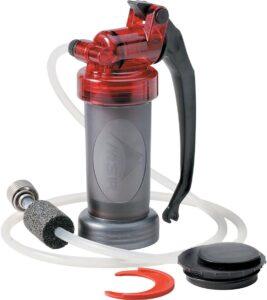
The MSR MiniWorks EX is for any trip where I’m in the backcountry for multiple days and sourcing water from the field. Pump design, which means it pulls from shallow sources that gravity filters can’t reach. About a liter per minute. Replaceable ceramic and carbon filter cartridge. Compatible with wide-mouth Nalgenes without adapters.
I ran this on a multi-day Sawtooth trip, pulling from alpine lakes and creek crossings on the approach to Goat Lake and on the Pettit Lake to Twin Lakes route. It performed without a single issue through all of it. At 16 ounces it’s heavier than the LifeStraw, but for extended trips where water sourcing is routine, it earns the weight. If viruses are a concern, supplement with Aquatabs. For most American backcountry use, the MiniWorks alone is enough.
7. Suunto Core Outdoor Watch, The Situational Awareness Tool
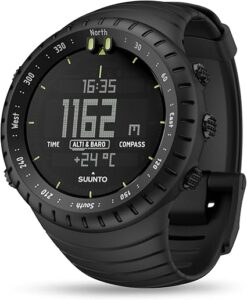
The Suunto Core tracks altimeter, barometer, and compass on the wrist. Waterproof to 100 feet. Readable buttons in the wet. The barometer is the feature that earns its place: a dropping barometric reading in the mountains is a weather warning system strapped to my arm.
On exposed routes, like the Dunraven Pass to Mount Washburn hike in Yellowstone at 7.0 miles and 1,404 feet of gain, or any of the Glacier Park high routes above treeline, knowing that pressure is dropping 90 minutes before a storm arrives is the difference between turning around safely and getting caught in a lightning situation. The altimeter also cross-checks GPS data and helps me confirm position on routes where the trail is ambiguous.
The menu is clean and fast to navigate. That matters when I need information quickly on a moving ridge. I don’t want to be fumbling through screens in wind.
8. Mylar Emergency Blanket, The Weight-Free Safety Net
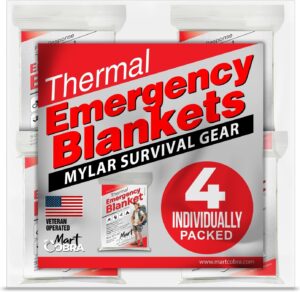
The Mylar Thermal Emergency Blanket folds to the size of a deck of cards. Reflects up to 90% of body heat. Weighs almost nothing. Every pack I own has one, permanently.
The scenario that kills people in the backcountry is unexpected overnight exposure. Not summiting a technical peak. Not rappelling a cliff. Just a twisted ankle at mile 7 of a 10-mile route that turns a day hike into an unplanned night out. At elevation in the Uintas or on any of the high-country trails in Rocky Mountain National Park, overnight temperatures in summer can drop into the 30s. A Mylar blanket is the difference between uncomfortable and hypothermic.
I carry the emergency blanket specifically because the scenarios that require it are the ones I didn’t plan for. That’s the whole point.
9. Energizer Ultimate Lithium AA Batteries, The Detail That Matters
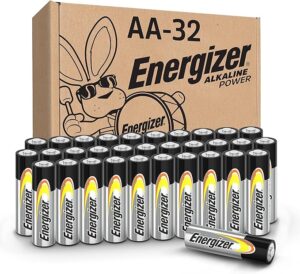
The Energizer Ultimate Lithium AA batteries work from -40°F to 140°F. They’re 33% lighter than alkaline. They hold charge in storage for up to 25 years. They don’t leak and corrode your electronics.
Standard alkaline batteries lose capacity rapidly in cold. I’ve watched a headlamp go from full power to dead in under two hours in winter conditions because of alkaline chemistry failing in the cold. Lithium batteries hold output in those temperatures. On any shoulder-season trip, any cold-weather camp, any situation where my safety gear needs to function reliably, I use lithium. Always.
Yes, they cost more. No, it’s not a close call for safety-critical devices.
Why Solo Hiking Changes the Entire Safety Equation
When you hike in a group, the group absorbs risk. Someone carries extra water. Someone has the first aid kit. Someone else has the satellite communicator. The group’s combined gear covers most scenarios even if any one person is underprepared.
Solo hiking eliminates that cushion entirely. There’s no one to run for help. There’s no one to stabilize a sprained ankle while you rest. There’s no one to share warmth if the temperature drops. Every item in my pack serves a purpose that would otherwise be unmet, because I am the only person on the trail.
I hike solo because I prefer it. The silence of the Fisher Towers at dawn. The absolute aloneness of a Sawtooth alpine lake with no other footprints on the approach. Those experiences require being out there without other people, and I won’t compromise that. But going solo means my gear list is not optional and not negotiable. It’s the contract I make with the wilderness every time I leave the trailhead.
How to Build a Hiking Safety Kit That Fits Your Trip
Match the Kit to the Terrain
A 3-mile day hike on a well-trafficked trail near Salt Lake City, like the Living Room Trail in the Foothills or Donut Falls in Big Cottonwood Canyon, doesn’t require the same kit as a 13-mile alpine route in the Sawtooths. Scale your gear to the actual risk profile of the specific trip. Always bring the inReach Mini. Always bring a headlamp. Always bring a first aid kit. Everything else scales up with remoteness, elevation, weather exposure, and trip length.
Weight vs. Capability Trade-Offs
Every item in a pack is a trade-off between weight and capability. The LifeStraw wins on weight. The MSR MiniWorks wins on capability for multi-day trips. The Mylar blanket wins on both. Learn to distinguish between items that are genuinely weight-free safety additions and items that just make you feel more prepared without adding real protection.
The single most dangerous piece of hiking gear is an overloaded pack that slows you down, tires you out, and increases the chance of a bad step on technical terrain. Be ruthless about what earns a spot.
Inspect Before Every Trip
Headlamp batteries get swapped at the start of each season, not when the light starts to dim. First aid kit gets inventoried every three months. Water filter gets flushed and inspected after every backcountry trip. inReach gets charged and firmware updated before anything over a day hike. Gear that fails in the field because you didn’t check it is not a gear problem. It’s a preparation problem.
Know How to Use Every Item Before You Need It
This sounds obvious. It isn’t. I’ve met people on the trail who couldn’t find the SOS function on their satellite communicator under pressure. Practice using the inReach before your first backcountry trip. Run through the first aid kit at home. Use the water filter before you’re thirsty and tired at a creek crossing. Familiarity with your gear is part of the safety system.
Frequently Asked Questions
What’s the single most important piece of hiking safety gear for a solo hiker?
The Garmin inReach Mini. Full stop. Every other item on this list addresses injury, discomfort, or navigation. The inReach addresses the scenario where none of those solutions are enough and you need outside help to survive. If you hike alone in places without cell service, you need satellite communication. There’s no substitute.
Do I need a satellite communicator for day hikes?
If the hike is beyond reliable cell coverage, yes. Cell service in the American West disappears fast. Canyonlands has almost none. The Sawtooths have none. Much of the Uintas has none. Grand Staircase has almost none. Day hikers die in those places every year, usually from preventable scenarios that a satellite SOS would have resolved. A day hike designation doesn’t limit the risk, it just limits the planned duration.
Is the LifeStraw enough for backcountry water filtration?
For day hikes and emergency backup, yes. For multi-day backcountry trips where you’re sourcing water routinely, carry the MSR MiniWorks EX as your primary and keep the LifeStraw as backup. The pump design of the MSR handles situations the LifeStraw can’t, including shallow or slow-moving sources.
How do I carry all this without an overloaded pack?
The satellite communicator clips to a pack strap. The Leatherman goes in a hip belt pocket or clips to a belt. The emergency blanket is smaller than a deck of cards. The LifeStraw goes in a side pocket. None of these items are heavy. The first aid kit and the MSR filter are the only meaningful weight adds, and both live in the pack interior. The full kit I’ve described here adds less than two pounds to a standard day pack.
What trails do you consider high-stakes enough to require the full kit?
Any trail beyond consistent cell coverage. That includes most of my regular terrain: the Coyote Gulch route in Grand Staircase-Escalante, the Amethyst Lake Trail in the Uintas, the full Grinnell Glacier route in Glacier National Park, any Sawtooth approach, and the longer Canyonlands and Arches routes where the terrain is technical and rescue access is limited. On those trails, every item I’ve listed is there for a reason.
Hiking Safety Gear Is the Contract You Make With the Wild
The trails I love most are remote, exposed, and unforgiving. The Iceberg Lake Trail in Glacier, 9.6 miles and 1,459 feet of gain, moving through grizzly country without another person in sight. The 10.3-mile Castle Trail in the Badlands. The Bright Angel descent to Havasupai Gardens in the Grand Canyon, 8.9 miles and 3,034 feet of gain in desert heat. These aren’t casual walks. They require real preparation.
I carry the gear on this list because I’ve thought carefully about what can go wrong and what I need to address it myself. The inReach for the scenario I can’t solve alone. The first aid kit for the scenarios I can. The headlamp because trails don’t care about my return time. The emergency blanket because weather doesn’t either.
Hiking safety gear isn’t about fear. It’s about being serious enough about the places you go to respect them properly. Prepare like the trail expects you to.
Support the Adventure
To make your walls less boring, check out my photography portfolio and bring a piece of the wild and my story into your home.
If you’d like to fuel future adventures, you can donate a coffee on Ko-Fi. Every cup keeps me chasing sunrises and stories.
When you shop using my affiliate links, every click helps support this blog at no extra cost to you. It’s a small way to keep Unicorn Adventure alive and kicking while I keep exploring.
Subscribe to my mailing list for future updates, new stories, and behind-the-scenes adventures.
Stay connected with me on Instagram and Facebook for more photos and daily inspiration.
Thanks for being part of the journey, Unicorn Squadron!

Theo Maynard is a landscape photographer and adventure blogger based in Salt Lake City. He chases remote desert and mountain light across the American West, documents it all solo, and shares the journey through Unicorn Adventure. He’s on the autism spectrum, and that’s not a footnote, it’s the whole story. He creates to inspire others to get outside, chase what lights them up, and live their best possible life. Unapologetically himself.