

Introduction
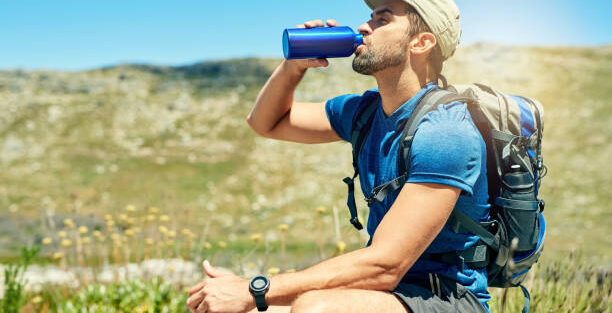
Staying hydrated during a hike is honestly one of the most important parts of trail safety and comfort. When you’re out there, you really need reliable ways to carry and access clean water.
The right hydration system can be the difference between a comfortable day and a miserable, dehydrated slog. You want something you can trust, not just another piece of gear weighing you down.
Water filters, bladders, and bottles each fill different roles for different hikers and trails. Filters let you drink from streams and lakes, getting rid of nasty bacteria and protozoa.
Bladders sit inside your pack and give you hands-free sipping through a tube. Bottles are the classic, simple, tough, and easy to fill, whether you use a filter or not.
What matters most is filtration, capacity, weight, and durability. If you’re drinking from rivers or lakes, you can’t skip filtration, unless you want to gamble with E. coli or giardia.
Capacity is a balancing act. Carrying more water means more weight, but running dry miles from a stream isn’t something I’d wish on anyone.
Weight adds up fast if you’re hauling several liters, so lighter materials make a real difference. I spent weeks researching and testing all sorts of water filters, bladders, and bottles to find the ones that actually keep you hydrated, without slowing you down or leaking all over your gear.
Best Hydration Gear for the Trail
I’ve tested a ton of water filters, bladders, and bottles to figure out which ones really work for staying hydrated out there. Here’s my list of the best hydration gear for keeping you safe and refreshed on your adventures.
CHERAINTI 2L Hydration Bladder
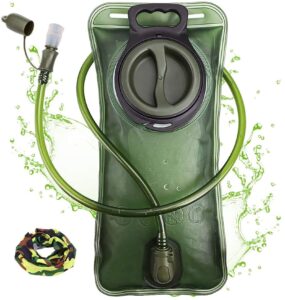
This bladder is a solid pick if you want a simple, reliable hydration system for day hikes and outdoor stuff. Nothing fancy, it just works.
Pros
- Wide opening makes it easy to add ice and clean by hand
- Seal actually prevents leaks, even when you cram it into an overstuffed bag
- Tube is long enough and water flows quickly
Cons
- Plastic taste at first, takes a few rinses to clear out
- Getting the inside totally dry after cleaning is a bit of a pain
- Mouthpiece cover can be fiddly when you’re thirsty and in a hurry
I took this bladder on a full day desert hike and it handled the heat and the dust without drama.
Cleaning was easy since I could actually fit my hand inside. The bite valve worked well once I got the hang of it. Water flowed smoothly, and I never had to stop to mess with it mid-hike.
The on/off switch stopped any drips, even when I tossed my pack around. There was a plastic smell when I first opened it, but a couple of washes with soap and warm water fixed that.
This thing survived being jammed into my already-stuffed backpack with no leaks. The tube length worked for me. I clipped it to my shoulder strap and could drink without breaking stride. Even scrambling over rocks, everything stayed put.
HEIKLN Hydration Bladder
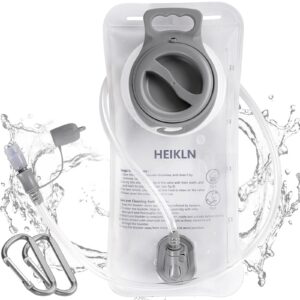
This bladder does the job for day hikes and outdoor activities where you want hands-free water and no annoying leaks.
Pros
- Wide opening makes it super easy to fill with ice and scrub clean
- On/off valve and bite mechanism actually keep it from leaking
- Clear tube lets you see when it needs a good cleaning
Cons
- Bite valve has a learning curve
- Bladder might show wear after heavy use over months
- Only works with water
I used this 2-liter bladder on several hiking trips and found it fits well in most packs. The opening is big enough for my whole hand, which makes cleaning so much easier (seriously, bladders can get gross if you can’t reach inside).
The bite valve took me a minute to figure out. Pull up the cap, bite down with your front teeth, and water flows. Once I got it, it worked smoothly and didn’t drip everywhere.
The dust cover keeps trail dirt out of the mouthpiece. I tested the leak-proof claim by filling it up and tossing it in my pack and my gear stayed dry all day. The tube disconnects, which makes drying everything out way easier than some other models.
This bladder handled temperature changes well. I added ice in the morning and the insulated tube kept the water cool for hours. The material didn’t leave any weird plastic taste, which is more than I can say for some budget bladders.
Water Buffalo Oasis Hydration Bladder
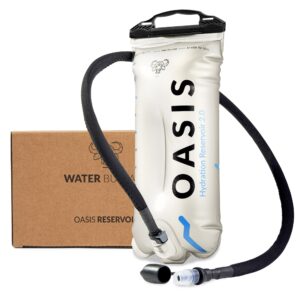
If you want something durable and easy to clean, this one’s worth a look, though I wish the bite valve flowed a bit better.
Pros
- Extra-wide opening makes filling and cleaning way easier
- TPU material keeps water tasting fresh
- Insulated hose sleeve helps keep water cool or at least not boiling hot
Cons
- Bite valve doesn’t flow as fast as I’d like
- Sliding top closure can be tricky to get just right
- Slightly heavier than some bladders at 0.3 kg
I’ve used the Water Buffalo Oasis for weeks on day hikes and long walks. The wide mouth is a huge plus. I can scrub every corner clean, which beats fighting with a narrow opening.
The TPU construction feels tough and doesn’t crack when I fold it up. Water always tastes fresh. The 2-liter size fits nicely in my daypack and doesn’t add much bulk.
The bite valve needs a firmer bite than I’d like, especially when I’m really thirsty. The insulated hose sleeve actually works and doesn’t feel too bulky on the pack strap.
The inner baffle helps stop that annoying water sloshing sound. The tube locks in solidly and hasn’t leaked yet. The attached cord on the sliding top is a smart touch, easy to lose those small parts otherwise.
Nalgene Sustain Wide-Mouth Water Bottle
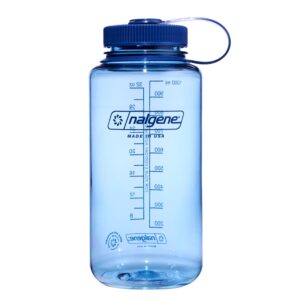
The Nalgene Sustain is a classic. This bottle shrugs off drops, rough trails, and daily abuse. Definitely worth it if you just want a bottle that works.
Pros
- Tough as nails, doesn’t crack or leak, even after some hard knocks
- Wide opening makes adding ice and cleaning a breeze
- Holds 32 ounces and fits most side pockets
Cons
- No insulation, so cold water warms up quick in the sun
- Plastic can pick up flavors from drink mixes eventually
- Heavier than some ultralight bottles
I’ve used this bottle on weekend hikes for months now, and it’s become my go-to. The wide mouth is surprisingly handy, ice goes in easy, and cleaning takes seconds.
The seal hasn’t leaked on me once. I’ve tossed it sideways in my pack, dropped it on rocks, and it just keeps going (just a few scratches for character).
It’s heavier than my friend’s aluminum bottle, but I’ll take the durability trade-off any day. The measurement markings help me keep track of how much I’m drinking, which is nice when I’m zoning out on the trail.
The Baby Blue color stands out, so I never lose it in my gear pile. After several dishwasher cycles, the color still looks new. I’ll admit, the sustainable materials are a nice touch, but honestly, I just like that Nalgene bottles last forever and rarely need replacing.
RAYMYLO 40oz Insulated Water Bottle
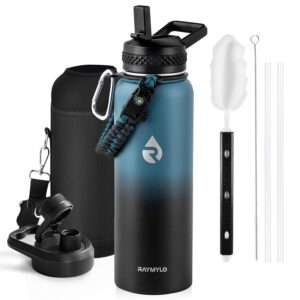
This bottle nails temperature control and comes packed with extras that serious hikers will probably appreciate.
Pros
- Keeps drinks cold for almost two days and stays hot for over 24 hours
- Includes two lids, cleaning brushes, and a paracord handle with compass
- Wide mouth makes adding ice and cleaning way easier
Cons
- Weighs 2.5 pounds when full, which you’ll definitely notice in your pack
- Hand wash onlyn
- 40-ounce size can feel bulky for quick day hikes
I brought this bottle on a weekend camping trip and honestly, my water stayed ice-cold. I filled it in the morning with ice water, and by evening, ice cubes were still clinking around. That’s not something every bottle manages.
The dual lid setup is handy. I used the straw lid while hiking so I didn’t have to stop moving. At camp, the spout lid let me chug bigger gulps. Both lids sealed tight. No leaks, even when I tossed the bottle in my pack.
The paracord handle feels solid and comfortable to hold. There’s a little compass on it, which is a fun touch, though I wouldn’t bet my life on its accuracy. The powder-coated finish gives you a good grip, even when your hands are sweaty.
Cleaning’s simple thanks to the wide mouth and included brushes. The straw brush actually fits all the way through, so everything stays clean. I like that the stainless steel inside doesn’t hold onto weird tastes or smells like plastic bottles sometimes do.
The weight might be a dealbreaker if you’re strict about ounces. At 2.5 pounds full, this thing is heavier than a collapsible or plastic bottle. It’s great for car camping or short trails, but if you’re going ultralight, you’ll want something else.
LifeStraw Peak Series Collapsible Squeeze
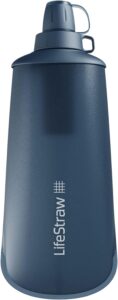
The LifeStraw Peak Series is a solid pick for hikers who want lightweight gear that handles both water storage and filtering, all without hogging pack space.
Pros
- Works as a bottle, squeeze filter, straw, or storage container
- Collapses down tiny and weighs under 4 ounces
- Material feels thicker than most collapsible bottles and stays leak-free
Cons
- Water tastes a bit plasticky when you drink through the straw
- Filter can clog up with silty or sandy water
- Hand wash only, so cleanup takes more effort
I grabbed the LifeStraw Peak for a three-day backpacking trip. The collapsible design let me stuff it in a side pocket when empty, which beats having a bulky bottle bouncing around. When I needed water, I filled it from a stream and either drank right from the mouthpiece or squeezed filtered water into my pot.
The filter blocks bacteria and parasites, which gave me some peace of mind. I drank from a few questionable sources and felt fine. The flow rate slowed down a bit after a muddy creek, but the backwash tool cleared it up fast enough.
This thing feels tougher than other collapsible bottles I’ve tried. The thicker material didn’t show any wear after being jammed in and out of my pack. I liked the carabiner loop for clipping it to my bag for quick grabs.
The main annoyance is the plastic taste when sipping through the straw. Not a dealbreaker, but it’s there. Squeezing water into another container solves it. For anyone who wants to travel light and still have safe water, this system gets the job done.
Sawyer Mini Water Filter
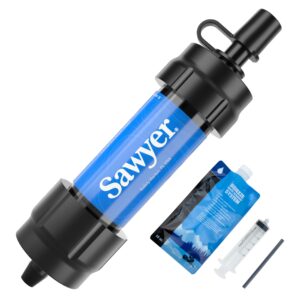
This ultralight filter is a great option for backpackers or travelers who want reliable water treatment without extra weight.
Pros
- Weighs just 2 ounces and fits in your palm
- Works with squeeze pouches, standard bottles, and hydration packs
- Removes bacteria and protozoa, rated for 100,000 gallons
Cons
- Flow rate drops over time and needs regular backflushing
- The included 16-ounce pouch feels flimsy and started leaking after a few trips
- Filtering multiple bottles takes longer than gravity-fed systems
I ran the Sawyer Mini through its paces on several day hikes and a weekend trip. Setup was straightforward, just screw it onto the pouch, fill from a stream, and squeeze out clean water.
The compact size is a huge plus. It disappeared into my pack’s side pocket, and I liked that I could attach it to disposable water bottles too.
Squeezing the pouch takes some effort, especially when filling more than one bottle. The flow started out strong but slowed by the end of my trip, so I had to use the cleaning plunger to get it back up to speed.
The drinking straw is handy for sipping directly from creeks. Just drop the filter in and drink.
The pouch itself feels thin. Some hikers I met switched to sturdier aftermarket pouches. The filter’s held up fine for me so far, and I’m still using it after several outings.
Survivor Filter Collapsible Water Bottles
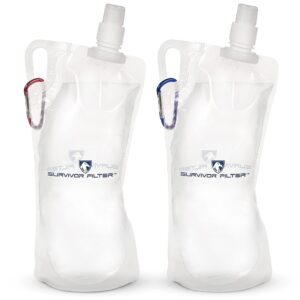
These collapsible bottles offer decent space saving convenience for hikers and travelers, but you’ll want to keep your expectations realistic about durability.
Pros
- Roll up small when empty, saving a ton of pack space
- Carabiner and handle make clipping to your bag easy
- Just 2.4 ounces each, so they barely add any weight
Cons
- Plastic taste shows up at first
- Creases at the bottom can leak after lots of folding
- Plastic carabiner feels less durable than metal
I used these bottles on several day hikes. They’re genuinely handy for carrying extra water without the bulk. When full, they stand up on their own and hold a full liter. The push-pull cap kept the mouthpiece clean from trail dust.
The collapsible design works as promised. After drinking, I rolled each bottle up tight and stuffed it in my pocket. That feature alone makes them worth a look if you hate carrying empties.
I did notice a plastic flavor for the first couple fills. A good wash helped, but a faint taste stuck around. The material seems sturdy enough for normal use, but I’m careful folding them since the bottom crease feels like a weak spot.
The wide mouth makes filling from streams easy, and the threads fit standard water filters with 28mm connections. I liked the dust cover that snaps over the mouthpiece. The lifetime warranty is reassuring, though I wish the build felt more premium for the price.
Sawyer Squeeze with Cnoc 2L Bladder
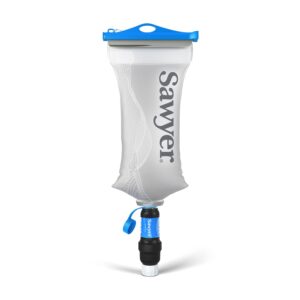
This system gives you reliable filtration and a super tough bladder. Filling and filtering water feels way faster than with those flimsy squeeze bags.
Pros
- The wide-mouth Cnoc bladder scoops from shallow streams and feels way more rugged than standard pouches.
- Backwashing the filter takes about a minute, keeping water flowing quick even after dozens of liters.
- At under six ounces, the whole setup barely adds weight to my pack.
Cons
- The bladder adds some bulk compared to just carrying the filter and a disposable pouch.
- Water flow slows down a lot when the filter needs cleaning after heavy use.
- The coupling between bladder and filter can drip if you don’t thread it just right.
Its big opening let me scoop from shallow streams where my old pouches just didn’t work. The filter attached securely and didn’t leak once during my trip.
I squeezed water straight into my bottles and cooking pot without trouble. After day two, the flow rate dropped, so I backwashed it with the plunger and water started moving fast again.
The bladder’s TPU material feels way thicker than any disposable bag I’ve used. I didn’t worry about punctures, even around rocks and sticks.
The two-liter capacity meant I could grab all the water I needed for camp in a single trip. Cleaning the filter is simple with the included syringe and coupling.
DripDrop Hydration Packets
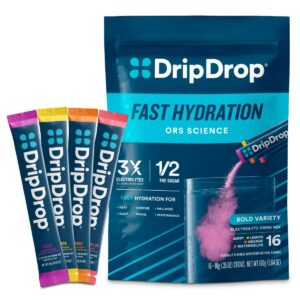
These are my go-to for trail days when water alone isn’t enough. Sometimes you just need a serious electrolyte boost, and fast.
Pros
- Works way faster than plain water to restore hydration after sweaty hikes.
- Tastes good
- Packs are tiny and fit anywhere in your bag.
Cons
- There’s a salty kick that takes a bit of getting used to.
- Honestly, it tastes better mixed with more than the suggested 8 ounces of water.
- Costs more than basic sports drink powders.
I started carrying these on longer hikes after plain water left me feeling wiped out. The difference was obvious within 20 minutes, my energy came back stronger than it ever did with water or typical sports drinks.
The variety pack helps keep things interesting on multi-day trips. Watermelon and berry flavors are my favorites after a tough climb.
Lemon and orange are solid when I want something citrusy. Each packet fits in my first aid kit and doesn’t take up room I need for other stuff.
I like that the formula skips artificial colors and weird additives. The saltiness is real, but it makes sense given the electrolytes.
I usually mix one packet with about 12 ounces of water instead of 8. That dials down the saltiness but still gives me the hydration bump I’m after.
Two packets get me through a full day on exposed trails when I’m sweating buckets.
LMNT Electrolyte Drink Mix
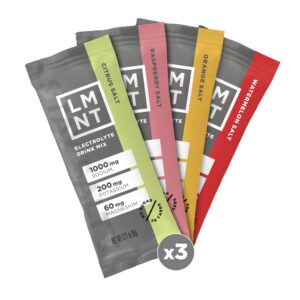
This powder works for staying hydrated on long hikes, especially when water alone isn’t cutting it.
Pros
- Packs a real punch of sodium that you can actually feel on tough trail days.
- Mixes right into your bottle
- No sugar or artificial stuff to upset your stomach mid-hike.
Cons
- The salty taste is bold and takes some getting used to.
- Costs more per serving than basic electrolyte powders or tabs.
- If you get bad cramps, it might not have enough minerals for you.
I’ve been mixing LMNT into my hydration bladder before heading out. The powder dissolves fast in cold water, which is handy when I’m rushing at the trailhead.
Each stick brings a serious sodium boost that I can feel working, especially on hot climbs. The taste is different, salty with a hint of fruit, not sweet like sports drinks.
I started by diluting it in more water than the label says, which helped me get used to it. Now I mix one packet with about 24 ounces and it tastes pretty good when I’m sweating hard.
My energy stays steady through longer hikes. I used to get that brain fog around mile five, but not so much anymore.
The extra stamina makes the price sting a little less. One variety pack lasts me about two weeks with regular trail use.
The stick packs fit perfectly in my backpack’s side pocket. I just tear one open and dump it in during water refills.
The packaging holds up well, even after bouncing around with my other gear.
Buying Guide
When I’m picking hydration gear, I start by thinking about how long I’ll be out and what kind of conditions I’ll face. A day hike really does need different gear than a multi-day trip.
Capacity Matters
Bottles and bladders come in all sizes. I try to figure out how much water I’ll need between refills.
Day hikers usually get by with 1-2 liters. On longer trips, I might need 3 liters or more.
Filter Types and Performance
I think about what kind of filter actually fits my needs. Here’s what I look at:
| Filter Type | Best For | Speed |
|---|---|---|
| Squeeze | Light weight, flexibility | Moderate |
| Pump | Group trips, silty water | Fast |
| Gravity | Camp use, filtering large amounts | Slow but hands-free |
| Straw/Bottle | Backup, ultralight trips | Slow |
Key Features to Check
Filtration level is huge. I make sure my filter removes bacteria and protozoa at the very least.
Some also knock out viruses, which matters if you’re traveling internationally.
Weight and packability really affect how much I enjoy carrying my stuff. I try to balance durability with keeping things light.
Flow rate tells me how long I’ll wait for clean water. Faster isn’t always better if it means losing out on other features.
Durability and maintenance make a difference over time. I check how easy it is to clean and if I can get replacement parts.
Some filters need backflushing, others require chemicals. I always check the cleaning method before buying.
Temperature range matters for cold weather hikes. Not every bladder or filter works well when it’s freezing out.
Frequently Asked Questions
Water filtration systems and hydration vessels vary a lot in what they offer. Here are some of the most common questions I get about picking and using these essential trail items.
What are the top water filters recommended for long-distance hiking?
I usually recommend the Sawyer Squeeze. It’s super light and can filter up to 100,000 gallons. The filter weighs just 3 ounces and removes 99.99999% of bacteria and protozoa.
How do you choose the best water purifier for international travel?
I look for purifiers that remove viruses, since those are more common in some countries. The Grayl GeoPress knocks out 99.99% of viruses, bacteria, and protozoa in just 8 seconds per press.
UV purifiers like the SteriPEN Ultra are handy for international trips. They kill 99.9% of bad stuff in 90 seconds for a liter of water, but you’ll need batteries or a way to charge them.
Chemical purification tablets are a good backup. I carry chlorine dioxide tablets, they work in 30 minutes and handle viruses too.
What factors should be considered when selecting a water bottle for hiking?
Weight is a big deal on long hikes. Plastic bottles weigh just 1-2 ounces, while steel bottles can be 8-12 ounces empty.
I always check mouth width. Wide mouths make it easy to add ice or clean inside, but narrow mouths help prevent spills when I’m moving.
If I want my water to stay cold (or hot), insulation matters. Double-wall bottles keep drinks cold for 24 hours or hot for 12, but single-wall bottles are lighter.
Durability is important for long-term use. I stick to BPA-free plastic or food-grade stainless steel that won’t crack or dent easily.
What are the advantages of using a hydration bladder on the trail?
Hydration bladders let me drink without stopping or taking off my pack. The tube stays right on my shoulder strap, so I drink more often.
The weight sits close to my back, which helps balance way better than bottles in side pockets. I can usually carry more water in a bladder, most hold 2-3 liters, and they use less space than bottles.
Which hydration bladder size is ideal for a full day of hiking?
I usually grab a 2-liter bladder for day hikes in moderate climates. That amount keeps me hydrated for about 6 to 8 hours without weighing down my pack too much.
If I’m heading out in hot weather or tackling tougher trails, I go with a 3-liter bladder. When it’s over 80°F, I seem to need at least half a liter of water every hour.
For quick hikes under 4 hours, a 1.5-liter bladder feels just right. It’s lighter, and honestly, it barely takes up any space in my bag.
How do gravity water filters compare to pump filters for backpacking?
Gravity filters take almost no effort. I just hang the dirty water bag from a branch and let gravity do the work.
Water flows through at about 1-2 liters per minute, which feels pretty hands-off. It’s nice not having to stand there and pump, honestly.
Pump filters, though, put me in control. I can filter water as fast as I pump, usually around 1 liter per minute if I keep a steady pace.
For groups, gravity systems shine. I can filter 4-10 liters in one go and handle other camp chores at the same time.
Pump filters suit solo hikers better. If I only need a little water and want it now, the pump’s the way to go.
Gravity filters usually weigh between 6 and 11 ounces. Pump filters are a bit heavier, clocking in around 10 to 16 ounces since there’s more hardware involved.
Anyway, there’s no perfect answer. Just depends on your style, group size, and how much patience you’ve got. Try both if you can, and see what feels right out there.
Support the Adventure
To make your walls less boring, check out my photography portfolio and bring a piece of the wild and my story into your home.
If you’d like to fuel future adventures, you can donate a coffee on Ko-Fi. Every cup keeps me chasing sunrises and stories.
When you shop using my affiliate links, every click helps support this blog at no extra cost to you. It’s a small way to keep Unicorn Adventure alive and kicking while I keep exploring.
Subscribe to my mailing list for future updates, new stories, and behind-the-scenes adventures.
Stay connected with me on Instagram and Facebook for more photos and daily inspiration.
Thanks for being part of the journey, Unicorn Squadron!