

Introduction
Off-road awnings have become essential gear for anyone who spends time camping or overlanding. These vehicle mounted shelters attach to roof racks or cargo systems and deliver instant shade and weather protection when you need it most.
Whether you’re taking a lunch break on a dusty trail or setting up camp for the night, an awning creates extra outdoor living space. Honestly, once you’ve used one, it’s hard to go back.
I’ve tested and researched the top off-road awnings available today to help you find the right shelter for your adventures. The market offers everything from simple budget options to advanced 270-degree designs with built-in lighting.
Each type has different strengths depending on your vehicle, budget, and how you use it in the field. There’s a lot out there, so narrowing it down can feel overwhelming.
Let’s dig into the best models from trusted brands and break down what features actually matter. I’ll also share some thoughts on how these awnings improve your outdoor experience and what to keep in mind before you buy.
1. Kammok Crosswing
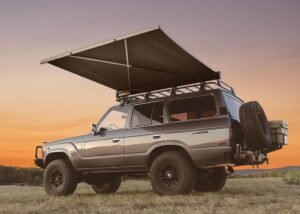
I’ve tested a lot of awnings, but the Kammok Crosswing deploys in just three seconds. That makes it one of the fastest options I’ve ever tried for quick shade and rain protection.
The design skips support poles entirely. The awning extends right out from your vehicle and stays put.
I like the aluminum housing since it won’t rust. The bag-free design lets me deploy it immediately whenever I need coverage.
The canopy uses VeloX 600D PVC coated polyester, which resists UV damage and mold. That’s a relief if you forget to dry it off after a rainy night.
A full-length t-slot rail runs along the aluminum body. This lets me attach third-party accessories and future Kammok add-ons as needed.
The Crosswing comes in 5-foot and 7-foot sizes. All mounting hardware is included, so you don’t have to hunt down extra parts.
It works well for overlanding, camping, and those quick stops when the weather turns on you.
2. ARB Deluxe Roof Rack Awning
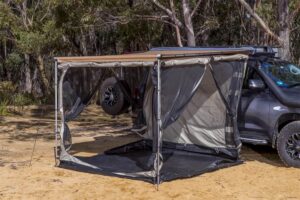
ARB’s retractable awnings have a solid reputation for reliability. They mount directly to most roof racks and roof bars, so installation is pretty straightforward.
The awning stores flat against your vehicle when you’re driving. When you get to camp, you just pull it out and you’re ready for shade. ARB offers a range of sizes to match different vehicles and coverage needs.
The construction uses tough materials built for outdoor life. The fabric resists water and blocks UV rays on sunny days.
ARB awnings are designed for 4×4 adventures and camping trips where you need something that lasts. I really like that ARB offers add-ons like awning rooms with floors.
These accessories expand the usable space under your awning and create enclosed areas for changing or storage.
The price sits in the mid-range, but you’re paying for quality and gear that holds up over time.
3. ARB Soft Case Awning With Light
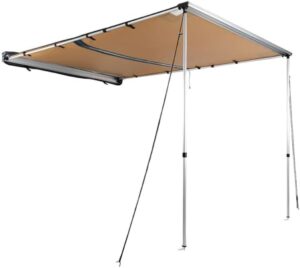
The ARB Soft Case Awning with Light is a great pick for overlanders who want quick shade. This retractable awning attaches to most roof racks and roof bars without any drama.
I love that it comes with integrated LED lighting. No more fumbling with lanterns at camp.
The awning uses 300GSM poly/cotton rip-stop canvas for waterproof and UV-resistant protection. The material is tough enough for wild weather.
The telescopic legs are height adjustable and made from anodized aluminum. Hook and loop ties keep the roof fabric secure, and the reinforced aluminum extrusions add durability.
Storage is easy with the soft case design. The awning stays ready for deployment as soon as you hit camp.
The 2.0M version covers small groups or solo travelers just fine. ARB has been building durable off-road gear since 1975, and this awning fits right in with that tradition.
4. Roam Rooftop Awnings
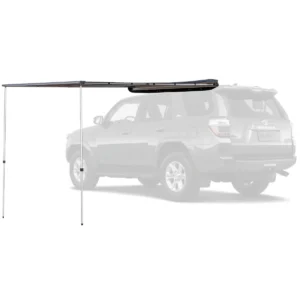
Roam rooftop awnings deliver solid performance for overlanding and camping trips. These awnings use waterproof polycotton ripstop material that holds up well in all kinds of weather.
The aluminum frame keeps weight down and durability up. I like that the Roam standard awning sets up easily, which matters when you’re tired and just want shelter.
Roam offers several size options. The 5 x 8 ft off-road awning gives good coverage for most setups.
Each awning includes a universal mounting kit that works with a bunch of different roof racks. One feature I dig is the option to add an awning room to the 6.5-foot model.
The polyurethane coating on the fabric adds more water resistance. The retractable design makes storage a breeze when you’re ready to hit the road.
5. DeltaWing 180° Awning
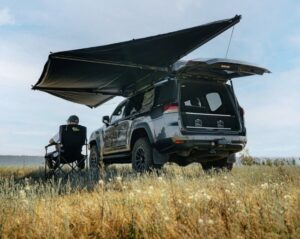
The DeltaWing 180° Awning stands out for its wraparound coverage. It provides full side-vehicle protection from sun and rain in a single setup.
The freestanding design means one person can install it easily. I like that it works with hatchbacks and SUVs with liftgates, giving them better shelter options than the usual awnings.
The 180-degree coverage creates a big shaded area next to your rig. It’s perfect for camping or picnics when you need some elbow room.
The awning comes with tensioning ropes for stability in light wind. Some models even toss in built-in LED lights for those late nights at camp.
I’d recommend this awning for overlanders who want quick setup and maximum coverage. It’s handy for all sorts of outdoor activities, not just camping.
6. Overland Vehicle Systems Nomadic 270 Awning
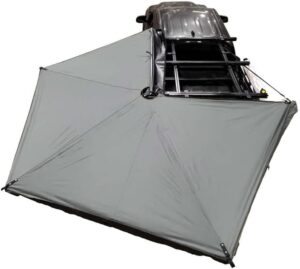
The Overland Vehicle Systems Nomadic 270 Awning is a solid pick for overlanders who need fast shelter. This awning gives you 270-degree coverage, so you get more protected space than a standard 180-degree model.
Setup is simple. I like that it uses reinforced oversize hinges and heavy-duty rafters, so no poles are needed during deployment.
One person can handle the whole setup. The awning delivers about 129 square feet of shelter in its full configuration.
When it’s time to pack up, it breaks down in minutes and fits into a 1000g PVC travel cover. The 270 LTE version offers 75 square feet of coverage in a lighter, more compact design.
Both models attach to vehicles with sturdy roof racks. The manufacturer backs these awnings with a limited 4-year warranty, which is reassuring.
How Off Road Awnings Enhance Camping and Overlanding
Off road awnings turn your vehicle into an outdoor basecamp, blocking harsh sun and rain while creating a spot to cook, relax, or stash your gear without crowding inside.
Protection from Weather Elements
Off road awnings give me real shelter from sun, rain, and wind. The UV-resistant fabric makes a huge difference on scorching days, keeping things cooler underneath.
When it rains, I can still cook and sort my gear without getting drenched. The waterproof fabric sheds water well and keeps my camp dry.
Wind can be a pain, but most awnings have adjustable legs and guy lines. I can angle the awning to block the wind and get a calmer, more comfortable spot to hang out.
Weather-resistant fabrics hold up to a mix of elements. I often leave my awning out during light rain and still get shade, so I spend more time outside instead of hiding in the car.
Maximizing Outdoor Living Space
Vehicle-mounted awnings really open up my living area. Depending on the size, I can get 50 to 100 square feet of extra covered space.
That extra room is perfect for setting up chairs, tables, or a camp kitchen. I can spread out supplies and keep everything organized.
It also keeps the mess out of my sleeping space. Muddy boots and wet gear stay under the awning, not inside the tent or truck.
I use the space for morning coffee, a shady break in the afternoon, or dinner at night. I don’t have to rearrange everything every time I want to do something different.
Key Features to Consider Before Purchase
Picking an off-road awning comes down to build quality, mounting options, and how fast you can set it up or take it down at camp. Some details matter more than you’d think.
Material Durability
The fabric and frame decide how long your awning survives rough trips. I look for waterproof, UV-resistant fabrics like ripstop polyester or canvas that don’t just fall apart after a season in the sun.
Heavy-duty materials help if you brush against trees or scrape on tight trails. Aluminum or powder-coated steel frames resist rust and hold up better than the cheap stuff.
Reinforced stitching at stress points keeps seams from blowing out in the wind. Metal zippers and buckles last longer than plastic, especially if you’re rough on gear. Yeah, it costs more upfront, but it’s worth it if you hate replacing gear every season.
Mounting and Compatibility
Your awning has to fit your vehicle without a bunch of custom work. Most attach to roof racks, crossbars, or rain gutters with included brackets.
I always measure my rack before buying to make sure the hardware will work. Some awnings only fit certain rack brands, while others use more universal mounts.
Weight matters too, your rack needs to handle the awning and whatever else you’re carrying. I double check that my vehicle-mounted awning won’t block doors, hatches, or rooftop tents, whether it’s open or packed away.
Ease of Setup and Takedown
Fast deployment means more time relaxing and less time fighting with your gear. Spring-loaded or gas-strut setups let me open the awning in under a minute, even alone.
I like awnings that stay on the vehicle between trips. Integrated storage bags protect the fabric while driving, so you don’t have to mess with extra steps.
The number of poles and guy lines affects how fast you can get set up. Lighter models are great for quick stops, while bigger setups make sense for longer stays. I avoid awnings with tricky tensioning systems, nobody wants a puzzle at the end of a long drive.
Frequently Asked Questions
Choosing the right awning means thinking about durability, coverage, wall systems, brand value, weather resistance, and material specs that impact how long it’ll last.
What are the top-rated awnings for durability and ease of setup in off-road conditions?
The ARB Deluxe Roof Rack Awning is tough and sets up quickly. I’ve found its heavy-duty construction holds up on rough trails.
Roam Rooftop Awnings are also easy to set up, with simple mounts that work even on uneven ground or in windy conditions.
The Kammok Crosswing is lighter but still fast to deploy, and it gives you reliable shelter when the weather gets weird.
How do 270-degree awnings compare to traditional pull-out awnings for overlanding?
270-degree awnings wrap around your vehicle’s corner, covering two sides. Traditional pull-outs like the ARB Soft Case Awning With Light only come out from one side.
The extra coverage from 270-degree models gives you more protected space, which is great for groups or if the wind shifts direction.
Pull-out awnings are lighter and usually cheaper. They’re a solid choice for solo travelers or couples who don’t need a ton of shade.
What features should one look for when choosing an awning with integrated walls for camping?
I always check the attachment systems first. You want walls that stay put, even if the wind picks up unexpectedly.
Strong zippers or hook-and-loop fasteners make a huge difference. If those are flimsy, you’ll notice right away.
Material quality is huge for integrated walls. They should be waterproof and tough enough to handle rough treatment, since, honestly, they usually get more abuse than the awning itself.
Window panels are a nice touch. They let air flow while still giving you some privacy, which I really appreciate.
Some setups come with removable panels. That makes it easy to adjust things if the weather changes suddenly.
Which brands offer the best quality-to-price ratio for overland vehicle awnings?
ARB gives you solid value across their lineup. Their Soft Case Awning With Light even includes LED lighting, and the price isn’t bad compared to others.
Roam Rooftop Awnings feel well built but don’t come with a crazy price tag. Their mounting systems fit most roof racks, so you probably won’t need to buy extra adapters.
Are there any awnings specifically designed for extreme weather conditions while camping or overlanding?
The ARB Deluxe Roof Rack Awning stands up to strong winds better than most. Reinforced arms and heavy duty fabric really help when the weather turns rough.
Some brands actually list wind speed ratings for their awnings. I always look for those numbers if I’m heading somewhere exposed or windy.
The Kammok Crosswing uses ripstop fabric that holds up in storms. Its lower profile also means less wind gets underneath, which is smart engineering if you ask me.
How important is the material and UV protection when selecting an overland awning for long-term travel?
UV protection keeps the fabric from breaking down too quickly. Without a proper coating, materials just fade and get brittle after too much sun.
I usually go for polyester or canvas with a solid UV-resistant treatment. These seem to hold up way better if you’re out for weeks or even months at a time.
Honestly, water resistance matters just as much as UV protection. The DeltaWing 180° Awning, for example, uses waterproof fabrics that don’t give up after a couple of seasons.
Material weight can sneak up on you during long trips. Lighter fabrics help with fuel economy, as long as they’re engineered right and still keep you covered.
Anyway, picking the right awning material isn’t always straightforward, but it’s worth the effort. You’ll thank yourself later when your gear still looks decent after a few adventures.
Support the Adventure
To make your walls less boring, check out my photography portfolio and bring a piece of the wild and my story into your home.
If you’d like to fuel future adventures, you can donate a coffee on Ko-Fi. Every cup keeps me chasing sunrises and stories.
When you shop using my affiliate links, every click helps support this blog at no extra cost to you. It’s a small way to keep Unicorn Adventure alive and kicking while I keep exploring.
Subscribe to my mailing list for future updates, new stories, and behind-the-scenes adventures.
Stay connected with me on Instagram and Facebook for more photos and daily inspiration.
Thanks for being part of the journey, Unicorn Squadron!