

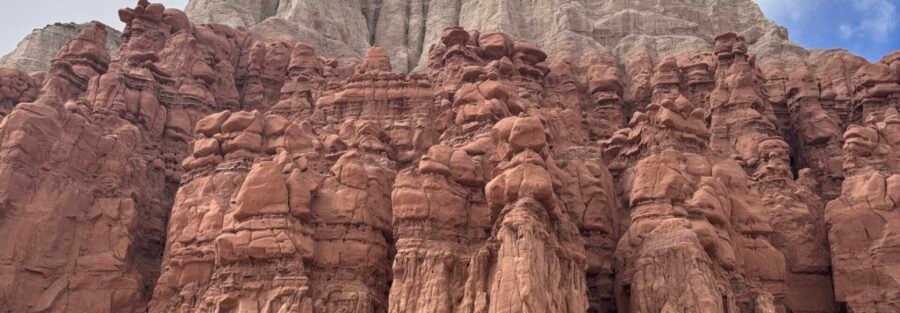
Goblin’s Lair is a collapsed sandstone dome at the northwest end of Goblin Valley State Park, about 3 miles round trip from the main parking area through the valley and up into the rockier terrain beyond the main formation field. Where the Valley of the Goblins is open and flat and easy, the Lair is enclosed, dramatic, and lit by shafts of light filtering through cracks in the rock above. The hike is moderate. The destination is genuinely impressive. It’s the kind of place that earns its own trip inside a park that most people visit for a single afternoon.
Here’s what you need to hike Goblin’s Lair.
Quick Facts
| Trail Name | Goblin’s Lair Trail |
| Location | Goblin Valley State Park, near Hanksville, Utah |
| Coordinates | 38.5702, -110.7034 |
| Distance | 3.0 miles (round trip) |
| Elevation Gain | 300 feet |
| Difficulty | Moderate |
| Time | 2-3 hours |
| Dogs Allowed | Yes (on leash) |
| Fee | $20/vehicle (Goblin Valley State Park) |
| AllTrails | View on AllTrails |
How to Get There
From Hanksville, take UT-24 west for approximately 6 miles. Turn right onto Goblin Valley Road (State Route 101) and follow it about 7 miles to the Goblin Valley State Park entrance. A $20 per vehicle day-use fee applies, payable at the entrance station or in advance online. Continue into the park to the main parking area for the Valley of Goblins. The Goblin’s Lair Trailhead is at the northwest corner of the parking lot. The park is well-signed and easy to navigate once you’re through the entrance.
Parking Information
The main Valley of Goblins parking lot is large and serves both the valley exploration area and the Goblin’s Lair Trailhead. Restrooms and picnic tables are available at the lot. It fills on peak spring and fall weekends. Arrive before 8 a.m. to secure a spot and get the morning light on the valley floor before the crowds arrive.

Cell Service and Navigation
Cell service is nonexistent inside Goblin Valley State Park. Download your map offline through AllTrails before leaving Hanksville. The Goblin’s Lair trail is marked within the park but the route through the goblin formation field and up into the rocky terrain beyond requires attention to the GPS track at junctions. The Lair itself is worth navigating carefully toward since the approach through the upper rocky terrain has multiple lines and the correct route matters for the scramble section.
What to Expect on Goblin’s Lair Trail
The Valley Approach
The trail starts at the northwest corner of the main parking lot and winds through the Valley of Goblins. You’re walking among the hoodoos here, the same mushroom-shaped Entrada sandstone formations that define the main valley experience. The terrain is flat and the light is good in the morning before it goes overhead. The valley approach is the most casual section of the hike and is easy enough that families and casual visitors stop here. Past the valley formations, the trail begins climbing into rockier terrain.
The Rocky Approach and Scramble
Above the valley the terrain shifts to rougher sandstone slabs and loose rock. The trail requires more footing attention here. The elevation gain comes in this section. The final approach to the Lair involves a short scramble over rocks that is manageable for most hikers but requires hands-on movement. It’s not technical climbing, but you need to be comfortable moving across uneven rock.
The Goblin’s Lair
The Lair is a collapsed sandstone dome, a large cavernous chamber open at the top through multiple cracks and openings in the rock. Light filters through the gaps and hits the interior walls in shafts that shift as the sun moves. The scale is larger than the approach suggests. The interior is cool compared to the exposed desert outside. This is the primary photography destination in the park for anyone who’s already done the valley floor. Wide-angle lens from the interior floor looking up captures the full dome and the light shafts simultaneously. Give yourself time in here.

Trail Difficulty and Length
Goblin’s Lair Trail is approximately 3 miles round trip with about 300 feet of elevation gain. The trail is rated moderate. The valley approach is easy. The rocky upper section and scramble to the Lair entrance earn the moderate label. Budget 2 to 3 hours. The park requires the $20 entrance fee regardless of which trail you hike.
Dog Friendly?
Yes. Dogs are welcome on leash throughout Goblin Valley State Park. The rocky scramble section near the Lair requires some management with a dog on a lead, but it’s manageable for trail-ready animals. Bring more water than you think your dog needs. The desert floor and rock surfaces heat up fast. In summer, start early and be done by 10 a.m.
What to Bring
At least 2 liters of water per person. The trail is exposed and the desert will drain you. Sun protection for the open valley and upper rocky sections. Trail shoes with grip for the scramble to the Lair entrance. A camera with a wide-angle lens for the interior dome shots and a telephoto for individual goblin formations in the valley approach. A tripod for the interior Lair photography where the light is low and a long exposure on the interior walls rewards the setup. A headlamp if you push inside the deeper sections of the cavern.
Best Time to Hike Goblin’s Lair
Spring (March through May) and fall (September through November) are the best windows. The desert temperatures are manageable and the park light is excellent. Summer heat is serious: the exposed valley and rocky approach sections reach temperatures well above 100°F by midday. Start before 7 a.m. in summer. Winter is quiet and the hoodoos look exceptional with occasional snow, but check road conditions on the Goblin Valley Road approach before committing.
For photography, the Lair interior is best mid-morning when the sun angle sends shafts through the dome openings at the most dramatic angle. The valley approach is best at sunrise when the hoodoos cast long shadows across each other. Arrive at the park before dawn for the valley floor, hike to the Lair, and shoot it at 9 to 10 a.m. That sequence covers both photography objectives in a single morning.
Rules and Regulations
Goblin’s Lair is in Goblin Valley State Park, managed by Utah State Parks. The $20 per vehicle entrance fee applies. Dogs on leash. Leave No Trace fully. Climbing on the goblin formations in the valley is permitted but the formations are fragile, do it carefully and don’t stand on tops of formations if it risks breakage. Inside the Lair, respect the rock surfaces and don’t alter anything. Flash flood risk inside the cavern is real during heavy rain. Check weather before hiking. Check the Utah State Parks website for current conditions and any trail or park closures before heading out.
Where to Stay Near Goblin Valley
Goblin Valley State Park has a campground directly in the park with electric hookup sites and a few primitive options, reservable through Utah State Parks. Staying in the park puts you at the trailhead before anyone else and gives you the valley and Lair in the best morning light without the drive from Hanksville. For points travelers, check available Marriott Bonvoy properties, IHG Rewards hotels, and Hilton Honors options in Moab, Green River, or Salt Lake City along your route.
Camping Nearby
The Goblin Valley State Park campground is the best base for both the valley and the Lair. Book well in advance through the Utah State Parks reservation system, particularly for spring and fall peak weekends. Dispersed BLM camping is available in the San Rafael Swell surrounding the park for hikers who want to camp without reservations.
Nearby Adventures
The Valley of the Goblins is the natural companion to the Lair trail, most visitors do both in the same park day. Carmel Canyon Trail is another park option that loops through different canyon terrain with views of the surrounding geology. The Curtis Bench Trail outside the park delivers panoramic views of the San Rafael Swell from a different ridgeline.
Little Wild Horse Canyon (8.0 mi / 787 ft) is about 30 minutes northwest and one of the best slot canyon loops in Utah. Leprechaun Canyon (2.2 mi / 147 ft) off Highway 95 is a shorter slot canyon option that pairs well with a Goblin Valley trip. Both canyons provide completely different terrain experiences from the open valley and cavern environment of the park.
For a complete Hanksville area multi-day itinerary, pair Goblin Valley with Moonscape Overlook to the north and the Moki Dugway and Cedar Mesa area to the south for one of the best desert road trips in Utah.
Plan This Hike
AllTrails has the Goblin’s Lair Trail with a downloadable map and recent user conditions. Given the route through the formation field and up to the Lair entrance, having the GPS track loaded offline before you lose signal in the park is the most practical preparation step.
AllTrails Pro is worth it for a Goblin Valley area trip where you’re planning multiple trails across multiple days in an area with zero cell service. Download the Lair, valley, and Carmel Canyon maps before you leave Hanksville.
Chase the Quiet
The valley floor at sunrise and then the Lair interior mid-morning with the light coming through the dome. Those are two completely different kinds of beautiful in the same park on the same morning. Goblin Valley tends to get lumped into the casual category because the valley is easy. The Lair changes that. It’s the payoff for the hikers who went past the goblins and kept going. That distinction matters.
Support the Adventure
To make your walls less boring, check out my photography portfolio and bring a piece of the wild and my story into your home.
If you’d like to fuel future adventures, you can donate a coffee on Ko-Fi. Every cup keeps me chasing sunrises and stories.
When you shop using my affiliate links, every click helps support this blog at no extra cost to you. It’s a small way to keep Unicorn Adventure alive and kicking while I keep exploring.
Subscribe to my mailing list for future updates, new stories, and behind-the-scenes adventures.
Stay connected with me on Instagram and Facebook for more photos and daily inspiration.
Thanks for being part of the journey, Unicorn Squadron!
Theo Maynard is a landscape photographer and adventure blogger based in Salt Lake City. He chases remote desert and mountain light across the American West, documents it all solo, and shares the journey through Unicorn Adventure. He’s on the autism spectrum, and that’s not a footnote, it’s the whole story. He creates to inspire others to get outside, chase what lights them up, and live their best possible life. Unapologetically himself.