

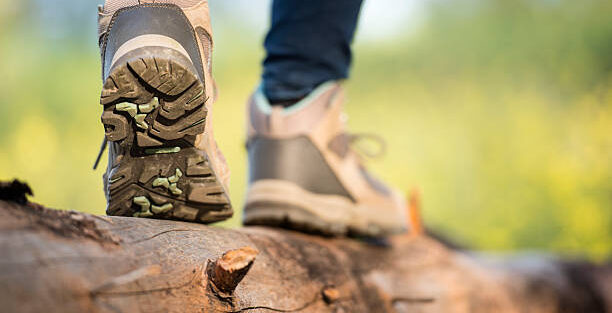
The Best Hiking Boots and Trail Runners That Actually Hold Up
Footwear is the most important gear decision you make. Everything else can be improvised. Boots can’t. I hike solo across terrain that punishes bad footwear. Slickrock in Moab. Loose scree on Wheeler Peak. Sandy washes in Grand Staircase-Escalante. River crossings in the Sawtooths. Rocky descents on Navajo Loop in Bryce Canyon. My boots carry me, my camera gear, and my water across all of it. When they fail, the trip ends.
I’m also autistic. Sensory fit matters more to me than most people. A pressure point that’s mildly annoying for someone else becomes a consuming distraction for me. Hot spots, pinching, inconsistent lacing tension, fabric that rubs differently when wet, these inputs accumulate and drain my focus. I need boots that feel the same at mile 10 as they do at mile 1. Predictable. Consistent. No surprises.
These are the hiking boots and trail runners I’d actually recommend. From zero-drop minimalist to stiff technical mountaineering. Tested on real terrain. No gimmicks.
The Best Hiking Boots and Trail Runners
1. Salomon X Ultra 4 GTX, Wide Fit With Contagrip and Almost Zero Break-In
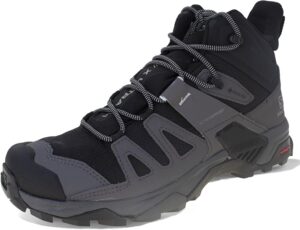
The Salomon X Ultra 4 GTX delivers trail runner agility with hiking boot stability. New chassis for joint support. Contagrip MA outsole. Gore-Tex waterproofing. Protective toe cap. Wide fit available.
My go-to boot. Trail runner agility with hiking boot stability and waterproof protection. The Contagrip MA outsole grips everything, loose gravel, wet rock, hard-packed dirt, without sacrificing mobility. The chassis provides joint support on uneven terrain. Gore-Tex keeps feet dry in stream crossings and rain. Protective toe cap handles rocks and roots. Wide fit accommodates feet that swell during long days. Almost zero break-in period. I wore these on full-day hikes right out of the box. That immediate comfort matters when you can’t afford blisters on a solo trip with no bailout option. I’ve taken these across Chesler Park in Canyonlands, down into Coyote Gulch, across slickrock in Moab, and through every terrain type in between. They’ve held up. The tradeoff is that they’re not stiff enough for heavy pack carrying on steep technical terrain. For that, step up to the Quest 4. But for day hikes and light backpacking across varied terrain, the X Ultra 4 GTX is the most versatile boot on this list.
2. Merrell Moab 3 Ventilator Mid, Breathable Forest Boot With Vibram Grip
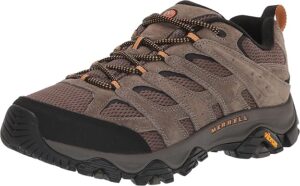
The Merrell Moab 3 Ventilator Mid features pigskin leather and mesh upper for airflow. Bellows tongue blocks debris. Kinetic Fit ADVANCED insole. Merrell Air Cushion shock absorption. Vibram TC5+ outsole. 100 percent recycled materials.
The Moab line has been a hiking staple for years and the third generation maintains that reputation. Breathable mesh upper with pigskin leather provides serious airflow for warm-weather hiking. Bellows tongue keeps trail debris out. Vibram TC5+ outsole delivers dependable traction on forest trails, rocky terrain, and moderate scrambles. Kinetic Fit ADVANCED insole provides arch support. Merrell Air Cushion absorbs heel shock. 100 percent recycled materials add an environmental angle. I’d recommend this for forest hiking in the Uintas, moderate trails in the Wasatch, and anyone who runs hot on the trail. The ventilated design breathes better than Gore-Tex lined boots, which trap heat. The tradeoff is waterproofing. The ventilator version is not waterproof. For wet conditions, get the Gore-Tex version instead. The Moab is also a softer boot that won’t provide the stiffness needed for heavy loads on steep terrain. But for day hiking in warm conditions, this is comfortable, affordable, and proven.
3. Altra Lone Peak All-WTHR Mid, Zero-Drop With Room for Your Toes
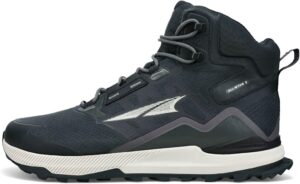
The Altra Lone Peak All-WTHR Mid features zero-drop Balanced Cushioning platform. FootShape toe box lets toes spread naturally. 25mm stack height. Altra EGO midsole. MaxTrac outsole. StoneGuard rock plate. Waterproof.
Zero-drop means your heel and forefoot sit at the same height. No elevated heel. This promotes natural foot positioning and low-impact landings. The FootShape toe box is the widest in the hiking boot market. Your toes spread naturally instead of being squeezed together. For people with wide forefeet or those who develop toe pain in narrow boots, this design is transformative. 25mm stack height with Altra EGO midsole provides responsive cushioning. MaxTrac outsole grips well. StoneGuard rock plate protects against sharp rocks. Waterproof construction. Feels good from day one with essentially no break-in. I’ve used Altra’s zero-drop design on trails through the Sawtooths and Uintas. The natural foot position reduces knee strain on descents. The tradeoff is stability. Zero-drop boots don’t provide the same ankle support or stiffness as traditional hiking boots. If you carry heavy loads on technical terrain, you may want more structure. But for anyone who values natural foot movement and wide toe room, the Lone Peak is the best option on this list.
4. Hoka Kaha 3 Mid, Maximum Cushioning With Minimal Break-In
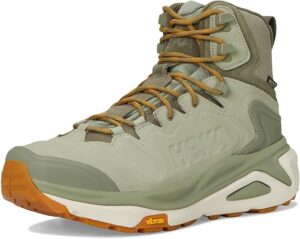
The Hoka Kaha 3 Mid features waterproof nubuck leather with Gore-Tex Invisible Fit. Dual-density sugarcane EVA midsole. MetaRocker geometry for smooth stride. Vibram Megagrip outsole with 4mm lugs. Recycled mesh. PFC-free water repellency.
Maximum cushioning for people who feel every rock through thinner soles. The dual-density sugarcane EVA midsole absorbs impact on uneven terrain and reduces foot fatigue over long miles. MetaRocker geometry creates a smooth rolling stride that reduces joint stress. Waterproof nubuck leather with Gore-Tex Invisible Fit keeps feet dry and breathable. Vibram Megagrip outsole with 4mm lugs grips confidently on rough terrain. Minimal break-in. Comfortable from the first hike. I’d recommend this for anyone with foot sensitivity, plantar issues, or joint concerns who needs maximum underfoot cushioning. The thick midsole absorbs the sharp rock inputs that thinner boots transmit directly to your feet. On rocky trails like Chesler Park in Canyonlands or the Navajo Loop descent in Bryce Canyon, that cushioning makes a noticeable difference in end-of-day fatigue. The tradeoff is ground feel. The thick sole reduces trail feedback. If you prefer feeling the terrain for precise foot placement on technical scrambles, this boot cushions too much. Eco-friendly materials including recycled mesh and PFC-free water repellency.
5. La Sportiva Nucleo High II GTX, Narrow Fit for Technical Scrambling
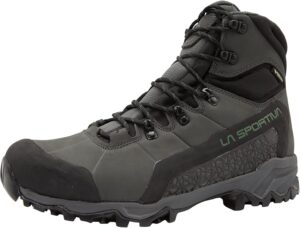
The La Sportiva Nucleo High II GTX features nubuck leather with Nano Cell breathable inserts. Gore-Tex Surround membrane. Vibram Nano XS-Trek outsole with aggressive lugs. Compression-molded EVA midsole with stiffener insert. 3D Flex ankle hinge. Sizes run small, order one full size up.
Built for narrow feet on technical terrain. The snug fit and high ankle support provide precision on scrambles and steep descents. Nubuck leather uppers are tough. Nano Cell inserts add breathability. Gore-Tex Surround keeps feet dry while letting heat escape from all directions. Vibram Nano XS-Trek outsole has aggressive lugs positioned for grip on wet rock and loose gravel. Compression-molded EVA midsole with a stiffener insert supports heavy packs. 3D Flex ankle hinge adds mobility and shortens break-in time. Critical sizing note: these run small. Order one full size up. I’d recommend this for narrow-footed hikers on technical terrain who need precision and support. The snug fit locks your foot in place on exposed scrambles and steep sidehill traverses. The tradeoff is a longer break-in than most boots on this list. The stiff leather needs time to conform. The narrow fit won’t work for wide feet. But for technical hiking and backpacking with a heavier load, the build quality and grip are excellent.
6. Scarpa Zodiac Plus GTX, Hybrid Mountain Boot for Serious Terrain
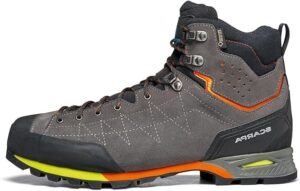
The Scarpa Zodiac Plus GTX is a hybrid mountain boot with Gore-Tex Performance Comfort. Abrasion-resistant suede upper with full rubber rand. Sock-Fit DV System. Vibram Mont outsole. Designed for rocky scrambles and demanding terrain.
The most technical boot on this list. Bridges the gap between lightweight hikers and alpine footwear. Designed for rocky scrambles, talus fields, and demanding mountain terrain where you need stiffness and precision. Gore-Tex Performance Comfort provides waterproofing without overheating. Abrasion-resistant suede upper with a full rubber rand protects against rock abrasion. Sock-Fit DV System creates a snug, foot-hugging fit that eliminates internal movement. Vibram Mont outsole grips in cold, rugged conditions. I’d consider this for technical approaches to photography locations on exposed mountain terrain. Scrambling to reach a shooting position. Navigating talus and scree fields. Terrain where a softer boot would fold and a trail runner would slip. The tradeoff is weight and flexibility. This is a stiff, heavy boot compared to everything else on this list. Not for casual trail hiking. Significant break-in period. But for serious mountain travel where the terrain demands precision and protection, this is the boot that won’t let you down.
7. Lowa Zephyr GTX Mid, Versatile All-Rounder With Easy Break-In
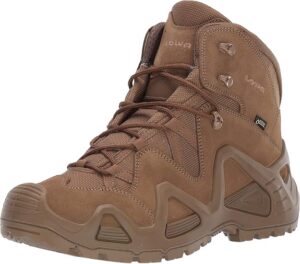
The Lowa Zephyr GTX Mid features suede leather and Cordura fabric upper. Gore-Tex waterproof liner with XCR technology. Removable padded insole. Lightweight. Standard fit.
The all-rounder. Suede leather and Cordura fabric upper balances durability with weight savings. Gore-Tex waterproof liner with XCR technology provides breathable all-weather protection. Standard fit works for most foot shapes without running too narrow or too wide. Removable padded insole allows custom orthotic replacement, which matters for anyone with specific arch support needs. Lightweight for a mid-height boot. Temperature regulation and moisture control perform well across seasons. Easy break-in period. Comfortable within a few short hikes. I’d recommend this as a first serious hiking boot for someone who doesn’t know their foot type yet. The standard fit and balanced design work for the widest range of feet and conditions. The tradeoff is that being an all-rounder means it doesn’t excel in any single category. Not the grippiest. Not the cushiest. Not the stiffest. But it does everything competently, which makes it the safest choice if you’re unsure what you need.
8. Vasque Breeze III GTX, Aggressive Traction With Breathable Construction
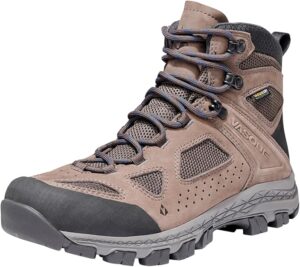
The Vasque Breeze III GTX features high-abrasion leather uppers with mesh panels. Heel and toe ventilation ports. Gore-Tex Extended Comfort membrane. Dual-density midsoles with EVA cushion pods. TPU Exo-plates for lateral stability. Vibram Contact Grip outsole with Megagrip rubber.
Aggressive grip with excellent breathability. High-abrasion leather uppers with mesh panels and dedicated heel and toe ventilation ports keep feet cool on hot days. Gore-Tex Extended Comfort membrane handles water protection while maintaining airflow. Dual-density midsoles with EVA cushion pods provide comfort over long distances. TPU Exo-plates add lateral stability on uneven terrain. Vibram Contact Grip outsole with Megagrip rubber delivers superior traction on both wet and dry surfaces. Average fit width. I’d recommend this for warm-weather hiking on varied terrain where you need both grip and breathability. Summer hikes through Moab. Hot-weather desert trails in Grand Staircase. The ventilation ports solve the heat problem that fully sealed Gore-Tex boots create in summer. The tradeoff is cold-weather performance. All that ventilation means cold air flows in too. Not ideal for winter hiking or snow. The average fit doesn’t accommodate very wide or very narrow feet well. But for three-season hiking with aggressive traction needs, this performs.
9. Brooks Cascadia 16 Trail Runner, Lightweight Protection With Rock Shield
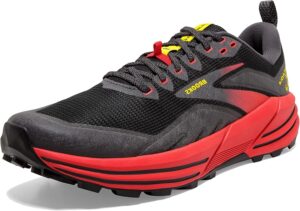
The Brooks Cascadia 16 Trail Runner features DNA LOFT v2 cushioning that’s 10 percent softer and 20 percent lighter. Upgraded Ballistic Rock Shield. Release grooves for terrain adaptation. TrailTack outsole for wet and dry grip. Drainage ports. Debris-blocking gusset. Narrow fit.
Trail runner, not a boot. For hikers who prefer speed and lightness over ankle support. DNA LOFT v2 cushioning is 10 percent softer and 20 percent lighter than previous versions. The Ballistic Rock Shield protects against sharp rocks without adding stiffness. Release grooves let the shoe flex and adapt to uneven terrain. TrailTack outsole grips in wet and dry conditions. Drainage ports and debris-blocking gusset handle water crossings and dusty trails. Narrow fit. I’d recommend this for fast day hiking and trail running on moderate terrain. Not for heavy packs or technical scrambles. The lightweight design reduces fatigue on long mileage days. No break-in needed. Comfortable immediately. For anyone who hikes fast and light on trails like Donut Falls, Rattlesnake Gulch, or moderate Wasatch trails, a trail runner provides more comfort and speed than a heavy boot. The tradeoff is no ankle support and no waterproofing. You’re trading protection for speed and weight savings. Narrow fit won’t work for wide feet.
10. Salomon Quest 4 GTX, Stiff Backpacking Boot for Heavy Loads
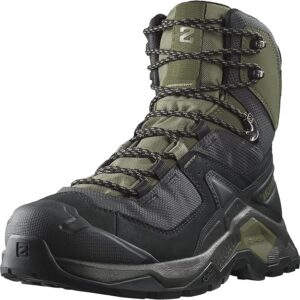
The Salomon Quest 4 GTX features nubuck leather upper with Gore-Tex waterproof breathable membrane. ADV-C chassis for stability and fatigue reduction. High-cut design. Roomy toe box. Built for multi-day treks with heavy packs.
When you’re carrying a heavy pack on multi-day trips, you need a stiff boot that supports the extra load. The Quest 4 GTX is built for that. Nubuck leather upper is tough. Gore-Tex membrane keeps feet dry. ADV-C chassis reduces fatigue and boosts agility across rough ground. High-cut design provides ankle support under load. Roomy toe box accommodates foot swell during long days with heavy weight. I’d recommend this for multi-day backpacking trips where you’re carrying 30-plus pounds. Extended trips through the Sawtooths. Multi-day routes in the Uintas. Anywhere the terrain is rough and your pack is heavy. The stiffness that feels clunky on a light day hike becomes essential stability under a loaded pack on steep descents. The tradeoff is weight and break-in time. Heavier than the X Ultra 4. Stiffer. Requires more break-in before long trips. Overkill for light day hiking. But for serious backpacking where boot failure has real consequences, the Quest 4 is Salomon’s proven workhorse.
How to Choose Hiking Footwear
Start with your foot type. Wide feet need a wide toe box like the Altra Lone Peak. Narrow feet need a snug fit like the La Sportiva Nucleo. Standard feet work with most boots. Know your arch height. Higher arches need more support. Flatter feet benefit from zero-drop or neutral designs. Try boots in the afternoon when your feet are swollen to their hiking size. Leave a thumb-width gap between your longest toe and the boot front.
Match stiffness to your load. Light day hiking with a small pack works with flexible trail runners and lightweight boots. Heavy multi-day packs need stiff boots with ankle support. Technical scrambling needs precision and grip. Warm-weather hiking needs breathability. Cold and wet conditions need waterproofing. Break-in every new boot at home and on short hikes before committing to a long trip. Pair with merino wool socks. Never cotton.
Frequently Asked Questions
What’s the single best hiking boot on this list?
The Salomon X Ultra 4 GTX for most hikers. Versatile, waterproof, grippy, wide fit available, almost zero break-in. For heavy backpacking, the Salomon Quest 4 GTX. For wide toe room, the Altra Lone Peak. For maximum cushioning, the Hoka Kaha 3. For technical mountain terrain, the Scarpa Zodiac Plus.
Do I need boots or trail runners?
Depends on terrain, pack weight, and ankle preference. Trail runners like the Brooks Cascadia work for fast light hiking on moderate terrain. Boots provide ankle support and stiffness for heavy packs, rough terrain, and stream crossings. If you carry more than 20 pounds or hike technical terrain regularly, boots are safer. If you hike fast and light on established trails, trail runners reduce weight and fatigue.
Which boots are best for someone with sensory sensitivities?
The Salomon X Ultra 4 GTX for almost zero break-in and consistent feel. The Hoka Kaha 3 for maximum cushioning that absorbs sharp rock inputs. The Altra Lone Peak for the widest toe box that eliminates toe compression. Avoid boots with stiff break-in periods that change feel over time. Boots that feel the same at mile 10 as mile 1 reduce sensory unpredictability.
How important is break-in time?
Critical. Blisters on a solo trip in remote backcountry can end your trip. The Salomon X Ultra 4, Altra Lone Peak, and Hoka Kaha 3 all have minimal break-in. The La Sportiva Nucleo and Scarpa Zodiac need longer break-in. Always test new boots on short hikes before committing to a long trip. Never start a multi-day trip in untested boots.
Should I size up for hiking boots?
Usually yes, by a half size. Your feet swell during long hikes, especially with heavy packs. A thumb-width gap between your longest toe and the boot front prevents black toenails on descents. The La Sportiva Nucleo runs especially small, order a full size up. Try boots in the afternoon when your feet are at their largest. Wear the socks you’ll actually hike in when fitting.
Your Feet Carry Everything
Every step on every trail starts with your boots. Good footwear lets you focus on the landscape, the light, and the experience instead of your feet. I’ve hiked hundreds of miles across the American West in the boots on this list, through desert, forest, alpine, and everything in between. They held up.
The best hiking boot is the one that fits your foot, matches your terrain, and feels the same at the end of the day as it did at the start. Find that boot and trust it.
Support the Adventure
To make your walls less boring, check out my photography portfolio and bring a piece of the wild and my story into your home.
If you’d like to fuel future adventures, you can donate a coffee on Ko-Fi. Every cup keeps me chasing sunrises and stories.
When you shop using my affiliate links, every click helps support this blog at no extra cost to you. It’s a small way to keep Unicorn Adventure alive and kicking while I keep exploring.
Subscribe to my mailing list for future updates, new stories, and behind-the-scenes adventures.
Stay connected with me on Instagram and TikTok for more photos and daily inspiration.
Thanks for being part of the journey, Unicorn Squadron!
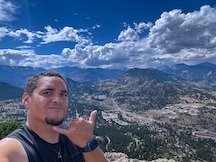
Theo Maynard is a landscape photographer and adventure blogger based in Salt Lake City. He chases remote desert and mountain light across the American West, documents it all solo, and shares the journey through Unicorn Adventure. He’s on the autism spectrum, and that’s not a footnote, it’s the whole story. He creates to inspire others to get outside, chase what lights them up, and live their best possible life. Unapologetically himself.