

Introduction
Off-grid adventures really need reliable power sources to keep your devices charged when you’re nowhere near an outlet. Whether you’re camping deep in the woods, living in an RV, or setting up a temporary base camp, having the right power solution can make or break your trip. Let’s dive into some off-grid power solutions you should consider.
These days, brands like Anker, EcoFlow, Bluetti, and Jackery have made portable power tech way better than it used to be. You’ll find everything from tiny units for a weekend getaway to beefy systems that can run a small camp for days.
Your best setup comes down to what you need to power, your budget, and how much weight you want to lug around.
1. Jackery Solar Generator 1000 v2
The Jackery Solar Generator 1000 v2 packs 1070Wh and puts out 1500W. It’s a solid pick for camping and backup power.
Plug it into the wall and it’s fully charged in an hour. Solar charging works too, so you’re not stuck if you’re off-grid. It’s got USB-A, USB-C, and AC outlets for appliances, laptops, and phones. Pass-through charging lets you power up devices while the unit itself charges.
👉 Shop Jackery Solar Generator 1000 v2

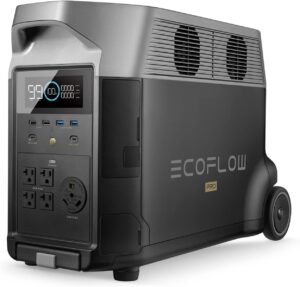
2. EcoFlow DELTA Pro Portable Power Station
EcoFlow DELTA Pro gives you 3600Wh and you can expand it up to 25kWh. It’ll run appliances during outages or off-grid trips.
This thing charges fast and handles high-watt devices. You get AC, USB, and DC ports for just about anything. At 99 pounds, it’s not for backpacking. Think base camp or RV. Add extra batteries if you need even more juice.
3. Bluetti AC180 Solar Generator
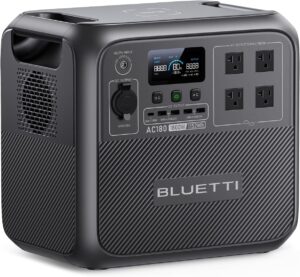
The BLUETTI AC180 is a high-performance portable power station with a 1152Wh LiFePO4 battery that fully charges in just 1 hour using 1440W AC input. It also supports fast solar charging up to 500W, recharging in just over 3 hours with clean energy.
It’ll run most home or camp gear, with plenty of AC, USB, and DC ports.
👉 Shop Bluetti AC180 Solar Generator
4. Anker SOLIX C1000 Power Station
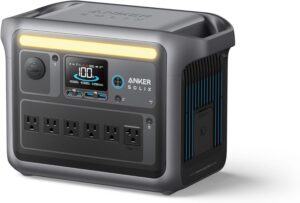
The Anker SOLIX C1000 puts out 1,800W with a 1,056Wh battery. You can double the battery if you want more capacity.
Charge it from empty to full in just 58 minutes on AC. With 600W solar input, it’s topped up in under two hours in good sun. It’ll power fridges, tools, or even a microwave. SurgePad tech lets it handle up to 2,400W for those power-hungry moments.
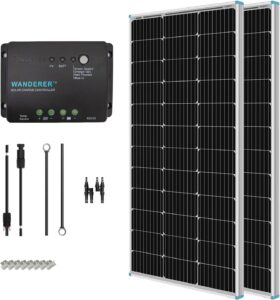
5. Renogy 200W Monocrystalline Solar Panel Kit
The Renogy 200W kit is a go-to for off-grid trips, making up to 1000 watt-hours a day in good sun. You get 15.46% efficiency from its monocrystalline cells.
It’s tough, rated for heavy wind and snow. The kit’s waterproof connectors fit both 12V on-grid and off-grid setups, so it’s versatile.
👉 Shop Renogy 200W Monocrystalline Solar Panel Kit
6. Renogy 200w Portable Solar Panel
The Renogy 200W portable solar panel is lightweight, foldable, and easy to carry. It delivers high 23.5% efficiency using premium solar cells and features multiple output ports (USB-C, USB-A, solar connector) for charging several devices at once.
With an IP65 splash-resistant rating, durable ETFE coating, and built-in mounting holes, it’s designed for outdoor use. Weighing just 17.6 lbs, it folds compactly for easy transport and setup anywhere you roam.
👉 Shop Renogy 200W Portable Solar Panel

7. Renogy DC to AC Pure Sine Wave Inverter
The Renogy 3000W Pure Sine Wave Inverter turns DC battery power into clean AC. It’s good for running electronics when you’re off-grid. Pure sine wave output keeps sensitive gear safe from surges.
Works well in RVs, cabins, or camp setups. The remote control and multiple outlets make it easy to use.
👉 Shop Renogy 3000W DC to AC Inverter

8. Pecron 500w Smart Car Charger
The Pecron 500W Smart Car Charger is a portable and efficient power solution designed to charge Pecron power stations directly from your vehicle. With a 500W output, it delivers fast and reliable charging while you’re on the move, making it perfect for road trips, camping, and off-grid use.
Compact and easy to use, it plugs into your car’s 12V outlet and safely converts power for your Pecron devices. Ideal for topping off your portable power station while driving, it ensures you stay charged and ready for any adventure.
👉 Shop Pecron 500W Smart Car Charger

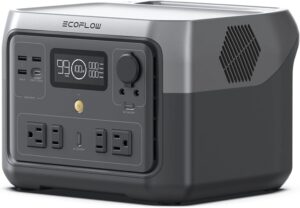
9. EcoFlow River 2 Max Power Station
The EcoFlow River 2 Max gives you 512Wh and 500W output. With X-Boost, it’ll handle up to 1000W for bigger appliances.
At 13.2 pounds, it’s easy to carry for camping. The LiFePO4 battery lasts over 3,000 cycles. Charge it in an hour with AC, or use solar, car, or USB-C. Four AC outlets and a 100W USB-C port cover your device needs.
10. Jackery SolarSaga 100W Solar Panel
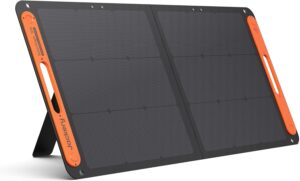
The Jackery SolarSaga 100W is a foldable panel with up to 23% efficiency. It’s simple to connect to Jackery Explorer stations with the included DC cable.
It’s portable but delivers solid output. Kickstands help you angle it for the sun, and the weather-resistant build handles the outdoors.
👉 Shop Jackery SolarSaga 100W Solar Panel
Key Considerations for Off-Grid Power Solutions
Picking the right off-grid power setup means thinking about battery tech, how much you want to carry, and making sure all your gear works together.
Energy Storage and Battery Lifespan
Battery tech decides how long your system will last. Lithium iron phosphate (LiFePO4) batteries are the safest and last longest.
Most quality lithium batteries give you 2,000 to 3,000 charge cycles before dropping to 80% capacity, usually 5-8 years.
- Cycle life rating
- Depth of discharge capability
- Operating temperature range
- Warranty coverage period
Anker and Jackery use automotive-grade lithium cells. EcoFlow and Bluetti often go with LiFePO4 for bigger units.
Extreme temps cut battery performance fast. Lithium batteries work best between 32-104°F, but cold weather can drop capacity by 20-40%.
Battery management systems (BMS) keep things safe by protecting against overcharging and overheating. Look for built-in BMS and thermal monitoring.
Portability and Weight Factors
Weight matters, especially if you’re hiking or moving camp a lot. Power stations range from 4 pounds for 150Wh up to 60+ pounds for 2000Wh systems.
- Small units: 15-20 Wh per pound
- Mid-size: 25-30 Wh per pound
- Large: 30-35 Wh per pound
Foldable solar panels are best for portability. 100W panels usually weigh 8-12 pounds and fold up small.
If you’re car camping, weight’s not a big deal. If you’re backpacking, you’ll want to keep your whole setup under 10 pounds.
Handles and wheels help with big units. EcoFlow Delta has telescoping handles, while Anker C1000 has strong side handles.
Compatibility of Components
Mixing brands can cause headaches with charging and connections. Voltage mismatches can break your gear or stop it from charging right.
Make sure your solar panel voltage matches your power station’s input. Most take 12-24V panels, but always check the specs.
Anderson Powerpole connectors are solid for DC. MC4 connectors are the standard for solar panels.
Pure sine wave inverters work with all electronics. Modified sine wave can mess up sensitive devices.
- Solar panel voltage
- DC connector types
- USB charging protocol support
- AC outlet configuration
Always check connector types before buying extras. Proprietary cables can really limit your options down the road.
Installation and Safety Tips
Setting up your off-grid power system isn’t rocket science, but you’ve got to pay attention to wiring and safety. Stick to the manufacturer’s guidance and basic electrical codes to keep things running smooth and avoid surprises.
Wiring and Connection Best Practices
Use MC4 connectors for all your solar panel hookups. They’re weatherproof and lock in tight, so you don’t have to worry about corrosion.
Pick DC wire rated for outdoor use and the right gauge. 12 AWG is fine for small setups under 30 feet; go with 10 AWG for longer runs or more current.
Install inline fuses between panels and charge controller. A 30-amp fuse covers most 100-watt panel setups and protects your gear if something goes wrong.
Keep positive and negative wires at least 6 inches apart, and bundle them with zip ties every couple feet. It helps prevent wear and accidental shorts.
Slap some dielectric grease on outdoor connections to keep water out and stop corrosion over time.
Support the Adventure
To make your walls less boring, check out my photography portfolio and bring a piece of the wild and my story into your home.
If you’d like to fuel future adventures, you can donate a coffee on Ko-Fi. Every cup keeps me chasing sunrises and stories.
When you shop using my affiliate links, every click helps support this blog at no extra cost to you. It’s a small way to keep Unicorn Adventure alive and kicking while I keep exploring.
Subscribe to my mailing list for future updates, new stories, and behind-the-scenes adventures.
Stay connected with me on Instagram and Facebook for more photos and daily inspiration.
Thanks for being part of the journey, Unicorn Squadron!