

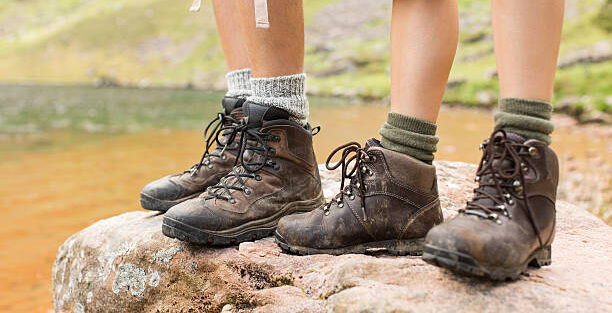
The Best Hiking Socks for Cushioning, Moisture Control, and Blister Prevention
Socks are the most underrated piece of hiking gear. Your feet take thousands of steps through dust, rock, heat, and cold. The wrong socks mean blisters, hot spots, and a miserable day. The right socks mean I can focus on the trail and the light instead of my feet. I hike solo across the American West with a loaded camera pack, and socks that fail at mile three ruin everything that follows.
I’m also autistic. Sensory issues with fabric are real. Seams that rub, textures that itch, compression that’s too tight or too loose, all of it compounds over a long day. I need socks that feel consistent from the first step to the last without creating sensory friction.
These are the hiking socks I’d actually recommend. Tested on real trails. No gimmicks.
The Best Hiking Socks
1. Darn Tough Hiker Socks, Lifetime Guarantee and All-Weather Comfort
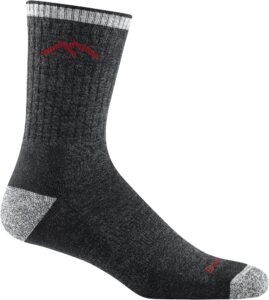
The Darn Tough Hiker Socks are merino wool blend with medium cushioning, seamless toe construction, micro crew height, and a lifetime replacement guarantee.
The cushioning underfoot matters on rocky trails like Chesler Park in Canyonlands or the Navajo Loop in Bryce. Micro crew height works well with hiking boots and never slips or bunches. No blisters or hot spots, even on long days. Seamless construction is key for that. The lifetime warranty is legit. I got a replacement for a pair with a hole and the process was painless. After dozens of hikes and washes, they still fit and look good. Merino wool handles temperature swings between desert heat and mountain cold better than expected. Pricier than most hiking socks. Dry slower than synthetics. Limited color choices. But for comfort, durability, and the guarantee, these are the socks I reach for most.
2. DANISH ENDURANCE Merino Wool Hiking Socks, Targeted Cushioning for Blister Prevention
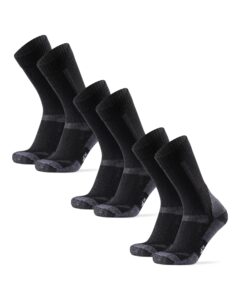
The DANISH ENDURANCE Merino Wool Hiking Socks have a merino blend with targeted cushioning zones, arch support, and odor resistance. Durable construction.
The cushioning works. No hot spots or blisters after a 15-mile day. Merino feels soft and doesn’t get smelly after a couple days on the trail. Arch support gave extra stability on rocky terrain in the Uintas and Wasatch. Sizing runs a bit large, so consider ordering down. They wash well in cold water and air dry fast. After six months, mine still look solid with barely any heel or toe wear. More expensive than basic socks. Fabric can pill with heavy use. But for targeted blister prevention and genuine arch support, these are the best value merino hiking socks I’ve found.
3. Dickies Dri-Tech Crew Socks, Budget Performance That Surprises
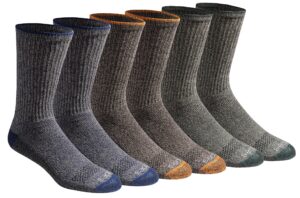
The Dickies Dri-Tech Crew Socks are a cotton-synthetic blend with moisture wicking, arch compression, reinforced heel and toe, and ventilation channels.
Moisture wicking works well on moderate hikes, keeping feet drier than regular cotton socks. The arch compression is the best feature. It hugs my foot without feeling tight and prevents bunching on steep climbs. Build quality surprised me for the price. Reinforced areas barely wore out after dozens of washes. Ventilation helps, but feet still sweat on hot summer hikes. Sizing is inconsistent. Some pairs feel bigger than others. Cushioning is thinner than premium merino options. Cotton blend holds some odor after heavy use. But for budget hiking socks that handle day hikes and casual trail use, these punch above their price.
4. Darn Tough Vermont Hiker Quarter Socks, Low Profile With Lifetime Durability
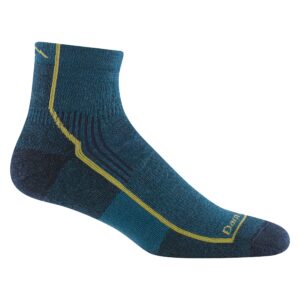
The Darn Tough Vermont Hiker Quarter Socks are merino wool blend with medium cushioning, quarter height that sits just above the boot, seamless toes, and a lifetime guarantee.
Merino blend kept my feet comfortable in both heat and cool mountain mornings. Even after creek crossings, feet dried out quickly. Quarter height sits just above the boot with no rubbing or bunching. Seamless toes mean no hot spots on long downhills. After months of use, heel and toe still look nearly new. Lifetime guarantee means if I ever get a hole, Darn Tough replaces them. Cost is higher than basic socks. Drying time is slower than synthetics. Medium cushioning might feel thick in tight boots. But for a low-profile sock that lasts essentially forever, this is the quarter-height option I trust.
5. Dickies Dri-Tech Moisture Wicking Socks, Day Hike Basics on a Budget
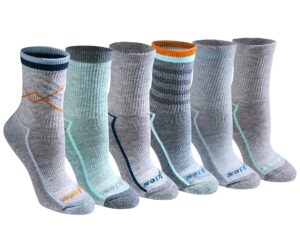
The Dickies Dri-Tech Moisture Wicking Socks are a synthetic blend with moisture wicking, arch compression, reinforced heel and toe, mid-crew height, and ventilation channels.
These handled sweat well on day hikes, especially on steep climbs. Ventilation channels worked in warm weather. Mid-crew height sits below the calf and doesn’t restrict movement. Arch compression provides extra support on rocky trails. Reinforced heel and toe held up against boot friction. Wash and dry quickly. Not enough cushion for multi-day hikes. Synthetics get smelly faster than merino. Too lightweight for serious backcountry use. But for day hikes, gym sessions, and casual trail use on a budget, these cover the basics and dry fast.
6. Darn Tough Vermont Treeline Micro Crew Socks, Maximum Cushioning for Long Days
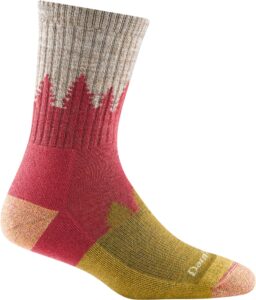
The Darn Tough Vermont Treeline Micro Crew Socks have thick plush cushioning, merino wool blend, seamless toe, micro crew height, and a lifetime guarantee.
Merino blend is soft right out of the package. No scratchiness. Micro crew height lines up perfectly with boots and never slips or bunches. The thick cushioning makes rocky sections on trails like Wheeler Peak or the Chesler Park loop way less brutal. Boots didn’t feel tight despite the extra padding. After months of hikes and washes, these still look almost new. No thinning, no holes. Seamless toe prevents blisters on longer days. Lifetime guarantee is reassuring even though I haven’t needed it. Pricier than most. Colors sometimes differ from online photos. Thicker fabric can feel warm in hot weather. But for maximum cushioning and durability on long trail days, these are worth the investment.
7. Anlisim Merino Wool Hiking Socks, Warm Five-Pack for Cold Weather
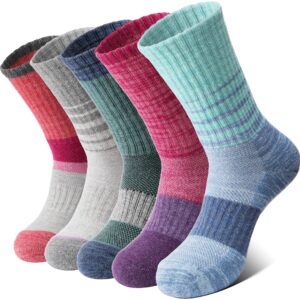
The Anlisim Merino Wool Hiking Socks are a high merino wool blend with arch support, heel and toe padding, ventilation, and a five-pack for multi-day trips.
Even during sweaty climbs, my feet stayed dry. Ventilation works better than expected. Less odor at the end of the day than I’m used to. Arch support is solid, making rocky terrain easier on the feet. No pressure points or hot spots. Padding around heel and toe helps on hard-packed trails. After several washes, no shrinking or fuzzing. Five pairs in a pack means no scrambling for clean socks on multi-day trips through the Sawtooths or Uintas. Tie-dye colors are more about style than blending in. Limited sizing options. Higher wool content means higher price than synthetics. But for warm, comfortable socks that come in a multi-day pack, these deliver.
How to Choose Hiking Socks
Material is the first decision. Merino wool keeps feet warm even when wet, fights odor naturally, and feels soft against skin. Synthetics dry faster and last longer but hold smell. Skip cotton completely. It soaks up sweat, stays wet, and causes blisters.
Cushioning depends on your activity. Light for day hikes and trail running. Medium for general hiking. Thick for backpacking with a heavy pack. Fit should be snug but not tight. Loose socks bunch and create friction. Seamless toe construction prevents hot spots. Match sock height to your boot, crew for mid-boots, quarter for low-cuts.
Frequently Asked Questions
What’s the single best hiking sock on this list?
For all-around use, the Darn Tough Hiker with the lifetime guarantee. For maximum cushioning on long days, the Darn Tough Treeline. For budget day hiking, the Dickies Dri-Tech. For cold weather, the Anlisim five-pack or MOGGEI. Match the sock to your conditions.
How many pairs of hiking socks do I need?
For day hikes, two pairs in rotation is enough. For multi-day trips, one pair per day plus one backup is ideal. The Anlisim five-pack covers a full week. Having a dry pair to change into mid-hike can prevent blisters on longer days.
Are merino wool socks worth the extra cost?
Yes. Merino manages moisture, regulates temperature, resists odor, and feels soft against skin. All of that matters more on a 10-mile day than a lower price tag. Darn Tough’s lifetime guarantee also means you’re buying the sock once, not replacing it every season.
Are any of these good for someone with sensory sensitivities?
Yes. The Darn Tough socks all have seamless toe construction that eliminates rubbing. Merino wool is the softest material against skin with no itch. The MOGGEI socks have a fuzzy interior that feels gentle. Avoid cotton blends and socks with raised seams. For anyone on the spectrum, seamless toes and consistent compression are non-negotiable.
Can I use hiking socks for everyday wear?
Absolutely. Merino wool socks work for daily use, not just trails. The odor resistance and moisture management make them better than most dress or athletic socks. I wear Darn Tough socks almost every day, hiking or not.
Good Socks Change Everything
Socks are the foundation of every hike. The right pair keeps feet dry, blister-free, and comfortable from the first mile to the last. Every sock on this list has been tested on real trails across the American West, from desert heat in Grand Staircase to cold mornings in the Uintas.
The best hiking socks are the ones you forget you’re wearing. These do that.
Support the Adventure
To make your walls less boring, check out my photography portfolio and bring a piece of the wild and my story into your home.
If you’d like to fuel future adventures, you can donate a coffee on Ko-Fi. Every cup keeps me chasing sunrises and stories.
When you shop using my affiliate links, every click helps support this blog at no extra cost to you. It’s a small way to keep Unicorn Adventure alive and kicking while I keep exploring.
Subscribe to my mailing list for future updates, new stories, and behind-the-scenes adventures.
Stay connected with me on Instagram and TikTok for more photos and daily inspiration.
Thanks for being part of the journey, Unicorn Squadron!
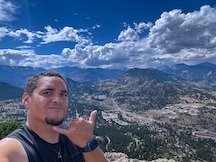
Theo Maynard is a landscape photographer and adventure blogger based in Salt Lake City. He chases remote desert and mountain light across the American West, documents it all solo, and shares the journey through Unicorn Adventure. He’s on the autism spectrum, and that’s not a footnote, it’s the whole story. He creates to inspire others to get outside, chase what lights them up, and live their best possible life. Unapologetically himself.