
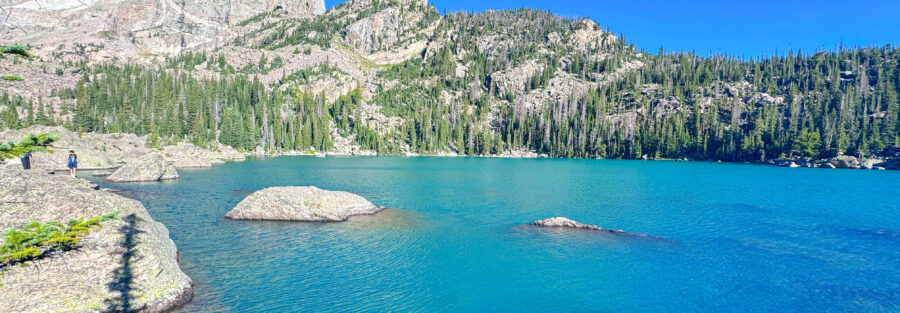
Four alpine lakes. One loop. Seven-plus miles in Rocky Mountain National Park near Estes Park, Colorado. The Four Lake Loop strings together Nymph Lake, Dream Lake, Emerald Lake, and Lake Haiyaha in a route that starts at the Bear Lake Trailhead, climbs through some of the most photographed terrain in Colorado, and returns you to the parking area having covered the full range of what the Bear Lake corridor delivers. This is the trail you do when you want to see all of it without committing to four separate out-and-backs. This guide covers the Four Lake Loop Trail: the Bear Lake parking and shuttle situation, what each lake actually looks like, and how to manage the timed entry system that Rocky Mountain National Park now requires.
Quick Facts
| Trail Name | Four Lake Loop Trail |
| Location | Rocky Mountain National Park, near Estes Park, Colorado |
| Coordinates | 40.3120° N, 105.6460° W |
| Distance | 7.2 miles (loop) |
| Elevation Gain | 1,351 feet |
| Difficulty | Moderate |
| Time | 3–5 hours |
| Dogs Allowed | No (pets not permitted on park trails) |
| Fee | $35 per vehicle; free with America the Beautiful Pass |
| AllTrails | View on AllTrails |
How to Get There
Rocky Mountain National Park is located near Estes Park, Colorado, on US-34 and US-36. From Estes Park, take US-36 west into the park and follow signs for Bear Lake Road. The Bear Lake Trailhead is at the end of Bear Lake Road, about 20 minutes from the park entrance. From Denver, plan roughly 1.5 hours: I-25 north to US-36 west through Lyons to Estes Park, then into the park. From Salt Lake City, it’s about 7 hours via I-80 east and I-25 north. Estes Park is a standard mountain resort town with full services: hotels, restaurants, grocery stores, gear shops. Stock up there before driving in. Critical: Rocky Mountain National Park requires timed entry reservations during peak season, typically May through October. You must reserve your entry window at recreation.gov before arriving at the park. Without a reservation during this period, you will not get in. Bear Lake Road Corridor reservations are separate from the general park entry and often sell out faster. Check nps.gov/romo for current reservation requirements before your trip.
Parking Information
Bear Lake Trailhead parking fills before 8 a.m. on summer mornings and weekend mornings throughout peak season. This is not an exaggeration. The lot holds a limited number of vehicles and is frequently at capacity before most visitors have finished their coffee. The NPS runs a free shuttle from the Glacier Basin Park & Ride area on Bear Lake Road directly to the Bear Lake Trailhead. The shuttle runs frequently throughout the day and is the recommended approach during peak season. Park at Glacier Basin, take the shuttle, and you’ll arrive at the trailhead without the parking stress. The shuttle is included with your park entry. Restrooms and informational signage are available at the Bear Lake Trailhead. Water is available as well. This is one of the more developed trailhead facilities in any national park, reflecting the volume of visitors the Bear Lake corridor receives. 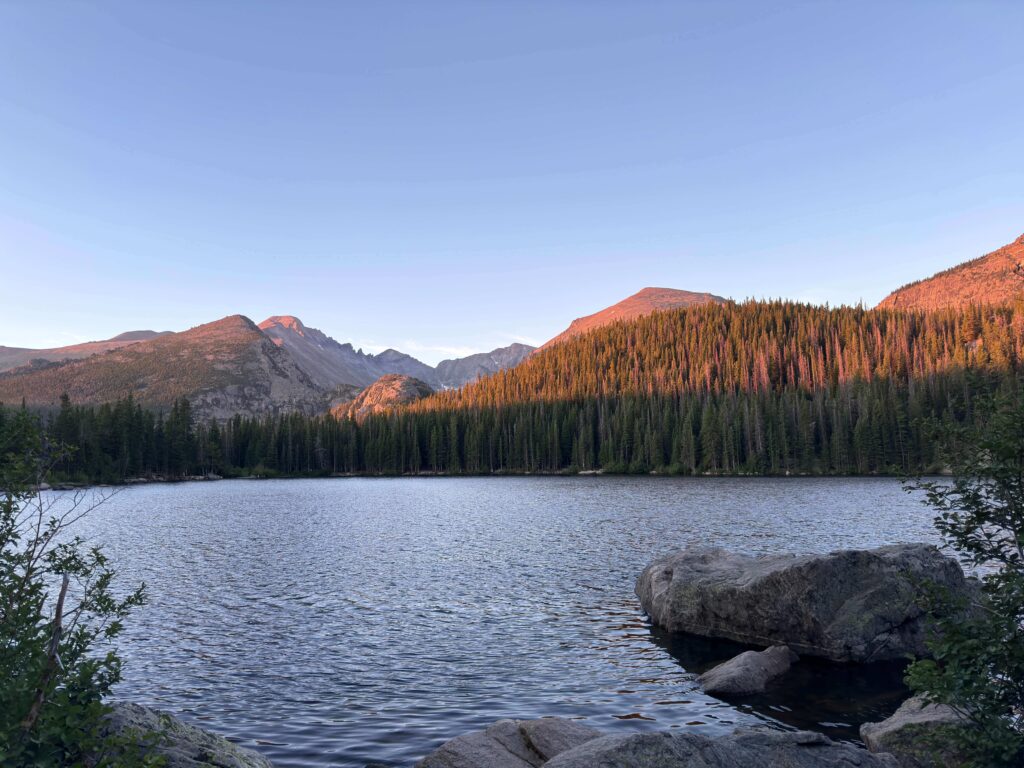
Cell Service and Navigation
Cell coverage in Rocky Mountain National Park is inconsistent and varies by carrier. The Bear Lake area has better coverage than more remote parts of the park, but don’t count on reliable data during the hike. Download AllTrails offline in Estes Park before driving in. The Four Lake Loop is well-signed throughout. Junction signs at each lake clearly indicate routes to other lakes and back to Bear Lake. Navigation isn’t a challenge here. Having the GPS map active is useful for tracking your position on the loop and confirming which junction you’re at when the trail diverges.
What to Expect on the Four Lake Loop Trail
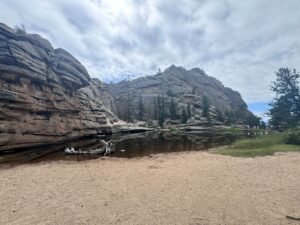
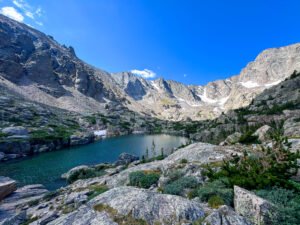
The first lake on the loop from Bear Lake is Nymph Lake, about 0.5 miles in. It’s a small, shallow lake partially covered in lily pads in summer, surrounded by pine forest with Hallett Peak visible above. It’s the warm-up lake. The views are pleasant and the setting is peaceful, but most hikers don’t linger here because they know what’s coming. Dream Lake is where most people stop and stare. The lake sits at 9,900 feet in a narrow valley between Hallett Peak and Flattop Mountain, both of which rise dramatically above the water. In the morning before the wind picks up, Dream Lake mirrors both peaks in near-perfect reflection. It’s one of the more photographed spots in Colorado mountain hiking for good reason. For photography, the best light at Dream Lake is 30-60 minutes after sunrise, when direct light reaches the eastern face of Hallett Peak and reflects into the still water. Getting there this early means being at the Bear Lake Trailhead before sunrise, which requires an early drive from Estes Park. The shuttle doesn’t run that early; you’ll need to park in the main lot or find another approach. It’s worth the logistics effort if sunrise at Dream Lake is the objective. The trail continues past Dream Lake and climbs to Emerald Lake, the highest of the three lakes on the main corridor at around 10,100 feet. The lake sits in a steep cirque with cliffs rising directly above it and the color of the water lives up to the name in certain light conditions. The section between Dream Lake and Emerald Lake is the steepest on the loop, rocky and requiring attention. Emerald Lake is where most visitors on the Emerald Lake Trail turn around. The Four Lake Loop continues from here to Lake Haiyaha, which involves backtracking partway and then taking the Lake Haiyaha Trail. Lake Haiyaha is the least-visited of the four, which is the reason to make the effort. The approach from the Emerald Lake corridor requires some route-reading through boulder fields and the trail has a different character from the polished path to the first three lakes. The lake itself sits in a boulder-ringed basin with large rocks visible through the clear water and a more rugged, secluded atmosphere than the other lakes on the loop. The return from Lake Haiyaha to Bear Lake completes the loop through forest terrain. It’s a longer section than the approach legs and gives you time to decompress after the rocky terrain above.
Trail Difficulty and Length
Moderate is accurate. The loop is long enough to feel substantial and the elevation gain on the Emerald Lake section is concentrated enough to require real effort. The Lake Haiyaha boulder approach adds a rougher terrain element at the back half. Budget 3-5 hours for the full loop at a reasonable pace with time at each lake. The Bear Lake corridor starts at around 9,400 feet at the trailhead. Hikers from lower elevations should expect altitude to be a factor. Take the first mile easy and let your breathing settle before the steeper sections.
Dog Friendly?
No. Rocky Mountain National Park prohibits pets on all trails. Dogs are permitted in parking areas, campgrounds, and along paved roads within the park, but cannot go on any unpaved trail surface. For dog-friendly hiking near Estes Park, the Roosevelt National Forest surrounding the park has trails that welcome leashed dogs. The Estes Park area has several options outside park boundaries. 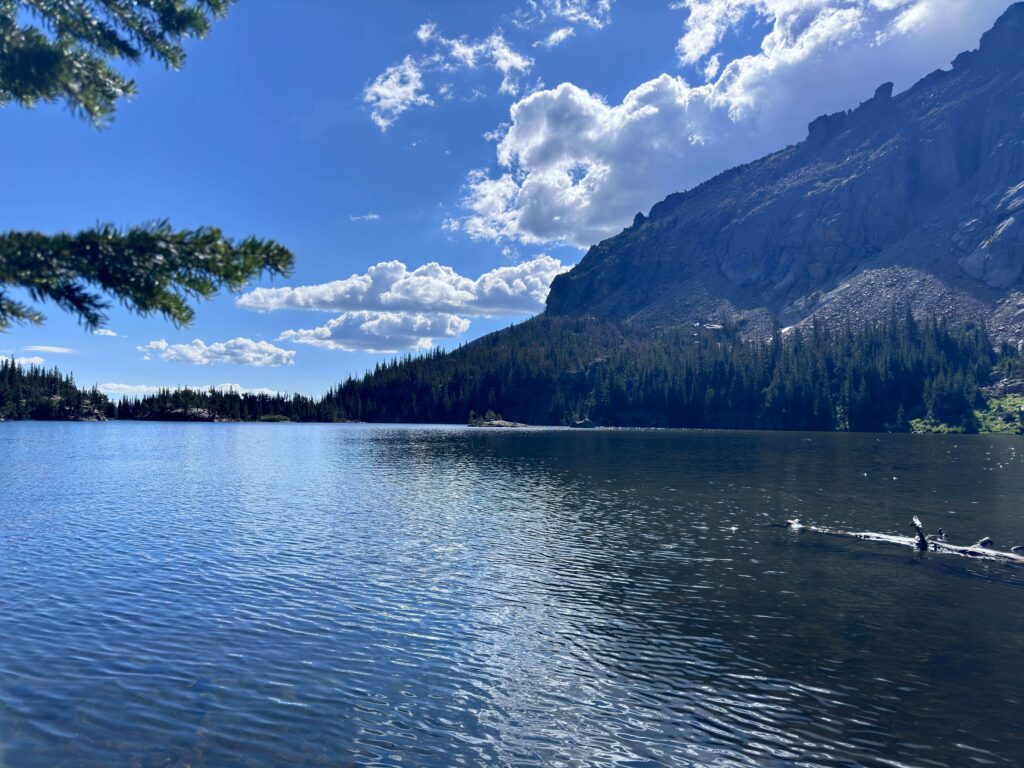
What to Bring
Water: 2 liters per person minimum. The trailhead has water but the trail doesn’t. In summer, the exposed upper sections above Dream Lake and at Emerald Lake warm up fast. Layers: the Bear Lake trailhead is nearly 9,500 feet and mornings are cold even in July. Afternoon thunderstorms build quickly over the Front Range peaks. A rain shell is mandatory. The exposed ridge between Dream Lake and Emerald Lake is where afternoon weather hits first. For photography: a wide-angle lens for Dream Lake and Emerald Lake reflections, a mid-range for the peak and cliff detail above the lakes. A tripod or gorilla-pod for pre-sunrise low-light work at Dream Lake. Getting there before sunrise requires a headlamp for the approach.
Best Time to Hike the Four Lake Loop Trail
Late June through September is the reliable window. Snow typically clears from the upper sections by late June in most years, though Emerald Lake can hold ice into early July in heavy snow seasons. Check trail conditions with the park before visiting in June. Summer is peak season and the Bear Lake corridor is the most visited area in one of the most visited national parks in the country. Weekday visits are significantly quieter than weekends. Early morning arrivals, even on weekdays, reduce trail density substantially. The first hour after sunrise has the best light and the fewest people simultaneously. September is the best month for hikers who want quality over chaos. Aspen trees around the lower sections of Bear Lake Road turn gold in late September, crowds thin noticeably, afternoon storms decrease in frequency, and the light on the peaks above Dream and Emerald Lakes is excellent in the lower-angle fall sun. For photography: sunrise at Dream Lake is the primary target, requiring pre-dawn arrival. Early September weekday mornings give you the best combination of fall light and manageable crowd levels.
Rules and Regulations
Timed entry reservations are required May through October. Book at recreation.gov before your trip. The Bear Lake Road Corridor reservation is separate from the general park entry reservation. Both can sell out, and both are required during peak season. Stay on designated trails throughout. Rocky Mountain National Park sees heavy visitor impact and the vegetation off-trail in the Bear Lake corridor is visibly stressed. Cryptogamic crust and fragile alpine plant communities exist around all four lakes. Stay on the path. No pets on trails. Pack out all trash. No drones without a special use permit. Leave No Trace principles apply. The park fee is $35 per vehicle or free with an America the Beautiful Pass.
Where to Stay Near Estes Park
Estes Park is a full mountain resort town with lodging at every price point. It’s the obvious base for Rocky Mountain National Park and sits right at the park entrance. The Stanley Hotel is the historic property in Estes Park, famously connected to Stephen King’s The Shining and legitimately one of the more atmospheric hotels in Colorado.
Camping Nearby
Rocky Mountain National Park has multiple campgrounds, all reservation-based during peak season through recreation.gov. Glacier Basin Campground is the closest to the Bear Lake corridor, which also has the Park & Ride shuttle stop. Moraine Park Campground is larger and slightly further. Both book out months in advance for summer weekends. Dispersed camping is not permitted inside the park. Outside the park boundaries, the Roosevelt National Forest has dispersed camping options on US Forest Service land. The Estes Park area has several private campgrounds as well if developed facilities are preferred. 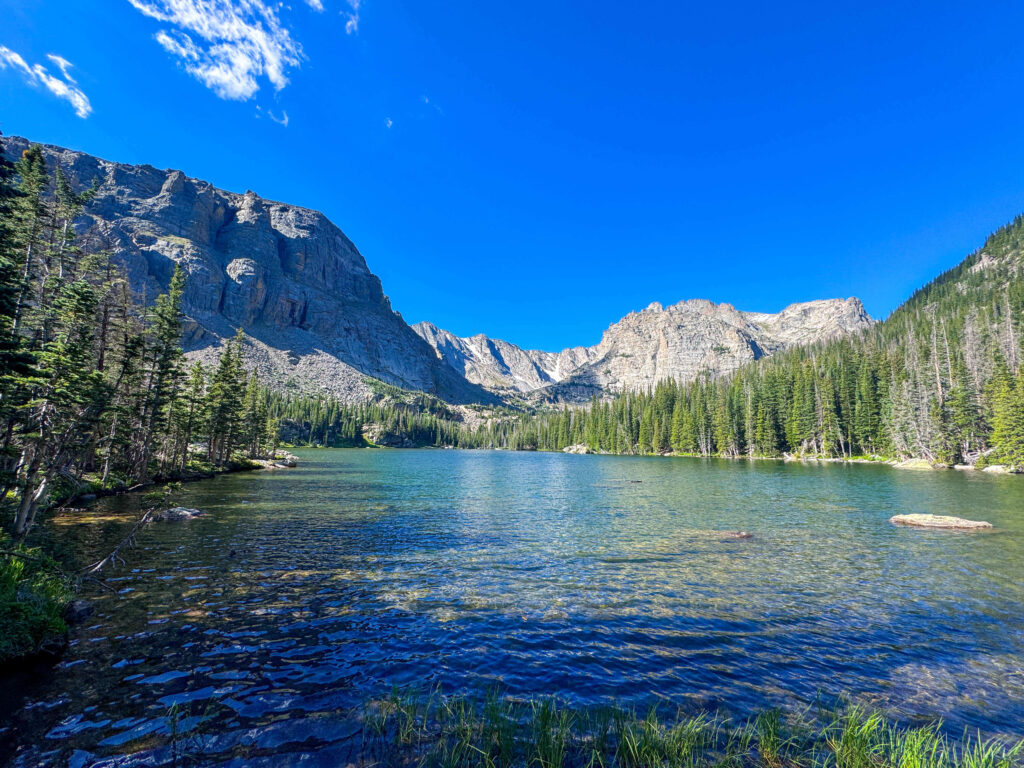
Nearby Adventures
The Bear Lake Loop is the zero-effort companion stop: a flat 0.6-mile trail around Bear Lake itself with panoramic views of the surrounding peaks. Worth doing before or after the main loop if your legs have anything left. The Sky Pond Trail is the step-up option for hikers who want more challenge after the Four Lake Loop. It passes Glass Lake and reaches Sky Pond in a steep cirque below Taylor Peak, with a waterfall section that requires some scrambling. One of the better hikes in the park for hikers ready for a harder day. Trail Ridge Road is the non-hiking alternative that shouldn’t be missed on any Rocky Mountain National Park visit. The highest continuous paved road in the United States, it crosses the alpine tundra at over 12,000 feet and provides views that rival anything accessible only on foot. The drive is accessible to any vehicle and visitor in good weather. Estes Park itself has its own outdoor activities: the Estes Park Riverwalk along the Fall River, wildlife viewing (elk are frequently visible in town at dawn and dusk), and the usual resort town amenities. The Stanley Hotel offers tours if the history interests you.
Plan This Hike
AllTrails has the Four Lake Loop mapped with offline capability and condition reports from recent hikers, including notes on trail conditions after winter and early in shoulder seasons. Download it before you drive into the park. Plan your hike on AllTrails and pull the offline map while you’ve still got reliable signal in Estes Park.
Chase the Quiet
Dream Lake at sunrise before the trail fills is the experience the Four Lake Loop is actually selling. The reflection of Hallett Peak in water so still it looks like a rendering, the cold air that smells like pine and altitude, and no one else there yet. That version of the Bear Lake corridor is available every morning. You just have to be earlier than everyone else who wants it. The rest of the day, the loop is busy. But that first hour belongs to whoever shows up for it. 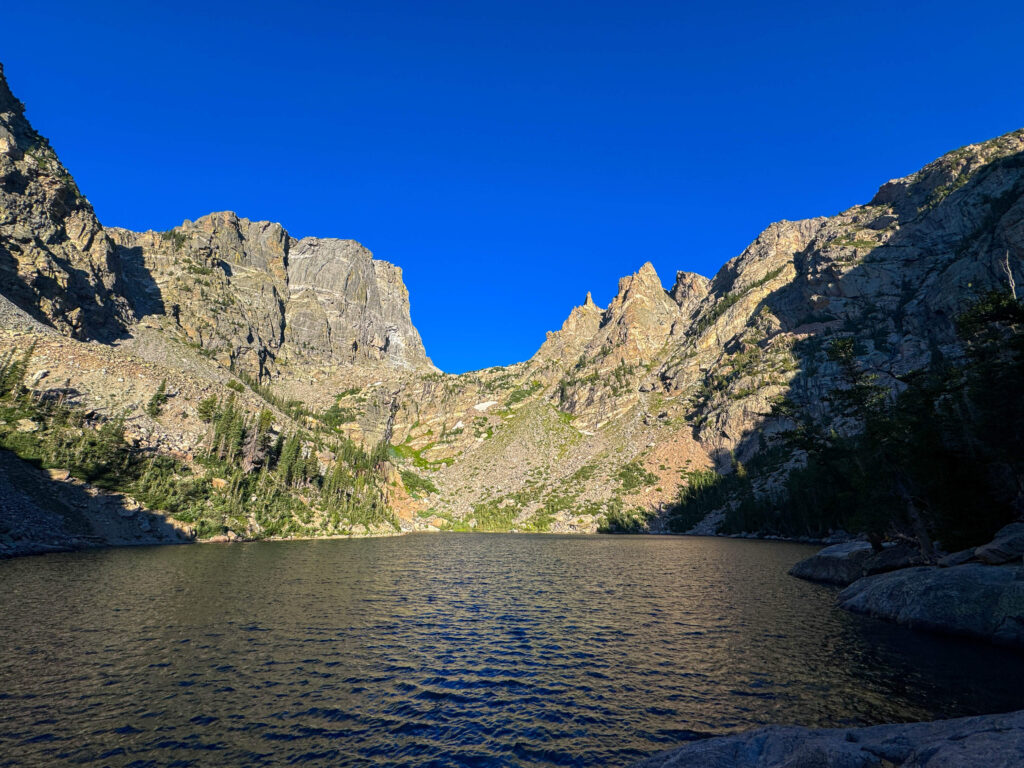
Support the Adventure
To make your walls less boring, check out my photography portfolio and bring a piece of the wild and my story into your home. If you’d like to fuel future adventures, you can donate a coffee on Ko-Fi. Every cup keeps me chasing sunrises and stories. When you shop using my affiliate links, every click helps support this blog at no extra cost to you. It’s a small way to keep Unicorn Adventure alive and kicking while I keep exploring. Subscribe to my mailing list for future updates, new stories, and behind-the-scenes adventures. Stay connected with me on Instagram and Facebook for more photos and daily inspiration. Thanks for being part of the journey, Unicorn Squadron!
Theo Maynard is a landscape photographer and adventure blogger based in Salt Lake City. He chases remote desert and mountain light across the American West, documents it all solo, and shares the journey through Unicorn Adventure. He’s on the autism spectrum, and that’s not a footnote, it’s the whole story. He creates to inspire others to get outside, chase what lights them up, and live their best possible life. Unapologetically himself.
1 Comment
Old Fall River Road Off-Roading to Chasm Falls, RMNP
[…] Alluvial Fan Trail offers an easy stroll to cascades and a boulder field. For bigger hikes, try the Four Lake Loop at 7.2 miles with 1,351 feet of gain, or Sky Pond at 8.6 miles with 1,771 feet of gain. Gem Lake […]