


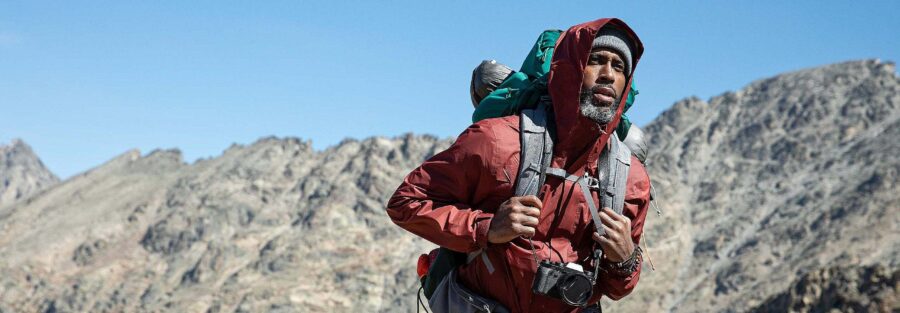
The Complete Hiking Layering Guide: Base Layers, Mid-Layers, Shells, and Socks
Layering is the system that keeps me alive and comfortable on the trail. I hike solo across the American West in conditions that change fast. Morning frost at Wheeler Peak in Great Basin. Afternoon sun at Chesler Park in Canyonlands. Sudden storms in the Uintas that drop temperatures 20 degrees in an hour. I’ve been soaked, frozen, and overheated, and every time it was because my layering system failed. Getting it right means I can focus on the landscape instead of my body temperature.
I’m also autistic. Fabric against my skin matters more to me than most people. Scratchy seams, clingy wet material, unpredictable temperature swings, these don’t just make me uncomfortable. They overwhelm my sensory system and shut me down. I need base layers that feel consistent against my skin, mid-layers that don’t bunch or bind, and shells that breathe predictably. The wrong fabric texture can ruin a whole day faster than bad weather.
These are the layering pieces I’d actually recommend. Base layers, mid-layers, shells, rain pants, and socks. Tested across seasons in real conditions. No gimmicks.
The Complete Hiking Layering System
1. Patagonia Capilene Midweight Crew, Year-Round Synthetic Base Layer
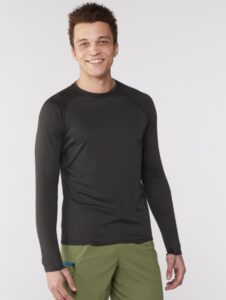
The Patagonia Capilene Midweight Crew is a synthetic base layer with diamond-grid pattern for warmth and moisture wicking. Fast-drying. Odor-resistant. Slides under layers easily.
My go-to base layer for year-round hiking. The diamond-grid pattern traps warm air close to your skin while moving sweat outward. Dries fast. Resists odors over multi-day trips. Slides under mid-layers and shells without bunching or binding, which matters when you’re adding and removing layers throughout the day. Wear it alone in mild weather on fall hikes through Kodachrome Basin. Layer it under fleece and a shell for winter pushes in the Wasatch. The synthetic fabric has a consistent, smooth feel against skin that doesn’t change when wet. No scratchy surprises. No clingy cotton nightmare. For anyone with sensory sensitivities, the predictable texture of this base layer is a major advantage over cheaper synthetics that feel plasticky or rough after a few washes.
2. Merino.tech 250 Midweight Baselayer Top, Natural Odor Control for Multi-Day Trips
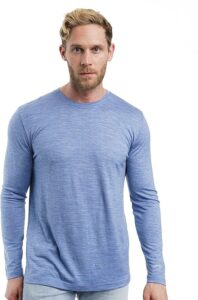
The Merino.tech 250 Midweight Baselayer Top is a 250gsm merino wool base layer with flat seams. Naturally odor-resistant. Also available in 165gsm lightweight and 320gsm heavyweight.
Merino wool is the other base layer option and it has real advantages over synthetic. Natural odor resistance means this shirt stays wearable for days without smelling like a gym bag. Temperature regulation keeps you warm when it’s cold and cool when it’s warm. The 250gsm midweight hits the sweet spot for most three-season hiking. Flat seams prevent chafing on long days, which matters on 10-plus-mile pushes through the Sawtooths or extended routes in Grand Staircase. Soft against skin. Stays warm even when damp, which synthetic can’t match. The tradeoff is dry time. Merino dries slower than synthetic. On heavy sweat days, you’ll notice it stays damp longer. Also available in 165gsm for summer and 320gsm for deep winter. For multi-day trips where you can’t wash your base layer, merino’s natural odor control is worth the slower dry time.
3. Under Armour ColdGear Leggings, Base Layer for Your Legs That Actually Moves
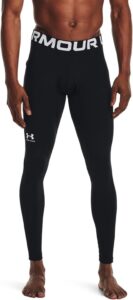
The Under Armour ColdGear Leggings trap heat and wick sweat. Four-way stretch. Available in 3.0 for moderate cold and 4.0 for bitter cold.
Don’t forget your legs. Most hikers layer their upper body and ignore everything below the waist. These leggings fix that. ColdGear traps heat and wicks sweat so you don’t get clammy underneath hiking pants. Four-way stretch means full range of motion on steep climbs and scrambles without the fabric fighting you. The 4.0 series handles bitter cold for winter hiking in the Uintas and Wasatch. The 3.0 works for milder cold days and shoulder seasons. I wear these under hiking pants anytime temperatures drop below 40 degrees. They add meaningful warmth without adding bulk or restricting movement. The fabric feels smooth and consistent against skin. No itchy waistband. No bunching behind the knees. For anyone who has struggled with base layer leggings that shift, ride up, or create pressure points, the four-way stretch here eliminates most of those problems.
4. Columbia Steens Mountain Fleece Jacket, Budget Mid-Layer That Breathes
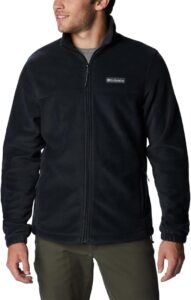
The Columbia Steens Mountain Fleece Jacket is a lightweight fleece jacket that insulates between base layer and shell. Traps warmth. Breathable. Easy to add or remove.
The mid-layer does the heavy lifting for warmth. This fleece traps warm air between your base layer and shell while letting sweat escape. Lightweight enough to add or remove quickly as conditions change. That matters on trails where you’re climbing in sun and descending into shade within the same hour. I’ve used this fleece on everything from cool morning starts at Bryce Canyon to cold evening descents from Quandary Peak. It layers cleanly over base layers without bunching at the shoulders or armpits. The tradeoff is wind. Fleece breathes well but doesn’t block wind. You need a shell over it in any breeze. Also less warm per weight than down or synthetic insulation. But fleece keeps working when damp, which down doesn’t. For a budget mid-layer that handles moisture, breathes during hard effort, and layers predictably, this Columbia fleece is the practical choice.
5. The North Face Thermoball Eco Jacket, Synthetic Insulation That Works When Wet
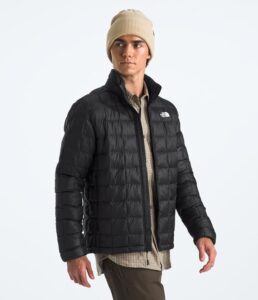
The The North Face Thermoball Eco Jacket uses recycled synthetic fiber clusters that mimic down insulation. Traps heat in air pockets. Packable. Lightweight. Works when wet.
When it’s colder than fleece can handle but you need insulation that survives moisture. Thermoball Eco uses small round fiber clusters made from recycled synthetic material that mimic down by trapping heat in tiny air pockets. The critical advantage over real down is that it keeps insulating when wet. That matters in the Pacific Northwest, in unexpected rain, and during heavy exertion where sweat soaks through from the inside. Packable enough to compress into a stuff sack for your day pack. Lightweight. Layers well over base layers and under a shell. I carry this as my warmth insurance on shoulder-season trips where conditions are unpredictable. Fall in the Uintas. Spring in the Sawtooths. It fills the gap between a fleece mid-layer and a full winter puffy. The sustainable angle is real too. Recycled materials without sacrificing performance.
6. 33,000ft Packable Rain Jacket, Lightweight Shell That Disappears in Your Pack
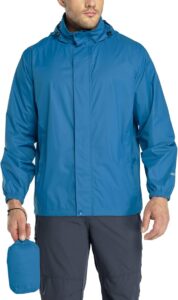
The 33,000ft Packable Rain Jacket is made from high-density ripstop polyester with fully sealed TPU membrane. Waterproof. Windproof. Breathable. Packs into its own pouch.
The shell layer is your weather shield. This jacket blocks rain, wind, and snow while still letting sweat escape through the breathable TPU membrane. Fully sealed seams keep water out at every stitch point. High-density ripstop polyester resists tearing from branches and brush. Packs into its own compact pouch, which means it lives in your pack on every hike regardless of the forecast. Because weather lies. I’ve been caught in unexpected storms in Grand Staircase, sudden wind on exposed ridgelines in the Wasatch, and cold rain in the Sawtooths that wasn’t in any forecast. A packable shell that’s always in your pack is insurance you’ll actually use. Lightweight enough that you forget it’s there until you need it. The tradeoff is breathability under sustained heavy effort. You’ll get some condensation inside during hard climbs. But for weight, packability, and reliable weather protection, this delivers.
7. 33,000ft Rain Pants, Waterproof Lower-Body Protection With Breathable Lining
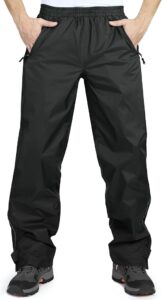
The 33,000ft Rain Pants feature fully seam-sealed waterproof fabric with TPU membrane. 5000mm waterproof rating. Breathable mesh lining. 5000g per square meter per 24 hour breathability rating.
Rain jacket without rain pants is half a system. Your legs get just as wet as your torso. These rain pants complete the shell layer with fully seam-sealed waterproof fabric and a TPU membrane rated at 5000mm waterproof. Breathable mesh lining prevents that clammy trapped-moisture feeling during active hiking. I carry these alongside the rain jacket on any trip where weather is uncertain, which in the American West is basically every trip. Navajo Loop in Bryce Canyon when afternoon thunderstorms roll in. Exposed ridgelines in the Uintas. Late-season hiking in the Sawtooths when rain turns to sleet. The 5000g breathability rating keeps things manageable during moderate effort. Pull them on over hiking pants when conditions deteriorate. Pull them off when the sun returns. Simple system. The tradeoff is bulk compared to ultralight rain pants, but the mesh lining and sealed seams justify the extra few ounces.
8. Darn Tough Vermont Midweight Wool Socks, Lifetime-Guaranteed Merino Hiking Socks
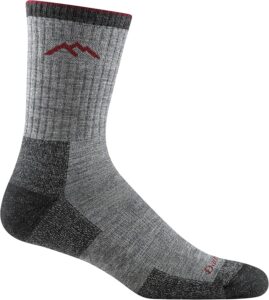
The Darn Tough Vermont Midweight Wool Socks are merino wool hiking socks with moisture wicking, odor resistance, cushioned sole, and a lifetime guarantee.
Socks are the foundation of your layering system. Everything above your ankles is pointless if your feet are blistered, wet, or cold. Darn Tough merino wool socks wick moisture, resist odor, and cushion pressure points. Snug fit prevents bunching and sliding inside your boots, which prevents blisters. The lifetime guarantee is real. If they wear out, Darn Tough sends you a new pair. I’ve worn these on every serious hike. Chesler Park in Canyonlands. Wheeler Peak in Great Basin. Multi-day trips through the Sawtooths. Merino wool stays warm even when damp and handles temperature swings better than synthetic socks. The midweight cushioning absorbs impact on rocky trails without making your boots feel tight. Pair with thin liner socks on long cold hikes for extra blister protection. Avoid cotton socks completely. Cotton traps moisture, causes blisters, and loses all insulation when wet. Merino wool socks are the single best upgrade most hikers can make.
How to Build Your Layering System
Three layers. Base layer wicks moisture off your skin. Mid-layer traps warm air for insulation. Shell blocks wind, rain, and snow. Every layer has a job. When one fails, the whole system fails. Start with the best base layer you can afford because it touches your skin all day. Merino wool for multi-day trips and odor control. Synthetic for fast-drying performance and hot conditions. Never cotton. Cotton soaks up sweat and stays wet, which makes you cold.
Adjust layers throughout the day. Remove your mid-layer on hard climbs to prevent overheating and sweat buildup. Add it back at rest stops and summits where wind chill drops your body temperature fast. Carry your shell in your pack on every hike regardless of the forecast. Weather changes faster than forecasts predict, especially in mountain environments. Don’t forget your legs and feet. Base layer leggings under hiking pants in cold weather. Rain pants over everything when it’s wet. Merino wool socks always.
Frequently Asked Questions
What’s the single best layering piece on this list?
The Darn Tough socks. Most hikers already have some kind of upper body layers but are still wearing terrible socks. Merino wool hiking socks with a lifetime guarantee eliminate blisters, manage moisture, and handle temperature swings. After that, the Patagonia Capilene base layer or Merino.tech 250 depending on whether you prioritize fast drying or odor control.
Merino wool or synthetic for base layers?
Both work. Synthetic dries faster and costs less. Merino wool controls odor naturally and regulates temperature better. For single-day hikes with heavy sweat, synthetic. For multi-day trips where you can’t wash your base layer, merino. For sensory comfort, merino tends to feel softer and more consistent against skin than most synthetics.
Are these layers comfortable for someone with sensory sensitivities?
Yes. The Patagonia Capilene has a smooth, predictable texture that doesn’t change when wet. Merino wool feels soft and consistent. Flat seams on the Merino.tech 250 prevent chafing and pressure points. The Under Armour ColdGear leggings have smooth fabric without itchy waistbands. Avoid any base layer with raised seams, scratchy tags, or fabric that changes texture when damp. Try layers at home before wearing them on the trail.
Do I really need rain pants or just a rain jacket?
You need both. Your legs get just as wet as your torso. Wet hiking pants in cold wind cause rapid heat loss from your legs. Rain pants complete the shell system. They pack small and weigh very little. Carry them alongside your rain jacket on any trip where weather is uncertain.
How do I prevent blisters on long hikes?
Start with proper socks. Merino wool like Darn Tough. Add thin liner socks for extra friction reduction on long or cold hikes. Make sure your boots fit with a thumb-width gap between your longest toe and the boot front. Break in boots before big hikes. Apply anti-chafe products like Body Glide to hot spots before they become blisters. Never wear cotton socks.
The Right Layers Let You Focus on the Trail
I’ve been cold. I’ve been soaked. I’ve been overheated and miserable on trails that should have been incredible. Every time, the problem was my layering system. Getting it right means I can focus on the light, the landscape, and the experience instead of my body temperature. Every piece on this list has been tested across seasons in the mountains, deserts, and forests of the American West.
Support the Adventure
To make your walls less boring, check out my photography portfolio and bring a piece of the wild and my story into your home.
If you’d like to fuel future adventures, you can donate a coffee on Ko-Fi. Every cup keeps me chasing sunrises and stories.
When you shop using my affiliate links, every click helps support this blog at no extra cost to you. It’s a small way to keep Unicorn Adventure alive and kicking while I keep exploring.
Subscribe to my mailing list for future updates, new stories, and behind-the-scenes adventures.
Stay connected with me on Instagram and Facebook for more photos and daily inspiration.
Thanks for being part of the journey, Unicorn Squadron!

Theo Maynard is a landscape photographer and adventure blogger based in Salt Lake City. He chases remote desert and mountain light across the American West, documents it all solo, and shares the journey through Unicorn Adventure. He’s on the autism spectrum, and that’s not a footnote, it’s the whole story. He creates to inspire others to get outside, chase what lights them up, and live their best possible life. Unapologetically himself.