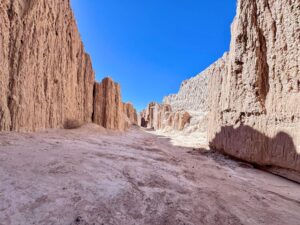
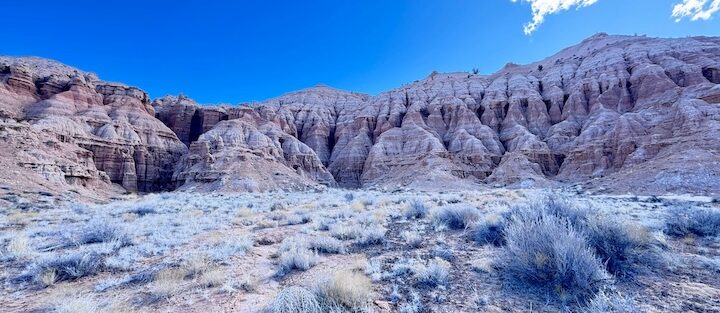
Cathedral Gorge State Park is in southeastern Nevada near Panaca, about 3 hours north of Las Vegas on US-93. The park’s clay formations, columns, ridges, and spires sculpted by erosion from the Panaca Formation’s bentonite clay, create a landscape that looks like a different planet’s canyon country. The Juniper Draw Loop Trail is the primary hiking route through the park: 3.3 miles with 216 feet of gain through open desert, slot canyon passages, and the sculptural clay terrain that makes Cathedral Gorge distinctive from any other state park in the American West.
Quick Facts
| Trail Name | Juniper Draw Loop Trail |
| Location | Cathedral Gorge State Park, near Panaca, Nevada |
| Coordinates | 37.8071° N, 114.4121° W |
| Distance | 3.3 miles (loop) |
| Elevation Gain | 216 feet |
| Difficulty | Easy |
| Time | 1.5–2.5 hours |
| Dogs Allowed | Yes, on leash |
| Fee | $5 Nevada vehicles / $10 non-Nevada vehicles |
| AllTrails | View on AllTrails |
How to Get There
Cathedral Gorge State Park is near Panaca, Nevada, on US-93 in southeastern Nevada. From Las Vegas, take I-15 north to US-93 north, approximately 3 hours. From Salt Lake City, take I-15 south to US-93 south through Ely, approximately 4-4.5 hours. From St. George, Utah, take I-15 north to US-93 north, approximately 2.5 hours. From Ely, Nevada, take US-93 south approximately 1 hour. From Panaca, the park entrance is a few miles away on US-93 with clear signage.
Parking Information
Designated parking lot at the trailhead with restrooms and picnic tables. Adequate space with less crowding than major national park trailheads given Cathedral Gorge’s relative obscurity. The park entry fee ($5 Nevada / $10 non-Nevada) is paid at the entrance. Arrive early for the best morning light on the clay formations. 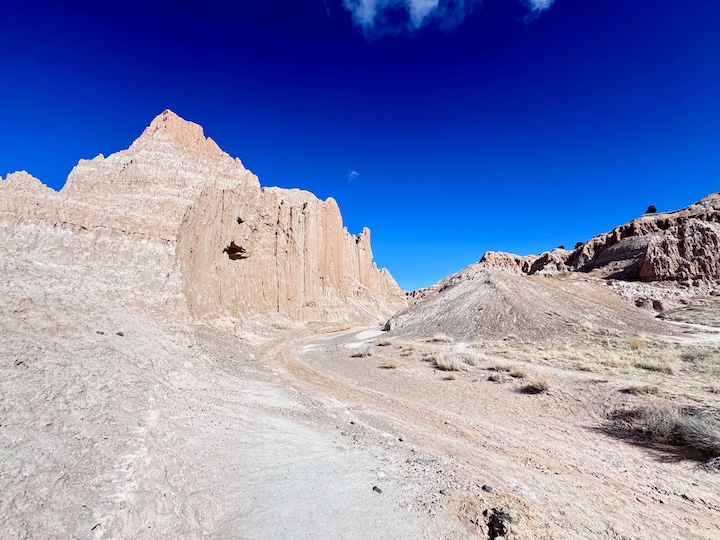
Cell Service and Navigation
Cell coverage is limited in southeastern Nevada’s rural corridor. Download AllTrails offline before leaving Panaca or Caliente. The loop trail is well-marked throughout; navigation is manageable with trail signage. Having the GPS track active is useful in the slot canyon sections where the route can be less obvious among the formations.
What to Expect on the Juniper Draw Loop
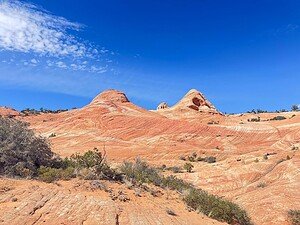
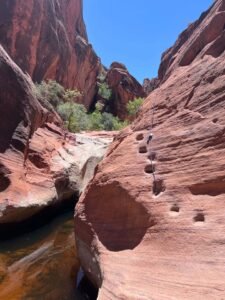
Cathedral Gorge’s geology is different from Utah’s sandstone canyon country: the formations here are bentonite clay from the Panaca Formation, deposited in an ancient lake bed and then sculpted by erosion into columns, ridges, and spires. The clay is far more fragile than sandstone; it erodes rapidly in rain and is damaged by foot traffic on the formation surfaces. Stay on the designated trail and do not climb on the formations. The color range shifts through the day: the pale beige and cream of the clay in morning light becomes warmer and deeper orange as afternoon light hits the formations from different angles. Golden hour from either direction, sunrise from the east, sunset from the west, produces the most dramatic color saturation on the clay spires. The loop includes narrow slot canyon passages through the clay formations where the canyon walls close in on both sides. These sections are the most visually distinctive part of the trail and the most photographed. The clay slot canyons are narrow, twisting, and occasionally low enough to require ducking. The confinement produces the sensation of being inside the formations rather than walking past them. The slot canyons are not navigable when the clay is wet: wet bentonite becomes extremely slippery and the narrow passages become mud traps. Do not attempt the slot canyon sections after recent rain or when the ground is still wet. The loop’s open desert sections provide contrast to the slot canyon passages: the formations visible at distance, the full scale of the gorge readable from outside it, and the high desert plant community of juniper, sagebrush, and desert shrubs. The silence in Cathedral Gorge is consistent throughout, the park draws far fewer visitors than comparable geological attractions, and the open sections amplify it. For photography: the slot canyon sections in soft morning light before direct sun reaches the canyon floor. The open formation views from the loop’s high points in late afternoon. Wide-angle for the full spire field and canyon context, mid-range for the clay texture and formation detail, mid-range for the slot canyon passages with their narrow sky strip overhead.
Trail Difficulty and Length
The trail is 3.3 miles with 216 feet of gain. Easy is accurate for the terrain: the loop has no technical challenges in dry conditions. The slot canyon sections require attention to footing. The desert heat in summer and the lack of trail water make easy feel harder than the numbers suggest in summer conditions. Budget 1.5-2.5 hours for the full loop with time in the slot canyon sections. 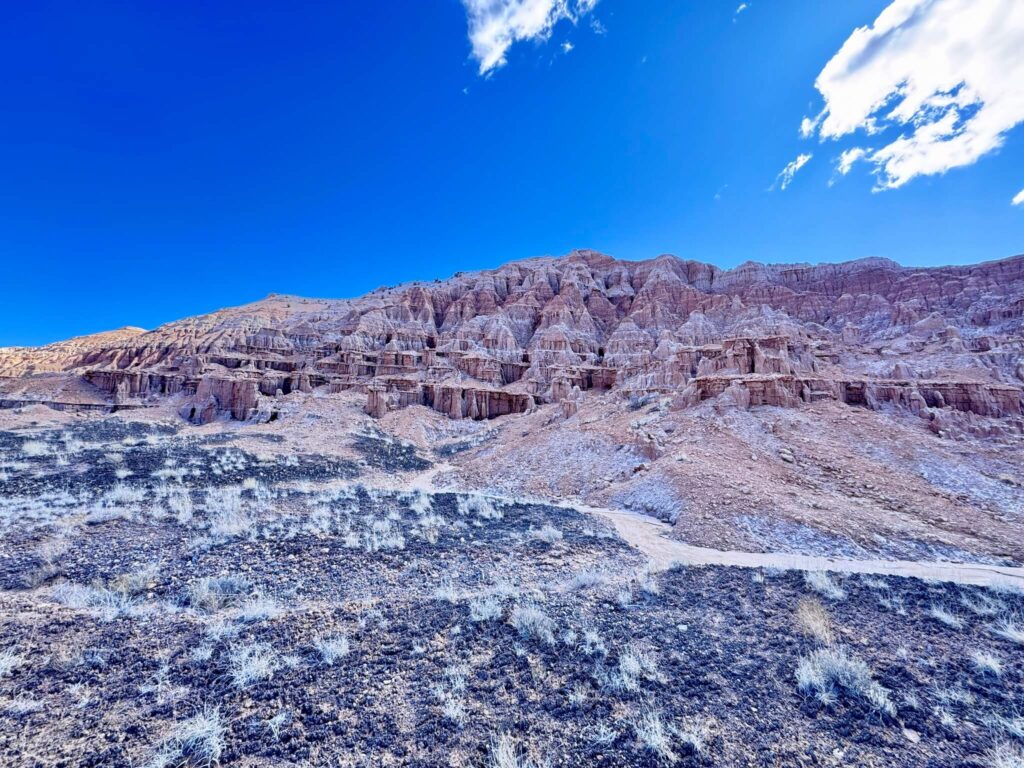
Dog Friendly?
Yes. Dogs are permitted on leash throughout Cathedral Gorge State Park. The clay trail surface is comfortable for dogs in dry conditions. Wet clay is slippery for both dogs and humans. Bring water for dogs; no water on the trail. The slot canyon sections may require dogs to be lifted or guided through the narrowest sections.
What to Bring
Water: 2 liters for a 3.3-mile desert loop. Sun protection for the open formation sections. Sturdy shoes for the sandy and rocky trail surface. Camera with wide-angle and mid-range capability; a headlamp for the slot canyon interior photography if needed.
Best Time to Visit
October through April is the recommended window. Spring (March through May) offers the most comfortable temperatures and occasional wildflowers in the desert sections. Fall (October through November) provides cooler temperatures and the best balance of light quality and crowd levels. Summer temperatures exceed 100 °F in the exposed formations; early morning starts before 7 a.m. are the practical summer approach. Golden hour for photography: sunrise reaches the east-facing formations early; sunset illuminates the west-facing spires in the last hour before dark. Both windows are worth planning for if the photography catalog is the primary goal.
Rules and Regulations
Do not climb on the clay formations; they are fragile and easily damaged by foot traffic. Stay on designated trails. No hiking in the slot canyons when clay is wet. Leave No Trace throughout. Pack out all trash. No water on trail; bring your own. $5 Nevada / $10 non-Nevada entry fee.
Where to Stay Near Cathedral Gorge
Cathedral Gorge State Park has a developed campground. Panaca is the nearest town with very limited services. Caliente, Nevada, about 14 miles south on US-93, has basic services and motel lodging. Ely, Nevada, about 1 hour north on US-93, has more developed lodging infrastructure.
Camping Nearby
Cathedral Gorge State Park Campground is the most convenient option: within the park, with electric hookups and restrooms. Reservations through reserveamerica.com. Camping inside the park enables sunrise starts on the formation photography without driving from Caliente or Panaca. 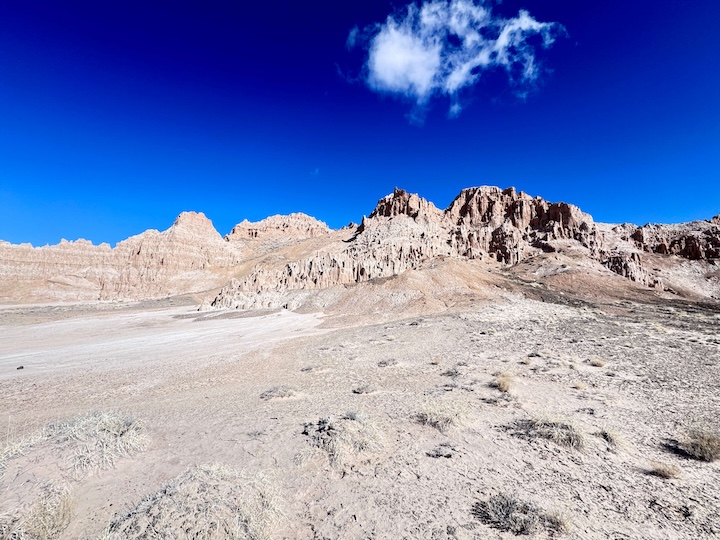
Nearby Adventures
The full Cathedral Gorge trail catalog: Moon Caves (0.2 miles / 26 ft), the network of narrow slot cave passages that the park’s famous Cathedral Caves are named for; Millers Point (0.5 miles / 111 ft), the panoramic overlook above the gorge; and Hawk’s Ridge Trail (4.2 miles / 278 ft), the longer ridge trail with expanded views. All four Cathedral Gorge trails can be combined in a single day visit for a comprehensive park experience. Kershaw-Ryan State Park near Caliente is about 14 miles south: a spring-fed canyon oasis that’s a completely different desert landscape from Cathedral Gorge’s clay formations. Worth pairing on a southeastern Nevada itinerary. Echo Canyon State Park has a reservoir and birding. Pioche, a historic Nevada mining town, is about 10 miles from Panaca with frontier-era architecture including the famous million-dollar courthouse and Boot Hill Cemetery.
Plan This Hike
AllTrails has Juniper Draw Loop mapped with offline capability and condition reports. Download before leaving Panaca. Plan your hike on AllTrails and pull the offline map while you’ve got signal.
Chase the Quiet
Cathedral Gorge is on US-93 in southeastern Nevada, which is not on any major tourist route between any two major cities. The park draws a fraction of the visitors that Zion or Bryce Canyon receive. The clay formations are as unusual and visually specific as any geological feature in the American Southwest, and the slot canyons are narrow and twisting and genuinely strange. On a weekday in November you can have the park effectively to yourself. That’s the specific deal Cathedral Gorge offers: unusual geology, no crowds, three hours from Las Vegas. Take the detour on US-93.
Support the Adventure
To make your walls less boring, check out my photography portfolio and bring a piece of the wild and my story into your home. If you’d like to fuel future adventures, you can donate a coffee on Ko-Fi. Every cup keeps me chasing sunrises and stories. When you shop using my affiliate links, every click helps support this blog at no extra cost to you. It’s a small way to keep Unicorn Adventure alive and kicking while I keep exploring. Subscribe to my mailing list for future updates, new stories, and behind-the-scenes adventures. Stay connected with me on Instagram and Facebook for more photos and daily inspiration. Thanks for being part of the journey, Unicorn Squadron!
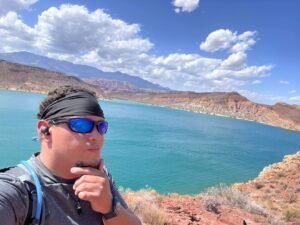
Theo Maynard is a landscape photographer and adventure blogger based in Salt Lake City. He chases remote desert and mountain light across the American West, documents it all solo, and shares the journey through Unicorn Adventure. He’s on the autism spectrum, and that’s not a footnote, it’s the whole story. He creates to inspire others to get outside, chase what lights them up, and live their best possible life. Unapologetically himself.