American Fork Canyon is where Utah County goes when it needs mountains. Silver Lake Trail is one of the best reasons to make the drive. The Silver Lake Trail is in the Lone Peak Wilderness in American Fork Canyon, accessed from the Silver Lake Flat Reservoir area off North Fork Road. The route climbs 1,500 feet over 4.5 miles round trip through pine and aspen forest, through wildflower meadows, and out to a clear alpine lake ringed by the peaks of the Lone Peak Wilderness. It’s a different canyon system from the Wasatch Front routes closer to Salt Lake City, which means different geology, different crowds, and a different feel on the approach. The canyon road is scenic enough to slow you down on its own before you even get to the trail. The lake at the end is worth every foot of gain. Here’s what you need to hike Silver Lake Trail.
Quick Facts
| Trail Name | Silver Lake Trail |
| Location | Lone Peak Wilderness, American Fork Canyon, Alpine, Utah |
| Coordinates | 40.50720934095275, -111.6562126705535 |
| Distance | 4.5 miles (round trip) |
| Elevation Gain | 1,500 feet |
| Difficulty | Moderate to Strenuous |
| Time | 3-5 hours |
| Dogs Allowed | Yes (on leash) |
| Fee | America the Beautiful Pass or fee (American Fork Canyon) |
| View on Alltrails | |
How to Get There
From I-15, take exit 284 (Alpine/Highland). Head east on UT-92 toward American Fork Canyon. Drive approximately 5 miles up the canyon, then turn right onto North Fork Road (Forest Road 085). Follow North Fork Road approximately 3.5 miles to the Silver Lake Flat Reservoir. The trailhead is near the reservoir. The canyon road requires an America the Beautiful Annual Pass or a day-use fee. Load navigation before entering the canyon since signal weakens quickly on North Fork Road.
Parking Information
Parking is available near Silver Lake Flat Reservoir at an unpaved but maintained lot. It fills on summer weekends, particularly in July and August during peak wildflower season. Arrive before 8 a.m. on busy weekends. Restrooms are available at the trailhead. A canyon fee applies: the America the Beautiful Annual Pass covers entry, or you can pay the day-use fee at the canyon entrance. 
Cell Service and Navigation
Cell service in American Fork Canyon is unreliable beyond the lower canyon and drops to nothing on North Fork Road. Download your map offline through AllTrails before leaving Alpine or Highland. The trail is well-marked but the upper sections near the lake require navigation attention. A GPS track loaded before losing signal removes junction uncertainty. Weather in the Lone Peak Wilderness builds fast. Afternoon thunderstorm risk in summer is serious at this elevation. Start early enough to reach the lake and begin descent before midday storms develop.
What to Expect on Silver Lake Trail
The Forest and Meadow Ascent
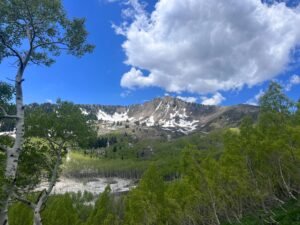
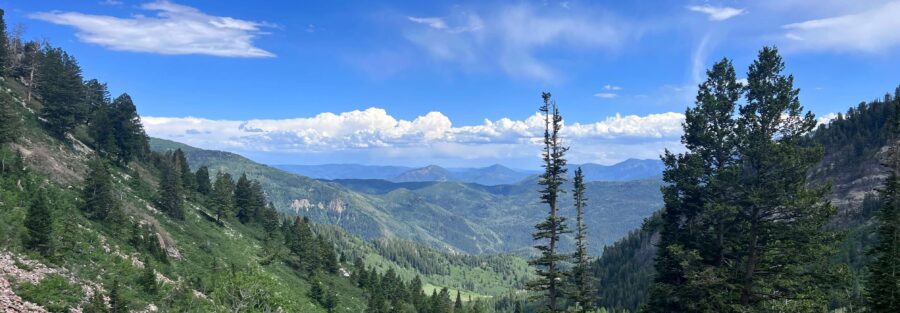
The trail leaves the reservoir area and climbs steadily through pine and aspen forest. The lower sections are shaded and the gradient is consistent without brutal pitches early on. As you gain elevation the trees thin and the views of the surrounding Lone Peak Wilderness peaks open up. Summer brings wildflower meadows in the open sections with a variety and density that rivals anything in the Wasatch. The approach feels more remote than front-range canyon trails because the canyon system is less traveled. You’ll have more space on this trail than on comparable routes closer to Salt Lake City.
Silver Lake
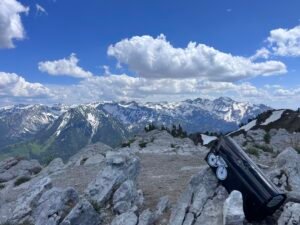
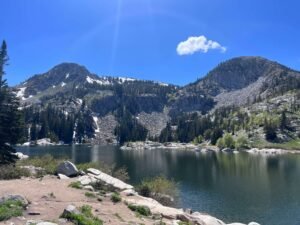
The lake sits in a rocky alpine basin with the Lone Peak Wilderness ridgeline defining the skyline above it. The water is clear and cold. On calm mornings the surface reflects the surrounding peaks. The wildflower meadows adjacent to the lake are exceptional in mid-summer. This is a natural rest point. If you want to push further, the Lone Peak Wilderness offers additional terrain for experienced hikers willing to navigate beyond the maintained trail network.
Trail Difficulty and Length
Silver Lake Trail is 4.5 miles roundtrip with 1,500 feet of elevation gain. Moderate to strenuous is the accurate rating. The gain is sustained and the upper sections near the lake include rocky terrain that demands solid footing. Budget 3 to 5 hours. Start early to avoid afternoon thunderstorm risk on the upper exposed sections. 
Dog Friendly?
Yes. Dogs are welcome on leash in the Lone Peak Wilderness. The trail is suitable for fit, trail-experienced dogs. The upper rocky sections and steeper pitches require some management. Bring more water than you think your dog needs. There’s lake water at the destination but pack enough for the full approach before you get there. Start early in summer to protect both of you from peak heat on the exposed upper meadows.
What to Bring
At least 2 to 3 liters of water per person. The gain and elevation drain you faster than the mileage suggests. Sun protection for the open meadow sections. A wind and insulation layer for the lake basin, which channels cold air even on warm days. Trail shoes or boots with grip for the rocky upper terrain. Trekking poles reduce stress on the descent. A rain layer for afternoon storm risk. A camera for the lake reflection and the wildflower meadows, which are among the best in the range in mid-July. A wide-angle lens handles the lake basin panorama.
Best Time to Hike Silver Lake Trail
Summer (late June through September) is the primary season. Mid-July through August is peak wildflower timing in the meadow sections. The trail is typically snow-free by late June, though conditions vary. Fall brings aspen color to the lower forest sections in late September and early October. Spring access is limited by snow in the upper basin. Winter is not recommended due to avalanche risk on the surrounding terrain and deep snowpack on North Fork Road. For photography, early morning gives you the calmest lake surface and the best chance at a reflection shot before wind builds. The wildflower meadows photograph best in soft morning light or on overcast days when the diffused light renders the color evenly. A wide-angle lens captures the lake and ridgeline together. A macro lens is worth packing in July for the wildflower detail shots in the adjacent meadows. 
Rules and Regulations
Silver Lake Trail is in the Lone Peak Wilderness, managed by the Uinta-Wasatch-Cache National Forest. Wilderness rules apply: no bikes, no motorized equipment. Dogs on leash. Leave No Trace fully. A canyon fee applies at the American Fork Canyon entrance: the America the Beautiful Annual Pass covers it. No fee to park at the Silver Lake Flat Reservoir trailhead specifically. Check the Uinta-Wasatch-Cache National Forest site for current fire restrictions and trail conditions before heading out, particularly in early season when North Fork Road may not be fully passable.
Where to Stay Near Alpine
Alpine and Highland have suburban lodging options close to the American Fork Canyon entrance. Lehi and American Fork along I-15 have more chain options. For hotel points check Marriott Bonvoy, IHG Rewards, and Hilton Honors. Salt Lake City is about 30 to 40 minutes north with the broadest inventory in the region.
Camping Nearby
American Fork Canyon has established campgrounds including Timpooneke Campground and others accessible via UT-92 and North Fork Road, reservable through recreation.gov. Staying in the canyon puts you close to the Silver Lake Flat Reservoir trailhead and eliminates the morning drive on North Fork Road. Book well in advance for summer weekends.
Nearby Adventures
American Fork Canyon has substantial hiking beyond Silver Lake. The Tibble Fork Reservoir area provides access to family-friendly loops and shorter options for rest days or introductory hikes. Silver Glance Lake and Sword in the Stone Scramble (6.1 mi / 2,470 ft) is a more committed objective in the same wilderness for experienced hikers. North Fork Ridge (3.9 mi / 958 ft) is a shorter ridge option in the Alpine area. Timpanogos Cave National Monument is in the same canyon and is one of the region’s signature non-hiking attractions. Guided tours take you through limestone cave formations that are genuinely impressive. The Alpine Scenic Loop (UT-92) is a beautiful drive that can be done in either direction through the canyon system and is worth taking slow on the way in or out.
Plan This Hike
AllTrails has Silver Lake Trail in Lone Peak Wilderness with a downloadable map and recent user conditions. Given that this trail is in a less-traveled canyon system, the user reviews often have current and specific information about trail conditions on North Fork Road and the upper lake basin that’s harder to find elsewhere. View on Alltrails AllTrails Pro is worth it for offline maps and GPS in American Fork Canyon where cell service is unreliable. Download maps for Silver Lake and any other canyon objectives before you lose signal on the canyon road.
Chase the Quiet
American Fork Canyon doesn’t get the same traffic as Big or Little Cottonwood. Silver Lake in the Lone Peak Wilderness gets even less. That ratio works in the trail’s favor. The wildflower meadows in July, the cold lake in a rocky alpine basin, the peaks of the Lone Peak Wilderness above it, all with more space than you’d have on comparable terrain 20 miles north. That’s the Silver Lake deal. It’s worth the extra drive to get there.
Support the Adventure
To make your walls less boring, check out my photography portfolio and bring a piece of the wild and my story into your home. If you’d like to fuel future adventures, you can donate a coffee on Ko-Fi. Every cup keeps me chasing sunrises and stories. When you shop using my affiliate links, every click helps support this blog at no extra cost to you. It’s a small way to keep Unicorn Adventure alive and kicking while I keep exploring. Subscribe to my mailing list for future updates, new stories, and behind-the-scenes adventures. Stay connected with me on Instagram and Facebook for more photos and daily inspiration. Thanks for being part of the journey, Unicorn Squadron!
Theo Maynard is a landscape photographer and adventure blogger based in Salt Lake City. He chases remote desert and mountain light across the American West, documents it all solo, and shares the journey through Unicorn Adventure. He’s on the autism spectrum, and that’s not a footnote, it’s the whole story. He creates to inspire others to get outside, chase what lights them up, and live their best possible life. Unapologetically himself.