

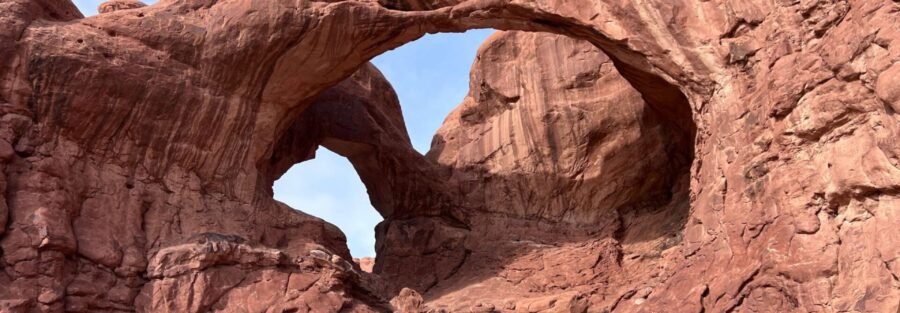
Three arches. One parking lot. About 1.2 miles of easy walking. The Windows Section of Arches National Park punches harder than its distance suggests, and the Windows Loop and Turret Arch Trail is the reason most people stop there in the first place. North Window and South Window sit side by side in the same sandstone wall, framing the sky like two enormous eyes staring east. Turret Arch rises a short distance away with a classic arch opening below a spire that looks exactly like what it’s named after. All three in a single morning.
This place delivers consistently. The geometry changes with the light. The crowds thin by early morning and late afternoon. And the walk itself is short enough that you can plan around it rather than around it planning you.
This guide covers the Windows Loop and Turret Arch Trail from end to end: how to get there, what the trail delivers, and how to build a full Arches day around it.
Quick Facts
| Trail Name | Windows Loop and Turret Arch Trail |
| Location | Arches National Park, near Moab, Utah |
| Coordinates | 38.6872° N, 109.5366° W |
| Distance | 1.2 miles roundtrip (loop) |
| Elevation Gain | Less than 100 feet |
| Difficulty | Easy |
| Time | 30-60 minutes |
| Dogs Allowed | No |
| Fee | $35 per vehicle (America the Beautiful Pass accepted) |
| AllTrails | View on AllTrails |
How to Get There
Arches National Park sits 5 miles north of Moab on US-191. Enter at the main entrance, follow Arches Scenic Drive north for about 12 miles, and watch for the signed turnoff to the Windows Section on the right. Turn right onto Windows Road and drive 2.5 miles to the parking area at the end. The Windows Section is one of the most visited areas in the park and the road into it is clearly marked.
From Salt Lake City, plan 4 hours: south on I-15, east on US-6, south on US-191 into Moab. From Grand Junction, Colorado, it’s about an hour west. Once inside the park the drive to the Windows parking area takes roughly 15-20 minutes from the entrance.
Timed entry reservations are required during peak season, typically April through October. Book at recreation.gov before arriving. The Windows Section is one of the most popular areas in the park and the lot fills fast during busy periods. Your timed entry window gets you in the gate, not a guaranteed parking spot, so arriving early within your window matters.
Parking Information
The Windows Section parking lot is large by Arches standards and still fills up by mid-morning on spring and fall weekends. Early arrival is the move. The lot serves both the Windows Loop and the Double Arch Trail, which starts from the same parking area.
Restrooms are available at the parking lot. No water on the trail itself. Fill up in Moab or at the visitor center before driving in.
Cell Service and Navigation
Cell coverage is inconsistent inside Arches and typically drops somewhere on the drive north from the entrance. Download AllTrails or the NPS Arches app offline before leaving Moab.
Navigation on this trail is not a concern. The loop is well-marked with a paved path to the arches and clear signage throughout the Windows Section. You’re not going to get lost. Still, offline maps are a good habit for any Arches visit, and pulling them while you have signal in Moab takes thirty seconds.
What to Expect on the Windows Loop and Turret Arch Trail
The Trail
The trail starts at the parking area and heads toward a cluster of massive sandstone fins. Within the first few minutes you’re already surrounded by the scale of the rock, the fins towering overhead and framing increasingly dramatic views as you walk the loop. The path is well-maintained, a mix of packed dirt and rock with a few stone steps at the base of the arches.
The loop takes you past North Window and South Window, then around to a backside view of both arches together that’s different and arguably better than the front approach. Most visitors walk straight to the front of the arches and turn around. The loop continues around the back and gives you a vantage that puts both windows in the same frame with open canyon country behind them. Don’t skip the backside.
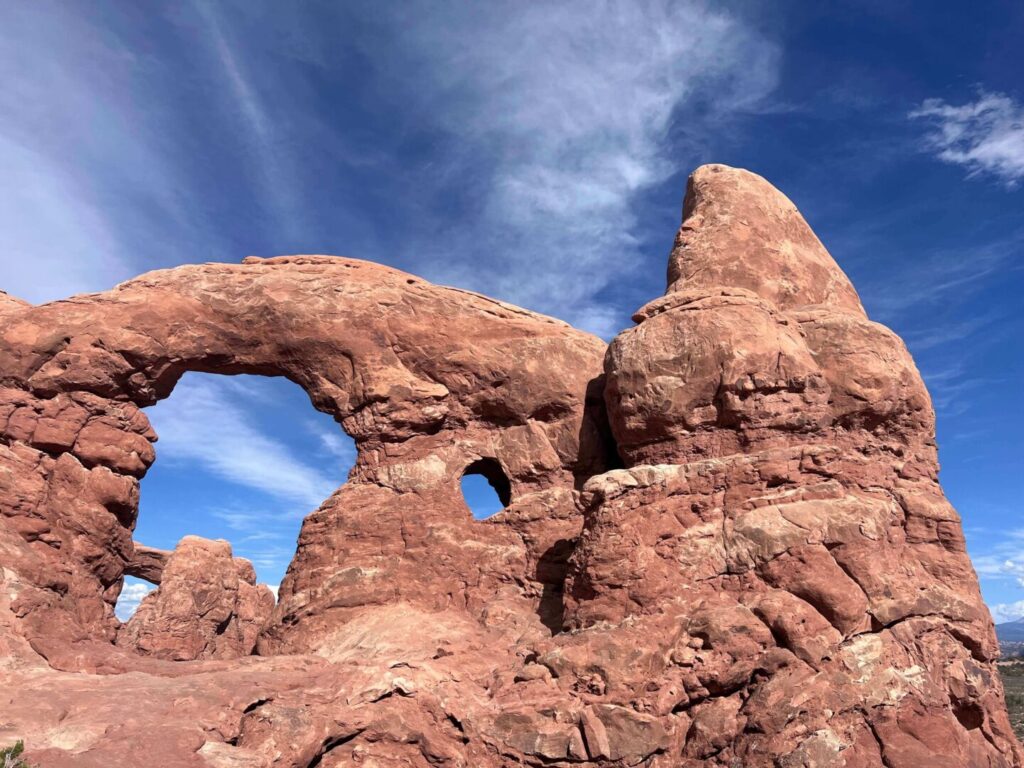
A short spur from the main loop leads to Turret Arch, maybe 0.15 miles from the junction. It’s a mandatory add. The arch opening is large and distinct, and shooting back through it toward the Windows gives you one of the most recognizable double-arch compositions in the park.
The Arches
North Window and South Window span the same sandstone wall side by side. North Window is roughly 51 feet tall and 93 feet wide. South Window is similar in scale. From the trail approach, they look like a pair of enormous eyes in the rock, which is why the formation gets called The Spectacles. From the backside of the loop, they frame the canyon beyond in a way that rewards patient photography.
Turret Arch stands separately, a larger arch below a distinctive spire. Looking back through Turret Arch toward the Windows is one of the great compositional opportunities in Arches National Park. Wide-angle, shoot from low, put the Windows in the background through Turret’s opening. That’s the shot. Plan to be there at sunrise or in the late afternoon for the best light on the red rock.
Trail Difficulty and Length
Easy is accurate. The loop runs 1.2 miles with minimal elevation change. The stone steps at the base of the arches are the only brief challenge, and they’re manageable for any ambulatory hiker. Families with young kids, older adults, anyone who needs an accessible but genuinely beautiful hike in Arches, this is the one.
Budget 30 to 60 minutes for the full loop with time at each arch. Photographers who linger should plan more. The backside of the Windows and the Turret Arch spur can easily turn a 45-minute hike into two hours if the light is doing something interesting.
Dog Friendly?
No. Arches National Park prohibits dogs on all unpaved trails, including the Windows Loop. Dogs are permitted in the parking lot, at picnic areas, and along paved roads within the park, but must stay leashed and off trail surfaces. Corona Arch Trail on BLM land west of Moab welcomes leashed dogs and delivers a comparable arch experience.
What to Bring
This is a short hike but the Arches desert doesn’t care about trail length when it comes to dehydration. Bring at least a liter of water per person. Sun protection: hat, sunscreen, sunglasses. Comfortable walking shoes work fine, nothing technical required.
For photography, a wide-angle lens is essential here. The arches are big and close, and standard focal lengths can’t capture them without backing up significantly. A tripod is useful for pre-sunrise or blue-hour work when light levels are low. The Turret Arch through-composition toward the Windows rewards a tripod and careful framing.
Best Time to Hike the Windows Loop and Turret Arch Trail
Spring and fall are the peak seasons: March through May and September through November. Temperatures are manageable and the canyon light has warmth without the sledgehammer of summer overhead sun.
Summer hiking is possible given the short trail, but the Windows Section parking lot gets brutally hot by midday and has limited natural shade. Go early, before 8 a.m., or wait until the last two hours of daylight. Carry more water than you think you need.
Winter brings solitude and low-angled light that’s genuinely excellent for photography. The trail can get slick if there’s been precipitation, but it rarely requires special gear. The lack of crowds in winter is its own reward at a section that sees heavy traffic in peak season.
For photography, sunrise is the priority visit. The arches face east, which means they catch direct light immediately after sunrise and the warmth of that first hour is remarkable. Plan to be at the Turret Arch spur within 30 minutes of sunrise for the best light through the arch toward the Windows. Late afternoon golden hour from the backside of the loop is a close second.
Rules and Regulations
Stay on designated trails. The Windows Section sees heavy visitor traffic and the desert ecosystem around the trail shows it. Cryptobiotic soil crust is fragile and takes decades to recover from footprints. Walk on rock or established path only.
Do not climb on the arches. The NPS enforces this and rangers are present in the Windows Section regularly. Arch erosion is accelerated by human contact. Respect the rock. Pack out all trash. No drones without a permit. The International Dark Sky designation means minimal light pollution if you’re there at night.
Timed entry reservations required during peak season at recreation.gov. The $35 vehicle fee or America the Beautiful Pass covers park entry.
Where to Stay Near Moab
Moab is the base for any Arches visit, 5 miles south of the park entrance and about 20 minutes from the Windows parking area. The town has lodging at every budget point. Red Cliffs Lodge on the Colorado River on Highway 128 and The Caves at Moab are both options with more character than a standard chain property. For points travelers, check available Marriott Bonvoy properties in Moab, IHG Rewards hotels near Moab, and Hilton Honors options in the area. Book well ahead for spring and fall.
Camping Nearby
Inside Arches, Devils Garden Campground is the only developed option and books out months in advance on recreation.gov. It sits at the north end of the park road, about 6 miles past the Windows Section. Proximity to the trailheads is the main advantage.
Outside the park, the BLM land around Moab has solid dispersed camping at Gemini Bridges, Porcupine Rim, and the Sandflats Recreation Area east of town. Sandflats has both dispersed and fee sites with facilities and is the most convenient option for most Moab-based camping.
Nearby Adventures
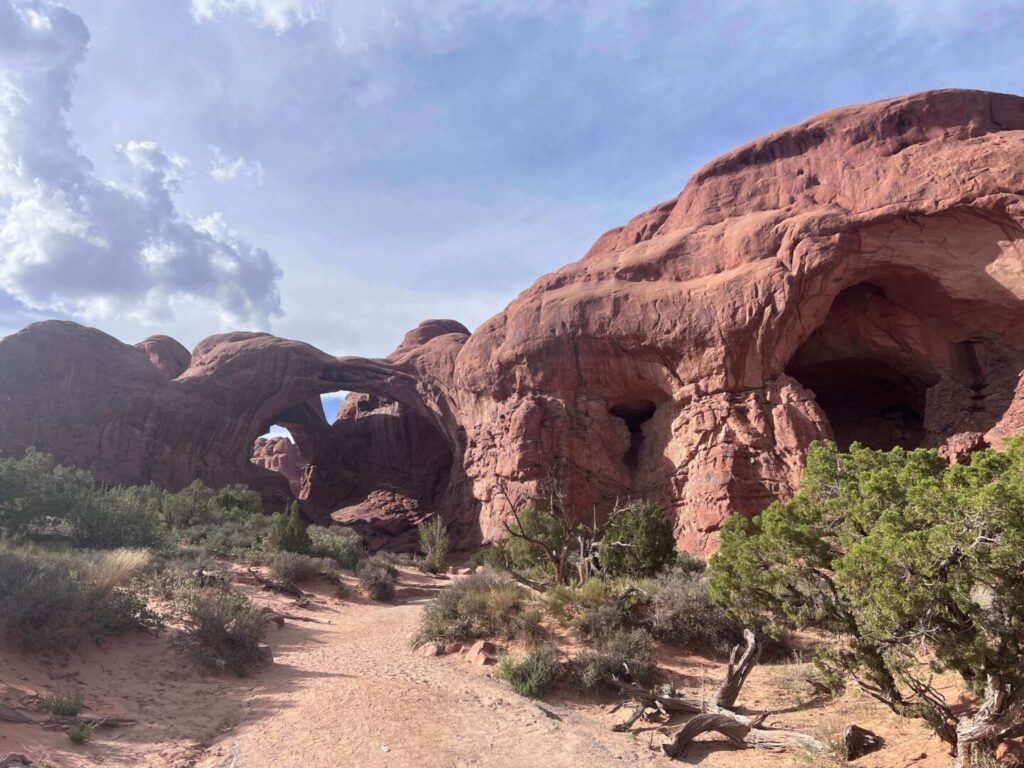
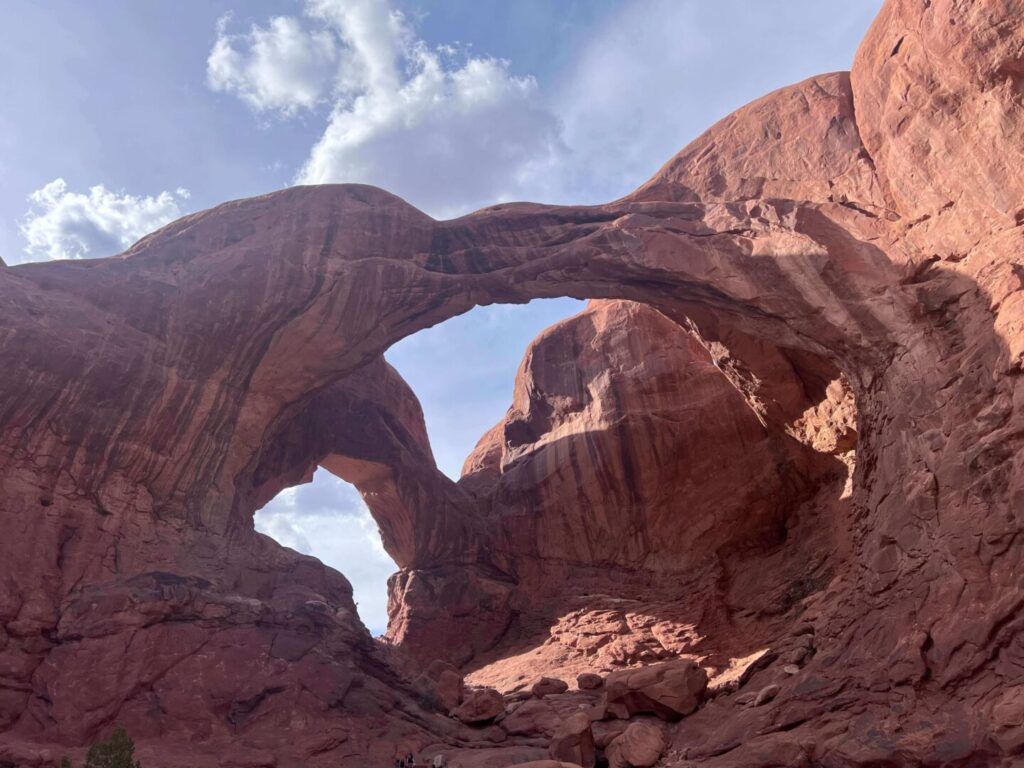
Double Arch is the natural companion stop. The Double Arch Trail starts from the same Windows Section parking lot, runs about 0.5 miles roundtrip, and leads to a massive paired arch formation that’s completely different in character from the Windows. It takes 20 minutes and the arch is enormous. Do both while you’re parked there. Balanced Rock is a few miles back toward the entrance and is the natural stop on the way in or out of the Windows Section.
For the rest of an Arches day, Park Avenue Trail near the entrance and Delicate Arch or Double O Arch Trail at the deeper end of the park are the main objectives.
Outside the park, Corona Arch on BLM land west of Moab is the dog-friendly alternative. Canyonlands Island in the Sky adds Mesa Arch and White Rim Overlook for a full mesa day. Dead Horse Point State Park is worth a separate stop on the UT-313 corridor.
Plan This Hike
AllTrails has the Windows Loop and Turret Arch Trail mapped with offline capability. Plan your hike on AllTrails and download the offline map in Moab before entering the park.
Chase the Quiet
Three arches, one parking lot. That math is the whole pitch. Most national park trails make you choose between a quick stop and a destination hike. The Windows Loop is both at the same time. Walk it once at midday and you understand the scale of the formations. Walk it at sunrise and you understand why people drive 1,500 miles to be there in October. Same trail. Different experiences. Both worth your time.
Support the Adventure
To make your walls less boring, check out my photography portfolio and bring a piece of the wild and my story into your home.
If you’d like to fuel future adventures, you can donate a coffee on Ko-Fi. Every cup keeps me chasing sunrises and stories.
When you shop using my affiliate links, every click helps support this blog at no extra cost to you. It’s a small way to keep Unicorn Adventure alive and kicking while I keep exploring.
Subscribe to my mailing list for future updates, new stories, and behind-the-scenes adventures.
Stay connected with me on Instagram and Facebook for more photos and daily inspiration.
Thanks for being part of the journey, Unicorn Squadron!
Theo Maynard is a landscape photographer and adventure blogger based in Salt Lake City. He chases remote desert and mountain light across the American West, documents it all solo, and shares the journey through Unicorn Adventure. He’s on the autism spectrum, and that’s not a footnote, it’s the whole story. He creates to inspire others to get outside, chase what lights them up, and live their best possible life. Unapologetically himself.