

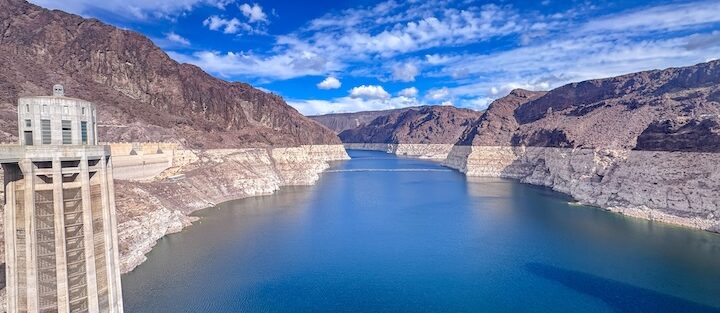
Five tunnels. Ninety years of history. One of the best long walks in southern Nevada. The railroad bed that workers used to haul equipment to Hoover Dam during its construction in the 1930s still exists, regraded and open to hikers, running 4.1 miles from the Alan Bible Visitor Center along the Lake Mead shoreline to the dam itself. Walk it out and back and you’ve got 8.2 miles with steady lake views, tunnel passages that cool the air and block the sun, and a front-row look at the infrastructure relationship between the dam and the reservoir it created. I cover Hoover Dam country on every Las Vegas trip. The Railroad Tunnel Trail is the one I keep coming back to, partly for the tunnels and partly because 8 miles of flat desert walking in good weather with a destination at the end is genuinely satisfying in a way that more dramatic trails sometimes aren’t. There’s a meditative quality to the route. Steady pace, consistent scenery, enough history to think about along the way. Long, even-paced walks do something productive for my brain that shorter, more intense hikes don’t. This trail is one I’d recommend to almost anyone.
Quick Facts
| Location | Lake Mead National Recreation Area, Nevada |
| Coordinates | 36.01216, -114.79235 |
| Distance | 8.2 miles |
| Elevation Gain | 931 ft |
| Difficulty | Easy to Moderate |
| Time | 3 to 5 hours |
| Dogs Allowed | Yes, on leash |
| Fee | $25/vehicle (America the Beautiful pass accepted) |
| Plan This Hike on AllTrails | |
How to Get There
The trailhead sits at the Alan Bible Visitor Center just outside Boulder City, about 30 minutes southeast of the Las Vegas Strip. Take US-93 South from Las Vegas and follow signs toward Boulder City and Lake Mead. Turn onto Lakeshore Road at the Lake Mead National Recreation Area entrance. The Visitor Center and its trailhead parking lot are on the right, before the fee station. From Hoover Dam, the trailhead is a 10-minute drive back toward Boulder City on US-93. GPS coordinates for the trailhead: 36.01216, -114.79235. The entrance and parking area are clearly signed from Lakeshore Road. 
Parking Information
The Alan Bible Visitor Center has a large paved lot with free parking. Restrooms are available at the Visitor Center and worth using before you start. The lot handles the trail’s typical weekend volume without filling. Overflow parking is available at Lakeview Overlook a short distance down Lakeshore Road. A $25 park entrance fee applies per vehicle unless you carry an America the Beautiful annual pass, which covers Lake Mead and all other national park units. The Visitor Center is worth 15 minutes of your time before the hike. The exhibits cover the dam construction and the railroad history with enough detail to make the tunnels hit differently once you’re on the trail.
Cell Service and Navigation
Cell signal is solid at the Visitor Center and trailhead. It fades inside the tunnels, which is part of the experience, and returns immediately on the other side. The trail is well-maintained, wide, and straightforward enough that navigation isn’t a concern. That said, download the AllTrails offline map before you leave Las Vegas or Boulder City as a backup for the sections closer to the dam where the route options branch. For hikers continuing all the way to Hoover Dam, the trail connects to the dam viewpoint and visitor area at the eastern terminus. Cell service returns fully at the dam. Plan your return before you start if you’re doing a car shuttle instead of an out-and-back. 
What to Expect on the Historic Railroad Tunnel Trail
The Road
The trail surface is compact gravel on the original railroad grade, wide enough for two people to walk abreast and popular with cyclists and joggers as well as hikers. The grade is gentle throughout, gaining elevation gradually as the route climbs along the hillside above Lake Mead’s Boulder Basin. There are no technical sections, no scrambles, and no route-finding required. The path runs southwest to northeast. Lake Mead fills the south and east frames for the majority of the route, blue against the red and tan canyon walls. The dam becomes visible in the distance approximately two miles before you reach it.
The Tunnels
Five tunnels interrupt the route between the trailhead and the dam. They range from short passageways of a hundred feet to longer bores that take a full minute to walk through. The interiors are unlit, so a headlamp or phone torch is useful, especially on bright days when your eyes take time to adjust. Temperature inside drops noticeably from the desert air outside. In summer, the tunnels are the only shade on the entire route. The tunnels were blasted through the volcanic ridges of the River Mountains in the early 1930s to create a direct railroad line from the Union Pacific spur at Boulder City to the Hoover Dam construction site. Walking through them, you’re moving through the same space that flatcars of steel and concrete moved through 90 years ago. The scale of what it took to build the dam hits differently from inside that context.
The Dam
Hoover Dam appears on the horizon around mile three and grows steadily until the trail deposits you at the Nevada approach to the dam itself. From the trail’s end, the dam face drops 726 feet to the Colorado River below, and the powerhouse on the Nevada abutment is fully visible. The view from the dam walkway adds a vertical dimension that the trail approach builds toward well. The dam visitor center and tour entrance are a short walk from where the trail arrives. If you’re doing an out-and-back hike, the dam is the turnaround point. If you’re doing a car shuttle, park a second vehicle in the Hoover Dam lot before you start. 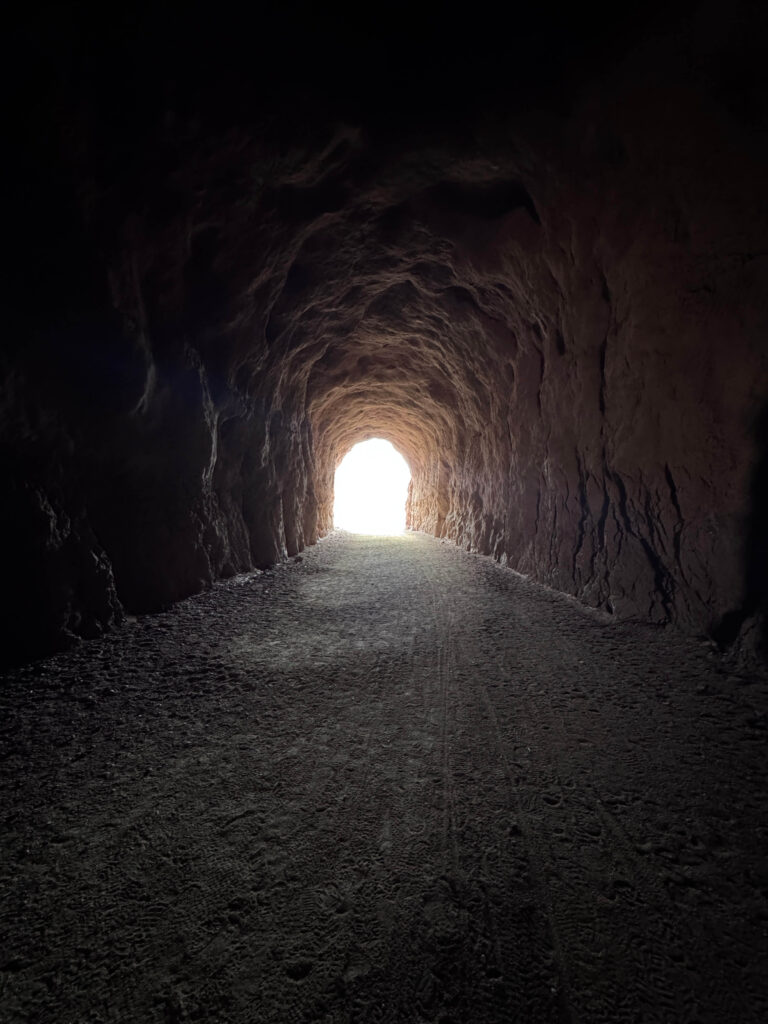
Trail Difficulty and Length
The Historic Railroad Tunnel Trail is the most accessible long trail in the Lake Mead area. At 8.2 miles round trip with 931 feet of cumulative elevation gain distributed across the full length, the grade never feels steep. It’s a trail that rewards a steady pace rather than athletic effort. Families with older children do it comfortably. Cyclists use it as a conditioning ride. Hikers looking for distance without technical difficulty get a full day out of it. The 931-foot elevation gain is spread across the full 8.2 miles in both directions, so it reads as a gentle, rolling climb rather than a concentrated ascent. For comparison, Fortification Hill packs 1,394 feet into 3.5 miles. This trail is in a different category entirely. Allow three to five hours for the full out-and-back at a comfortable walking pace with time at the tunnels and the dam.
Dog Friendly?
Leashed dogs are welcome and the wide, flat surface makes this one of the better long trail options for dogs at Lake Mead. The caveats are heat and pavement temperature. The gravel surface absorbs and radiates heat significantly in late spring through early fall. If you can’t hold the back of your hand against the trail surface for five seconds, your dog’s paws are at risk. Hike early in the morning or after 4 PM from May through September, or skip those months entirely. Bring more water than you think the dog needs. There’s no water on the trail between the Visitor Center and the dam. 
What to Bring
Two liters of water per person for the full out-and-back on a cool day. Three liters in spring or fall. The trail has no water sources between the Visitor Center and the dam. The flat surface and consistent breeze off the lake can mask how much the desert is pulling out of you. Comfortable walking shoes are sufficient here. The compact gravel surface doesn’t require aggressive lug soles. A light daypack handles everything you need: water, snacks, sun protection, and a headlamp or phone for the tunnels. Wide-brim hat and sunscreen are non-negotiable. The trail is almost entirely exposed from the trailhead to the dam. For photographers: bring your wide-angle lens. The tunnel interiors frame the lake exit shot well, and the dam face from the Nevada abutment is wide enough that you want as much field of view as possible.
Best Time to Hike the Railroad Tunnel Trail
October through April is the window. November through March is ideal: mild temperatures, lower visitor volume, and the strongest light of the year on the lake. The tunnel interiors stay cool regardless of season, which makes them genuinely refreshing on a warm spring day. Summer is manageable with early starts. A 5 AM departure puts you at the dam before 9 AM and back at the Visitor Center before the midday heat becomes a problem. The trail sits at lower elevation than Red Rock Canyon or the Spring Mountains, so summer temperatures can exceed 110 degrees in the canyon and the exposed ridgeline sections offer no shade except the tunnels. For photography: sunrise from the trail with the lake lit in the east frame is the strongest available shot. The tunnel exit framing the lake with morning light coming through is the iconic composition on this route. Golden hour on the return puts warm light on the dam face from the west. Plan a late afternoon out-and-back if the dam shot is the priority.
Rules and Regulations
Lake Mead charges $25 per vehicle. America the Beautiful passes cover the fee. Stay on the designated trail. Don’t climb on the tunnel walls or enter any gated or restricted sections of the original railroad infrastructure. Pack out all waste including pet waste. Cyclists share this trail with hikers and are asked to keep speed reasonable, especially through the tunnel sections where visibility drops to zero. Drones are not permitted in Lake Mead National Recreation Area. No open fires anywhere outside of designated campground sites. Flash flood risk is low on this specific trail due to the elevated grade, but check the National Weather Service before heading out if weather is building to the north or east.
Where to Stay Near the Railroad Tunnel Trail
Boulder City is the ideal base for this trail: 10 minutes to the trailhead, a walkable historic downtown, and significantly quieter than anything on the Strip. For Las Vegas stays, Marriott Bonvoy options near the Strip or Henderson put you 30 minutes from the Visitor Center on a clear morning. IHG Rewards hotels in Henderson cut that drive to 20 minutes and skip the Strip traffic entirely. Hilton Honors members have options in both areas worth checking against your points balance. Boulder City’s El Rancho Boulder Motel and a handful of independent properties offer affordable, no-frills stays with direct proximity to both the trail and the Hoover Dam visitor complex. If you’re doing multiple Lake Mead days, staying in Boulder City beats driving in from the Strip every morning.
Camping Nearby
Las Vegas Bay Campground is the closest developed camping option inside Lake Mead NRA, directly on the lake with paved sites and hookups for RVs. It puts you 15 minutes from the Railroad Tunnel trailhead. Reservations at recreation.gov. Kingman Wash dispersed camping is accessible off the same Lakeshore Road corridor and puts you directly on the water in a primitive, 4×4-required site. It’s a harder drive than the Fortification Hill access and best suited for a rig with real clearance. Worth it for the isolation and the lakeside location. Lovell Canyon in the Spring Mountains offers free dispersed camping at 7,000 feet elevation, 45 minutes from the trailhead in the pines. A strong contrast to the desert floor and a good base if you’re combining Railroad Tunnel Trail with Red Rock Canyon hiking over two or three days. 
Nearby Adventures
Hoover Dam tours are the obvious extension. The inside dam tour covers the power plant turbines and the original construction engineering in detail. Allow 90 minutes for the full inside tour, 30 minutes for the exterior walkway and viewpoints. The Boulder City Hoover Dam Museum on Arizona Street handles the human side of the story: the workers, the timeline, and the Depression-era context. Worth an hour before or after the hike. Fortification Hill (3.5 miles, 1,394 ft gain) is 15 minutes from the Railroad Tunnel trailhead and is the natural pairing for anyone who wants both a flat history walk and a strenuous summit on the same Lake Mead day. For a full Lake Mead overview including Spooky Canyon and more context on all three parks in the Las Vegas area, see the Las Vegas hiking guide. Lake Mead Marina offers kayak and paddleboard rentals for anyone who wants to see the tunnel entrances from the water. The Nevada State Railroad Museum in Boulder City runs scenic train rides through the desert and connects directly to the railroad history the trail covers.
Plan This Hike
The Historic Railroad Tunnel Trail is on AllTrails with current photos, trail condition reports, and a downloadable offline map: View on Alltrails. AllTrails Pro is worth it for the offline topo maps on the sections closer to the dam where the route branches. Recent reviews flag current conditions on tunnel accessibility and any closures to the dam approach.
Chase the Quiet
Inside the fourth tunnel the sound changes completely. The desert wind drops. The lake light disappears. You’re standing in 1932 for a few seconds, in a hole blasted through a mountain by workers who were paid $4 a day to build something that would power a region for a century. Then the far entrance opens back up and you’re standing on a ridge above Lake Mead again, blue water below, dam on the horizon. That transition, from tunnel dark to desert bright, over and over for 8.2 miles, is the whole reason to do this trail.
Support the Adventure
To make your walls less boring, check out my photography portfolio and bring a piece of the wild and my story into your home. If you’d like to fuel future adventures, you can donate a coffee on Ko-Fi. Every cup keeps me chasing sunrises and stories. When you shop using my affiliate links, every click helps support this blog at no extra cost to you. It’s a small way to keep Unicorn Adventure alive and kicking while I keep exploring. Subscribe to my mailing list for future updates, new stories, and behind-the-scenes adventures. Stay connected with me on Instagram and Facebook for more photos and daily inspiration. Thanks for being part of the journey, Unicorn Squadron!
Theo Maynard is a landscape photographer and adventure blogger based in Salt Lake City. He chases remote desert and mountain light across the American West, documents it all solo, and shares the journey through Unicorn Adventure. He’s on the autism spectrum, and that’s not a footnote, it’s the whole story. He creates to inspire others to get outside, chase what lights them up, and live their best possible life. Unapologetically himself.